Hygiene recall rates are the single metric that most frequently separates $500,000 dental practices from $1,000,000 practices. Yet only 17% of dentists report that most of their active patients receive hygiene treatment every six months. For DSOs pursuing growth through acquisition or organic expansion, hygiene recall represents the highest-ROI operational lever available. Building on the principles in our patient recall campaign framework, this guide explains why hygiene recall drives valuation, provides benchmarks, and outlines strategies for improvement.
Table of Contents
- Why Does Hygiene Recall Matter for Valuation?
- Where Do Most Practices Stand on Recall?
- What Is the Revenue Impact of Improving Recall?
- What Are the Recall Rate Benchmarks by Performance Tier?
- Why Is the Six-Month Recall Still the Standard?
- Why Does Recall Fail? Common Breakdown Points
- What Are the Best Strategies for Improving Hygiene Recall?
- What Technology Is Required for Effective Recall?
- What Should DSOs Consider for Multi-Location Recall?
Why Does Hygiene Recall Matter for Valuation?
Dental practice valuations depend heavily on predictable, recurring revenue. Hygiene appointments provide exactly that: scheduled, repeating visits that generate both direct revenue and downstream treatment opportunities.
The financial math: Average hygiene appointment produces approximately $175-200 in direct hygiene production. Including doctor exam and treatment acceptance, total visit value reaches $350-450. A new patient generates at least $4,500 in lifetime revenue with the practice. 20% of hygiene exams result in restorative treatment averaging $500 per patient. Practices with strong recall systems retain patients 10-15% longer than those without.
Why it separates practices: Research shows hygiene reappointment rates “most frequently separate $500,000 practices from $1,000,000 practices.” The difference is not location, demographics, or marketing spend. It is systematic execution of patient retention through hygiene recall.
Where Do Most Practices Stand on Recall?
The industry data reveals a significant performance gap:
| Metric | Value |
|---|---|
| Average practice recall rate | 65-74% |
| Optimal recall rate | 85%+ |
| Practices with “most patients” on 6-month recall | Only 17% |
| Average general dentist patient retention | 4 out of 10 beyond first visit |
The retention challenge: The average general dentist retains only four out of every ten patients beyond their initial appointment. Patients who cancel hygiene appointments frequently fail to reschedule without active intervention. Your ideal patient retention rate should be 85% or better: nearly nine out of every ten patients returning for their next visit.
What Is the Revenue Impact of Improving Recall?
A 10-15% increase in patient retention ties directly to improvements in a practice’s recall program. Here is what that means in dollars:
For a single practice retaining 25-30 additional patients per month:
| Revenue Category | Monthly Impact |
|---|---|
| Hygiene production | +$4,500-6,000 |
| Restorative production (from hygiene exams) | +$2,500-3,000 |
| Total monthly improvement | +$7,000-9,000 |
| Annual improvement | +$84,000-108,000 |
For a 20-location DSO improving recall by 10%: If each location adds $7,000/month: $140,000/month network-wide. Annual impact: $1.68 million in additional production. Plus improved valuation multiple from demonstrating operational excellence.
Revenue scaling potential: Practices using optimized recall solutions report significant improvements in patient return rates, with top performers adding $15,000-25,000 in monthly revenue depending on practice size and baseline recall rate.
What Are the Recall Rate Benchmarks by Performance Tier?
| Performance Level | Recall Rate | Implication |
|---|---|---|
| Poor | Below 50% | Urgent intervention needed |
| Below average | 50-64% | Significant revenue leakage |
| Average | 65-74% | Acceptable but suboptimal |
| Good | 75-84% | Strong performance |
| Excellent | 85-90%+ | Best-in-class |
Where to focus improvement: Practices below 65%: Fundamental process issues need addressing. Practices at 65-75%: Incremental improvements yield significant gains. Practices at 75-85%: Optimization and consistency across all team members. Practices above 85%: Maintain through systematic monitoring.
Why Is the Six-Month Recall Still the Standard?
The traditional six-month recall interval remains the industry standard, though research shows nuance:
Clinical research findings: A study comparing risk-based, 6-monthly, and 24-monthly dental check-ups found that 6-month recalls were the most efficient strategy under a net societal benefit framework, with a probability of positive net benefit ranging from 78% to 100%.
Practical implications: Six-month recall works for most patients and simplifies operations. Risk-based intervals (longer for low-risk, shorter for high-risk) optimize clinical outcomes. For DSO operations, standardizing on six-month recall provides consistency across locations. Some patients may benefit from 3-4 month intervals (periodontal cases, high-risk patients).
Why Does Recall Fail? Common Breakdown Points
Understanding where recall systems fail helps target improvements:
At the appointment: Hygienist or front desk does not schedule next appointment before patient leaves. Patient says “I’ll call to schedule” and never does. No standard process for pre-scheduling.
After the appointment: No systematic outreach to patients approaching due date. Single-channel reminders (phone only) fail to reach patients. Inconsistent follow-up on non-responders. Staff too busy with incoming patients to make outbound calls.
Data and tracking: PM system not configured to identify due patients accurately. No visibility into recall rate by hygienist, day, or patient segment. Management unaware of declining performance until revenue drops.
What Are the Best Strategies for Improving Hygiene Recall?
Strategy 1: Pre-Schedule at Every Visit
The highest-performing practices schedule the next hygiene appointment before the patient leaves the chair.
Implementation: Hygienist mentions the next visit date during the appointment. Front desk confirms and schedules before checkout. Patient leaves with next appointment card/text confirmation. Target: 90%+ pre-scheduling rate.
Impact: Practices that pre-schedule consistently report 15-20% higher recall rates than those relying on outbound reminders alone.
Strategy 2: Multi-Channel Confirmation and Reminder
Different patients respond to different channels. A single phone call is not sufficient.
Recommended sequence: 4 weeks before: Email reminder with online rescheduling link. 2 weeks before: Text message confirmation request. 1 week before: Phone call for non-confirmed appointments. 48 hours before: Final text reminder.
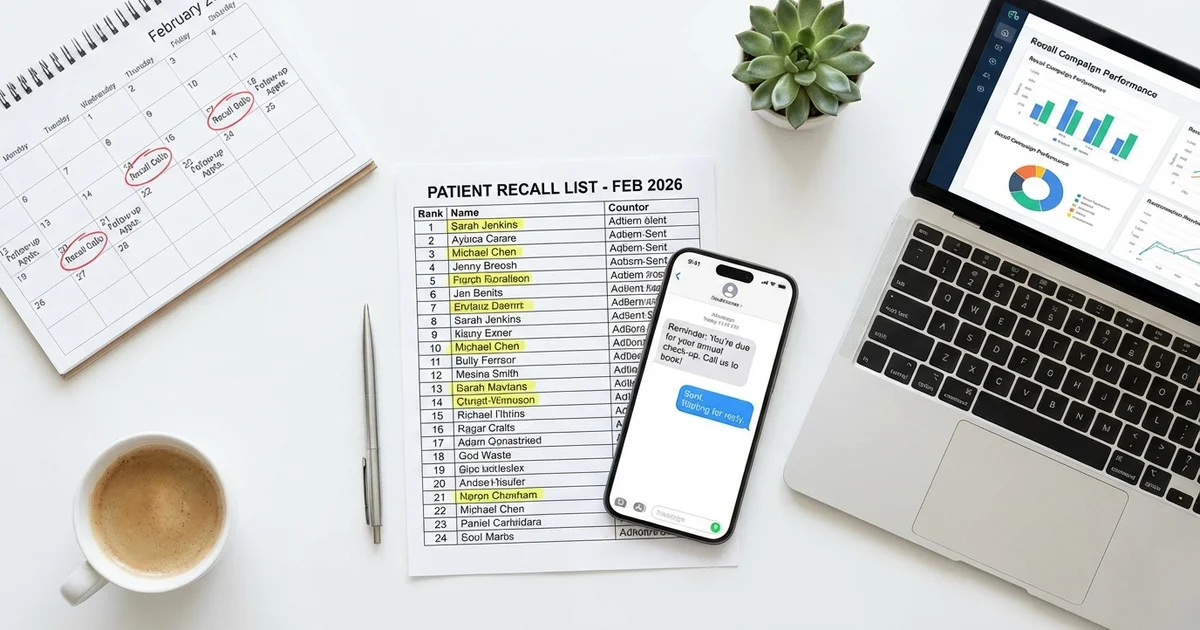
Channel effectiveness: Text messages: 95%+ open rate. Phone calls: Only effective if patient answers (many don’t). Email: Lower engagement but provides documentation. Combination approach outperforms any single channel.
Strategy 3: Same-Day Contact for Cancellations
When a patient cancels or no-shows, immediate follow-up prevents permanent loss.
Protocol: Contact within 4 hours of cancellation/no-show. Offer rescheduling immediately (not “call us back”). Have specific time slots ready to offer. Log all contact attempts for non-responders.
Strategy 4: Waitlist Management for Fill-Ins
Cancellations create revenue gaps. Active waitlists recover them.
System requirements: Maintain list of patients wanting earlier appointments. Automated notification when slots open. Staff enableed to offer same-day or next-day openings. Target: Fill 50%+ of last-minute cancellations.
Strategy 5: Tracking and Accountability
What gets measured gets managed. Track recall metrics at multiple levels.
Metrics to monitor:
| Metric | Frequency | Target |
|---|---|---|
| Pre-scheduling rate | Weekly | 90%+ |
| Confirmation rate | Weekly | 80%+ |
| Recall rate (overall) | Monthly | 85%+ |
| Same-day cancellation recovery | Weekly | 50%+ |
| Recall rate by hygienist | Monthly | Consistency |
For DSOs: Compare locations against network averages. Identify best performers and replicate their processes.
What Technology Is Required for Effective Recall?
Effective hygiene recall at scale requires integrated technology:
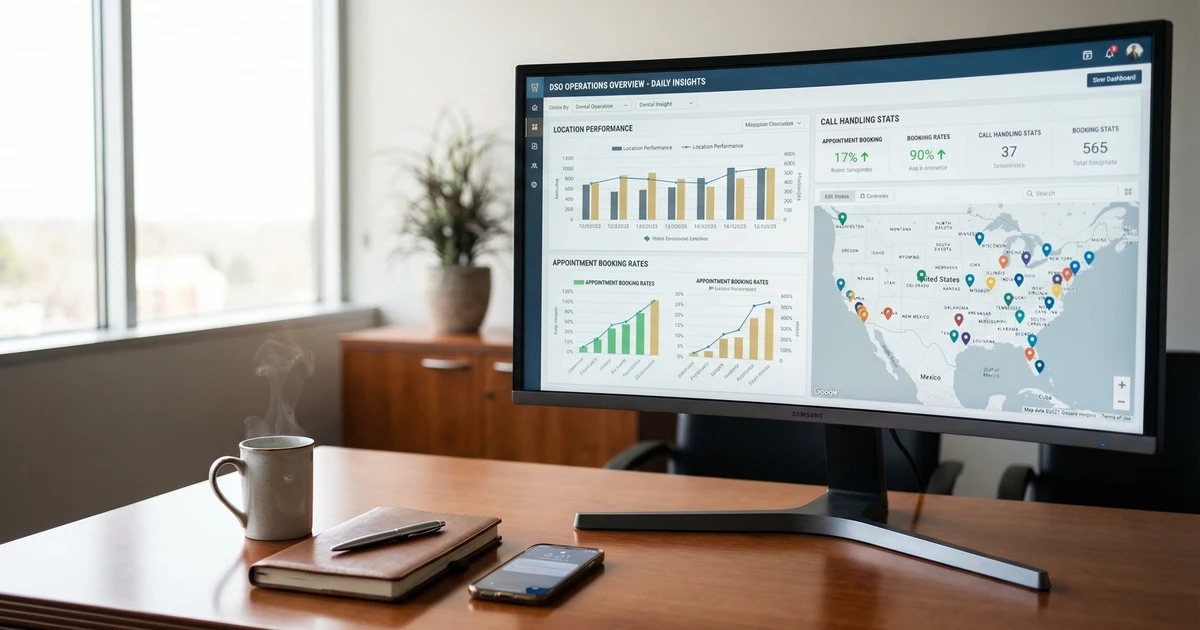
Essential capabilities: PM system that accurately identifies due patients. Automated multi-channel reminder sequences. Two-way texting for patient responses. Online self-scheduling for easy rebooking. Dashboard tracking recall metrics by location, hygienist, time period.
Integration matters: Disconnected systems (separate PM, reminder, and scheduling tools) create data gaps and staff friction. Integrated platforms that connect patient data, outreach, and scheduling drive higher performance.
What Should DSOs Consider for Multi-Location Recall?
Multi-location dental groups face additional complexity:
Standardization vs. local autonomy:
- Standard recall protocols across all locations
- Consistent messaging and timing
- Local flexibility for staff scheduling and capacity
- Centralized tracking with location-level accountability
Centralized support options:
- Central call center for reminder calls (consistent execution)
- Shared waitlist across nearby locations
- Network-level reporting and benchmarking
- Best practice sharing from high-performing sites
Acquisition integration:
- Assess recall rate during due diligence
- Budget for recall improvement in first 12 months post-acquisition
- Apply proven protocols to newly acquired practices
- Expect 6-12 months to reach target performance
Key Takeaways
Dental hygiene recall is the operational lever with the highest impact on practice valuation and revenue:
- Hygiene recall rates separate $500,000 practices from $1,000,000 practices
- Only 17% of dentists have most patients on proper 6-month recall
- Average practices achieve 65-74% recall; optimal is 85%+
- A 10-15% improvement in retention adds $84,000-108,000 annually per practice
- Pre-scheduling at every visit is the single most effective intervention
- Multi-channel reminders (text + phone + email) outperform single-channel
- For DSOs: standardize processes, track by location, share best practices
The hygiene department is the “unsung hero” of successful dental practices. Investment in recall systems delivers returns that exceed most marketing or patient acquisition initiatives.
For general recall strategies applicable across healthcare, see our patient recall service guide. For reactivation of long-dormant patients, review our 30-day reactivation playbook. Dental groups that answer every call book more patients. Talk to our team about how MyBCAT helps dental practices capture every opportunity.