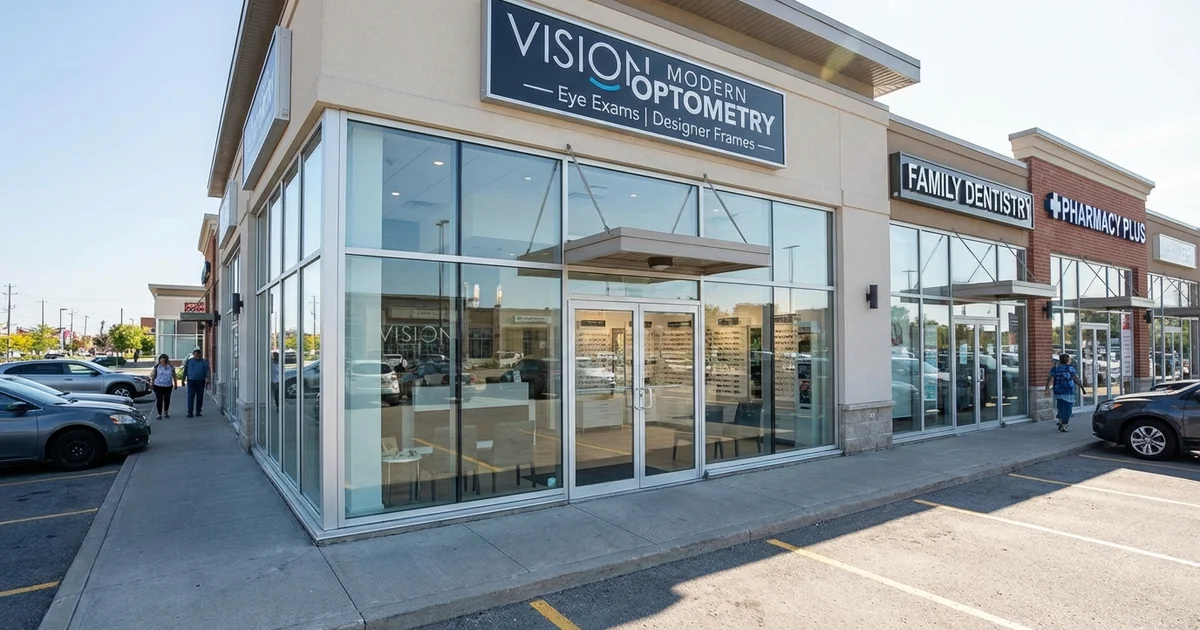

Starting a new optometric practice requires significant investment in equipment and technology. The choices you make during this phase will affect patient care quality, operational efficiency, and your practice’s financial health for years to come. This checklist breaks down what you need, what it costs, and how to prioritize your purchases.
For a complete overview of launching your practice, see our guide on starting an optometric practice.
Table of Contents
- What Exam Room Equipment Do You Need?
- What Optical Dispensary Equipment Is Required?
- What Practice Management Technology Do You Need?
- What Is the Total Investment Estimate?
- How Should You Prioritize Equipment Purchases?
- What Financing Options Are Available?
- What Common Equipment Mistakes Should You Avoid?
- Next Steps
What Exam Room Equipment Do You Need?
Every optometry practice needs a properly equipped exam room. These are non-negotiable items that patients expect and clinical care demands.
What Primary Diagnostic Equipment Is Essential?
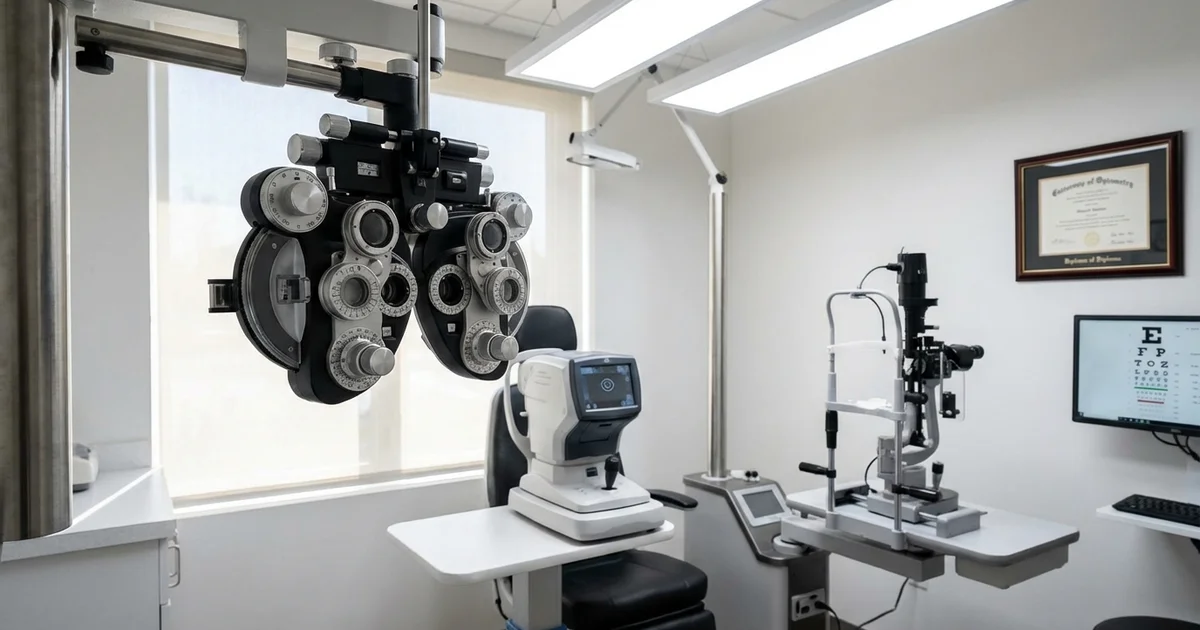
Phoropter and Refractor The phoropter is your primary tool for determining refractive error. Manual phoropters run between $3,000 and $8,000, while digital phoropters with automated features cost $15,000 to $25,000. Digital models speed up exams and reduce technician training time, but manual units work reliably for decades.
Slit Lamp Biomicroscope Essential for anterior segment examination. Basic models start around $2,500, with high-end imaging slit lamps reaching $15,000 or more. Consider your patient volume and specialty focus when choosing. A mid-range model ($5,000 to $8,000) serves most general practices well.
Auto-Refractor/Keratometer These combination units provide objective refraction measurements and corneal curvature data. Budget $8,000 to $20,000 depending on features. The time savings in patient flow often justify the higher-end models within two years.
Tonometer Intraocular pressure measurement is standard care. Non-contact tonometers cost $5,000 to $12,000. Goldmann applanation tonometers run $1,500 to $3,000 plus the slit lamp adapter. Most practices eventually have both.
Retinal Imaging Fundus cameras have become expected rather than optional. Entry-level non-mydriatic cameras start at $15,000. Advanced OCT systems with fundus photography capabilities run $40,000 to $100,000. Consider starting with a basic fundus camera and adding OCT as revenue grows.
What Secondary Equipment Should You Consider?
Visual Field Analyzer Critical for glaucoma management and neurological assessments. Humphrey-type automated perimeters range from $15,000 to $35,000. If you plan to co-manage with ophthalmology, invest in equipment they recognize and trust.
Lensometer For verifying eyeglass prescriptions. Manual models cost $500 to $2,000. Automatic lensometers run $3,000 to $8,000. The automatic versions integrate better with EHR systems and reduce transcription errors.
Trial Lens Set Always have a backup for phoropter failures and specialty fits. Budget $800 to $2,000 for a complete set with frames.
What Optical Dispensary Equipment Is Required?
If you plan to dispense eyewear, the optical area needs its own equipment investment.
Frame Inventory Starting frame inventory typically requires $15,000 to $40,000 depending on your brand positioning. Premium practices need higher investment. Budget practices can start smaller but need adequate selection to avoid patient frustration.
Edger and Lens Finishing Equipment In-house finishing capability runs $20,000 to $50,000 for quality equipment. Many new practices start with lab partnerships and add in-house capability once volume justifies the investment.
Frame Boards and Displays Professional displays cost $3,000 to $15,000 for a properly merchandised optical area. This is where patient perception of value forms. Cost-effective displays suggest cost-effective products.
PD Ruler and Digital Pupillometer Manual PD measurement tools cost under $100. Digital pupillometers with height measurements run $1,500 to $5,000. The digital versions improve accuracy and patient confidence.
What Practice Management Technology Do You Need?
Technology infrastructure affects every patient interaction and staff workflow. These systems determine how smoothly your practice operates day to day.
Which Electronic Health Records (EHR) System Should You Choose?
EHR systems designed for optometry range from $300 to $800 per month for cloud-based solutions. On-premise systems cost more upfront but may have lower long-term costs for established practices. Key features to evaluate:
Exam templates designed for eye care. Integration with diagnostic equipment. E-prescribing capability. Insurance verification tools. Patient portal functionality.
The transition cost includes implementation, training, and temporary productivity loss. Budget three to six months for full proficiency.
What Should You Look for in Practice Management Software?
Separate from or integrated with EHR, practice management handles scheduling, billing, and administrative functions. Monthly costs range from $200 to $600 per provider. Look for:
Appointment scheduling with patient self-booking. Insurance claims processing. Payment processing integration. Reporting and analytics. Inventory management for optical.
What Communication Systems Are Needed?
Patient communication has evolved beyond a receptionist answering calls. Modern practices need:
Phone System VoIP systems cost $20 to $50 per line monthly with features like call routing, voicemail-to-email, and analytics. Traditional phone systems still work but lack flexibility.
Patient Communication Platform Automated appointment reminders, recall messages, and two-way texting cost $100 to $400 monthly. The reduction in no-shows typically covers this expense within the first month.
After-Hours Coverage Patients call outside business hours. How you handle those calls affects both patient satisfaction and revenue capture. Options include voicemail (free but loses patients), answering services ($200 to $500 monthly), or virtual receptionist services that integrate with your practice management system.
What Is the Total Investment Estimate?
Here is a realistic breakdown of equipment costs for a new optometric practice:
| Category | Budget Range | Notes |
|---|---|---|
| Primary diagnostic equipment | $40,000 - $80,000 | Essential exam room items |
| Secondary diagnostic equipment | $20,000 - $50,000 | Add as specialties develop |
| Optical dispensary | $40,000 - $100,000 | Varies with positioning |
| Technology infrastructure | $5,000 - $15,000 | Initial setup costs |
| Monthly software and services | $700 - $2,000 | Recurring operational costs |
Total initial equipment investment typically ranges from $100,000 to $250,000 depending on practice scope and brand positioning.
How Should You Prioritize Equipment Purchases?
Not everything needs to be purchased at once. Here is a suggested priority order:
Phase 1: Opening Day Requirements Phoropter and chair. Slit lamp. Auto-refractor. Tonometer. Basic fundus camera. EHR and practice management. Phone and communication system.
Phase 2: First Six Months
- Visual field analyzer
- Enhanced retinal imaging
- Frame inventory expansion
- Patient communication platform
Phase 3: Growth Phase
- OCT
- In-house edging capability
- Advanced diagnostic equipment
- Additional exam lanes
What Financing Options Are Available?
Equipment financing typically offers better rates than general business loans because equipment serves as collateral. Common options include:
- Equipment loans through banks (5-10% interest, 5-7 year terms)
- Manufacturer financing programs (often promotional rates)
- Equipment leases (preserve capital, may include service agreements)
- SBA loans (competitive rates, longer approval process)
Leasing often makes sense for technology that will need replacement within five years. Buying typically works better for equipment with 10+ year lifespans.
What Common Equipment Mistakes Should You Avoid?
Overspending on opening day You do not need every piece of equipment immediately. Start with essentials and add as patient volume and revenue support expansion.
Ignoring integration Equipment that does not talk to your EHR creates manual work and data entry errors. Verify integration capability before purchasing.
Skipping maintenance contracts Diagnostic equipment requires calibration and service. Budget for maintenance contracts or risk expensive emergency repairs.
Underestimating technology costs Monthly software fees, internet service, IT support, and cybersecurity add up. Budget $1,500 to $3,000 monthly for technology operations beyond initial setup.
Neglecting the optical area The optical generates significant revenue in most practices. A poorly equipped or merchandised optical area limits growth potential.
The operational foundation of a successful optometry practice extends beyond clinical excellence. Practices that track their key performance indicators consistently outperform those that rely on intuition alone. Metrics like patient conversion rate, average revenue per visit, optical capture rate, and recall compliance rate provide the data needed to make informed decisions. When these numbers are visible to the entire team, accountability improves naturally. Staff members who understand how their daily work connects to practice performance tend to take more ownership of outcomes. The practices achieving the strongest results are those that combine rigorous measurement with a patient-centered culture, creating an environment where both clinical quality and operational efficiency reinforce each other.
Keeping every appointment slot filled starts with answering every call. Talk to our team about how MyBCAT helps optometry practices capture more patients and reduce revenue leakage.
Next Steps
Equipment selection is one component of launching a successful practice. For guidance on the broader picture including business planning, compliance, staffing, and marketing, review our comprehensive Starting an Optometric Practice 101 guide.
Last Updated: January 2026
Sources: SBA - Loans, Review of Optometric Business
Related Reading
How Does Technology Selection Affect Long-Term Practice Value?
The technology decisions you make when opening your practice affect not just current operations but also future practice value if you decide to sell or bring in partners. Buyers evaluate technology infrastructure as part of their due diligence process, and practices running outdated or poorly integrated systems face valuation discounts. Electronic health records, modern diagnostic equipment, and integrated practice management systems signal operational maturity and reduce the perceived risk for potential acquirers.
Planning technology purchases with an eye toward scalability also matters for practices that anticipate adding associates or opening additional locations. Systems that support multi-provider scheduling, role-based access controls, and centralized reporting make growth transitions smoother and less disruptive to daily operations. The incremental cost of choosing scalable technology at the outset is typically far less than the cost of replacing systems later when you outgrow them.