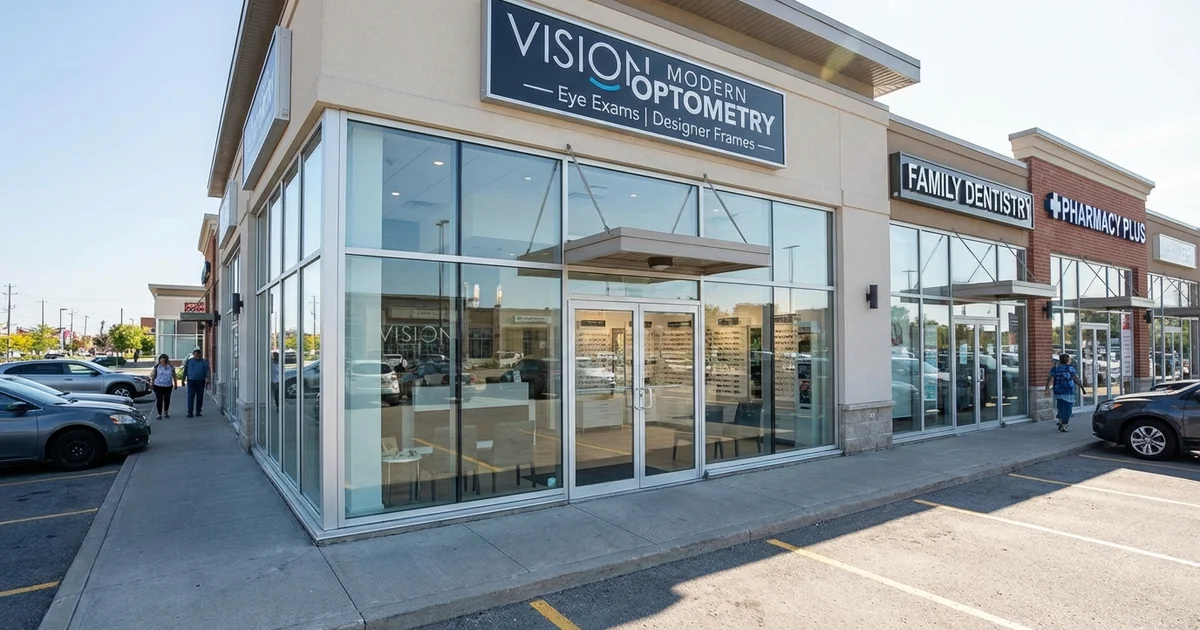

Optometry Private Practice: A Complete Guide to Success
Running an optometry private practice gives you something corporate settings never can: complete control over patient care, your schedule, and your income. According to the American Optometric Association, private practice owners earn an average of $175,000 annually, with top performers exceeding $300,000. But these numbers only tell part of the story. The real advantage lies in building equity in a business you own outright.
Table of Contents
- Why Do Optometrists Choose Private Practice Over Corporate Employment?
- What Are the Essential Steps to Starting Your Optometry Private Practice?
- How Do You Build Your Optometry Private Practice Patient Base?
- What Does Operational Excellence Look Like in Your Optometry Private Practice?
- How Should You Manage Finances for Long-Term Success?
- How Do You Scale Your Optometry Private Practice?
- What Common Mistakes Should You Avoid?
- Your Path Forward
Why Do Optometrists Choose Private Practice Over Corporate Employment?
The decision to open or join an optometry private practice often comes down to three factors: autonomy, income potential, and professional satisfaction.
Corporate optometry positions offer stability but come with significant trade-offs. Production quotas, limited appointment times, and pressure to sell specific products can compromise patient care. Many optometrists report spending just 10-15 minutes per comprehensive exam in corporate settings.
Private practice flips this equation. You decide how long each appointment takes. You choose which products to recommend based on patient needs, not profit margins. You build lasting relationships with patients who return year after year.
What Is the Financial Reality of Private Practice?
The income gap between employed and practice-owner optometrists widens significantly after the first five years. While starting salaries may appear similar, practice owners who reinvest in their business typically see:
40-60% higher income by year five. Business equity worth 0.5-1.0x annual collections at sale. Tax advantages through business deductions. Retirement account options unavailable to employees.
What Are the Essential Steps to Starting Your Optometry Private Practice?
Opening a practice requires careful planning across multiple fronts. Rushing any of these steps creates problems that compound over time.
How Do You Choose the Right Location and Demographics?
Your location determines 70% of your practice’s potential success. Look beyond rent prices to understand the patient population you will serve.
Key factors to evaluate:
| Factor | What to Look For |
|---|---|
| Population density | Minimum 15,000 people within 5-mile radius |
| Median household income | $50,000+ for full-service practices |
| Age distribution | Mix of families and seniors for diverse revenue |
| Competition | One OD per 7,500-10,000 population is healthy |
| Vision insurance coverage | Higher employer coverage means more routine exams |
Avoid locations with three or more established practices already serving the same demographics unless you have a specific niche strategy.
How Much Should You Invest in Equipment and Technology?
The minimum equipment investment for a new optometry private practice ranges from $75,000 to $150,000 depending on whether you purchase new or refurbished equipment. Essential items include:
Exam Lane Equipment: Phoropter and projector or digital acuity system. Slit lamp biomicroscope. Direct and indirect ophthalmoscopes. Tonometer (Goldmann or handheld). Retinoscope. Keratometer or topographer.
Diagnostic Equipment: Visual field analyzer. OCT (optical coherence tomography). Fundus camera or optomap. Autorefractor.
Many new practice owners start with one fully equipped exam lane and add a second within 12-18 months as patient volume grows.
What Legal Structure and Compliance Requirements Apply?
Choosing the right business entity affects your taxes, liability, and ability to bring on partners later. Most optometry practices operate as:
Professional Corporations (PC). Professional Limited Liability Companies (PLLC). S-Corporations.
Consult with a healthcare attorney and CPA before making this decision. The wrong structure can cost thousands annually in unnecessary taxes or leave you personally liable for business debts.
Compliance requirements include HIPAA policies, OSHA standards, state optometry board regulations, and proper credentialing with insurance panels. Budget 3-6 months for insurance credentialing alone.
How Do You Build Your Optometry Private Practice Patient Base?
Empty appointment slots kill new practices faster than any other factor. Your patient acquisition strategy needs to generate 30-50 new patients monthly within the first year to reach profitability.
What Insurance Panel Strategy Works Best?
Despite lower reimbursements, accepting vision plans dramatically increases patient volume. A practice accepting VSP, EyeMed, and Davis Vision has access to 80% of insured patients in most markets.
The key is understanding which plans to prioritize:
VSP: Largest vision plan, essential for most markets. EyeMed: Growing rapidly, second-largest network. Medical plans: Higher reimbursements for medical eye care. Medicare: Critical for practices near retirement communities.
Managing insurance claims efficiently becomes increasingly important as your panel participation grows.
What Marketing Strategies Actually Work?
Forget expensive billboard campaigns. The most effective marketing for an optometry private practice focuses on:
Online Presence: Google Business Profile optimization (free, high impact). Website with online scheduling capability. Reviews management on Google and Healthgrades.
Community Connections: Local business networking groups. School vision screenings. Senior center presentations. Pediatrician and PCP referral relationships.
Patient Retention: Recall systems for annual exams. Contact lens subscription programs. Text appointment reminders.
New practices should allocate 5-8% of projected revenue to marketing in year one, dropping to 2-4% once established.
What Does Operational Excellence Look Like in Your Optometry Private Practice?
Efficient operations separate thriving practices from those barely surviving. Small improvements compound into significant revenue differences.
Which Staffing Models Scale Effectively?
Most new practices start with minimal staff and add positions as volume justifies the expense:
Launch (0-500 patients):
- Doctor plus one optician/technician cross-trained in front desk duties
Growth (500-1500 patients):
- Doctor, one dedicated front desk/billing person, one optician
Established (1500+ patients):
- Doctor, front desk coordinator, billing specialist, 1-2 opticians, technician
Staff costs typically run 22-28% of collections. Higher percentages indicate overstaffing or underperformance; lower percentages often mean the doctor is doing tasks that should be delegated.
How Should You Integrate Technology Systems?
Disconnected systems create data entry duplication, errors, and wasted time. Your practice management system, EHR, and optical software should share patient data smoothly.
Modern practice management approaches emphasize integration over individual feature sets. A slightly less powerful system that connects properly outperforms a feature-rich system that creates information silos.
Essential technology stack include practice management and ehr (combined or integrated), optical dispensing software, patient communication platform, online scheduling integration, and credit card processing with statement posting.
How Much Do Missed Calls Really Cost?
Every unanswered phone call represents potential lost revenue. Studies show 62% of calls to healthcare practices go unanswered or reach voicemail. Of those callers, 85% will not leave a message and 30% will call a competitor instead.
Understanding your phone answer rate reveals opportunities most practice owners overlook. Solutions range from additional staff coverage to AI-powered answering systems that handle routine inquiries 24/7.
How Should You Manage Finances for Long-Term Success?
Profitable optometry private practices share common financial discipline. They track specific metrics, maintain adequate reserves, and reinvest strategically.
Which Key Performance Indicators Should You Monitor?
Track these metrics monthly:
| Metric | Target Range |
|---|---|
| Collections rate | 95%+ of net charges |
| Overhead percentage | 55-65% of collections |
| Average revenue per patient | $350-450 |
| Optical capture rate | 65-75% |
| Contact lens capture | 40-50% |
| Days in accounts receivable | Under 35 days |
Practices consistently missing these targets need operational intervention, not just harder work.
How Do You Plan Cash Flow for a New Practice?
New practices typically take 12-18 months to reach break-even. Plan your initial capitalization accordingly:
6-12 months of fixed expenses in reserve. Line of credit established before you need it. Separate business and personal accounts from day one. Monthly financial review, not just annual.
Undercapitalization causes more practice failures than competition or location combined.
How Do You Scale Your Optometry Private Practice?
Once your practice stabilizes, growth opportunities multiply. The most common paths include:
When Should You Add Associate Optometrists?
An associate OD can double patient capacity without doubling overhead. Most practices can support an associate when the owner is personally seeing 25+ patients daily and turning away new patients.
Compensation models vary include straight salary ($90,000-$130,000), base plus production bonus, and pure production percentage (25-30% of collections).
The right model depends on your practice culture and the associate’s experience level.
Should You Expand Your Physical Space?
Before leasing additional space, maximize your current footprint include add an exam lane if space permits, extend hours rather than square footage, and optimize patient flow to reduce bottlenecks.
Only expand physically when you have documented demand that current capacity cannot meet.
What Specialty Services Drive Growth?
Medical optometry services offer higher reimbursements and differentiation from competitors:
Dry eye treatment centers. Myopia management programs. Low vision rehabilitation. Sports vision training. Medical billing optimization for increased revenue.
Each specialty requires additional training and equipment investment but creates patient loyalty and referral opportunities competitors cannot easily replicate.
What Common Mistakes Should You Avoid?
Learning from others’ failures saves time and money. These errors appear repeatedly in struggling practices:
Financial Mistakes: Overspending on cosmetic buildout versus equipment. Accepting every insurance plan without analyzing profitability. Neglecting collections on past-due accounts. Mixing personal and business expenses.
Operational Mistakes:
- Hiring too quickly during busy periods
- Ignoring online reviews and reputation
- Failing to implement recall systems
- Underinvesting in staff training
Strategic Mistakes:
- Competing on price instead of value
- Copying competitor strategies without understanding your market
- Expanding before stabilizing current operations
- Ignoring patient feedback patterns
Your Path Forward
Building a successful optometry private practice requires patience, planning, and persistent execution. The financial and professional rewards justify the effort for optometrists willing to treat their practice as a business, not just a job.
Start with the fundamentals: choose your location carefully, equip efficiently, staff appropriately, and market consistently. Then refine your operations based on data, not intuition. The practices that thrive long-term make decisions based on metrics and adjust course based on results.