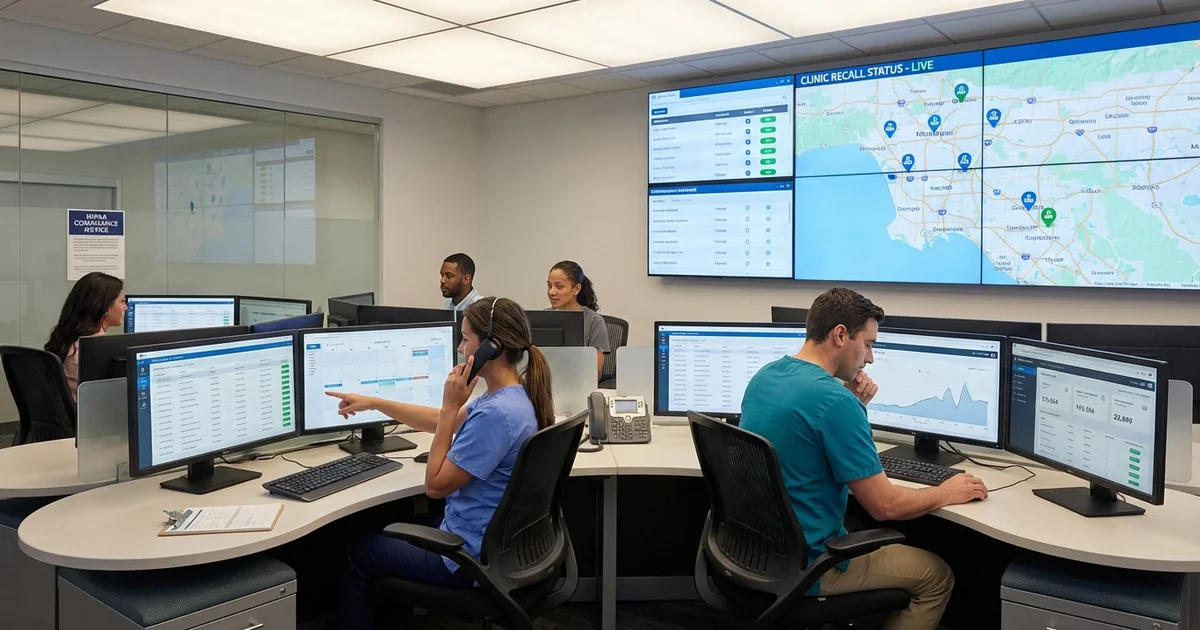


Private equity firms have invested over $200 billion in healthcare over the past decade, and the KPIs they track tell a clear story about what drives valuation. Whether you are operating a PE-backed healthcare platform, preparing for a PE transaction, or simply want to run your multi-location practice with PE-level discipline, understanding these metrics is essential. This guide details the specific KPIs that PE firms monitor, how they impact valuation multiples, and how to optimize them at every stage of the investment lifecycle.
Table of Contents
- Why Do PE Healthcare KPIs Matter?
- What Is the PE Healthcare KPI Framework?
- How Do KPI Priorities Change by Investment Stage?
- How Should You Design a KPI Dashboard?
- Which Levers Improve KPIs That Drive Valuation?
- What Are the Common PE Healthcare KPI Pitfalls?
- How Do You Build KPI Infrastructure?
Why Do PE Healthcare KPIs Matter?
PE firms approach healthcare investments with a clear thesis: operational improvements and scale drive EBITDA growth, which multiplies into enterprise value at exit. The KPIs they track reflect this:
The valuation equation:
Enterprise Valuation Formula
Enterprise Value = EBITDA x Multiple
The multiple is driven by several interconnected factors. Consistent revenue and EBITDA growth demonstrates the platform’s ability to generate increasing returns over time. Operational efficiency metrics show that the business converts resources into revenue effectively. Clinical quality indicators reduce risk for buyers who need assurance that outcomes will support favorable payer contracts. Market position and scalability signal room for continued growth through acquisitions or organic expansion. Management depth and systems give buyers confidence that the platform can operate independently and continue executing after ownership changes.
Current multiples (2025-2026):
| Performer Category | EBITDA Multiple | Key Characteristics |
|---|---|---|
| Elite platforms | 12-15x | 85%+ occupancy, under 5% readmissions, 20%+ margins |
| Strong performers | 10-12x | Consistent growth, solid operations |
| Average | 8-10x | Stable but undifferentiated |
| Underperformers | 6-8x | Operational challenges, high use |
A 50-location dental group generating $10 million EBITDA at a 10x multiple is worth $100 million. Improve operations to command 12x and value increases to $120 million (a $20 million gain from operational excellence alone).
What Is the PE Healthcare KPI Framework?
PE firms organize healthcare KPIs into three categories that collectively drive valuation:
Category 1: Financial KPIs
Financial metrics measure profitability, cash generation, and capital efficiency.
Primary Financial KPIs:
| KPI | Formula | Target | Why It Matters |
|---|---|---|---|
| EBITDA Margin | EBITDA / Revenue x 100 | 18-25%+ | Core profitability measure |
| Operating Margin | Operating Income / Revenue x 100 | 12-18% | Operational efficiency |
| Revenue Growth | (Current - Prior) / Prior x 100 | 8-15% YoY | Growth trajectory |
| Revenue per Location | Total Revenue / Locations | Varies by specialty | Scale efficiency |
| Revenue per Provider | Total Revenue / FTE Providers | $400K-800K+ | Provider productivity |
Use and Liquidity KPIs:
| KPI | Formula | Target | Risk Threshold |
|---|---|---|---|
| Debt/EBITDA | Total Debt / EBITDA | Under 3.5x | Above 5x = concern |
| Interest Coverage | EBITDA / Interest Expense | Above 3x | Under 2x = risk |
| CFO/Total Debt | Cash Flow from Operations / Total Debt | Above 25% | Under 15% = liquidity risk |
| Days Cash on Hand | Cash / (Operating Expenses / 365) | 45-90 days | Under 30 days = stress |
These financial KPIs matter because they address the fundamental questions buyers ask. EBITDA margin directly impacts the numerator of enterprise value, making it the single most scrutinized metric in any healthcare transaction. Growth rate affects buyer confidence in forward projections, which determine how much they are willing to pay today for future cash flows. Use ratios impact risk assessment and purchase structure, since high debt levels constrain deal flexibility and increase buyer risk. Liquidity metrics signal operational stability, and practices that struggle with cash flow are perceived as higher risk regardless of their profitability on paper.
Category 2: Operational KPIs
Operational metrics measure how efficiently the business converts resources into revenue.
Volume and Capacity KPIs:
| KPI | Formula | Target | Notes |
|---|---|---|---|
| Patient Volume | Visits or encounters per period | Growth trend | Leading indicator |
| Capacity Utilization | Actual Volume / Max Capacity x 100 | 75-85% | Balance efficiency vs. access |
| Provider Utilization | Productive Hours / Available Hours x 100 | 80-90% | Revenue driver |
| Chair/Bed Occupancy | Filled Units / Total Units x 100 | 80%+ | Fixed cost use |
Efficiency KPIs:
| KPI | Formula | Target | Notes |
|---|---|---|---|
| Revenue per Encounter | Total Revenue / Total Encounters | Specialty-specific | Pricing power |
| Cost per Encounter | Total Costs / Total Encounters | Declining trend | Efficiency measure |
| Collection Rate | Payments / Charges x 100 | 95%+ | Revenue cycle health |
| Days in A/R | (A/R / Revenue) x 365 | Under 35 days | Cash flow efficiency |
Retention and Growth KPIs:
| KPI | Formula | Target | Notes |
|---|---|---|---|
| Patient Retention Rate | Returning Patients / Total Patients x 100 | 80-90% | Revenue stability |
| New Patient Volume | New patients per period | Growth trend | Pipeline health |
| Same-Store Growth | YoY growth excluding acquisitions | 3-8% | Organic strength |
| Patient Lifetime Value | Average Revenue x Average Tenure | Increasing | Long-term value |
These operational metrics matter for valuation because they reveal the underlying health of the business beyond the financials. Volume growth demonstrates genuine market demand for the platform’s services. Utilization efficiency impacts margins at scale, and even small improvements in provider utilization compound across dozens of locations. Patient retention signals sustainable revenue streams, which is why DSO patient retention strategies have become a central focus for PE-backed dental platforms. Same-store growth is particularly important because it proves organic value creation, distinguishing platforms that grow through operational excellence from those that simply roll up acquisitions without improving them.
Category 3: Clinical and Quality KPIs
Clinical quality increasingly drives both reimbursement and valuation in value-based care environments.
Quality Outcome KPIs:
| KPI | Target | Valuation Impact |
|---|---|---|
| 30-Day Readmission Rate | Under 5% | Value-based contract eligibility |
| Hospital-Acquired Infection Rate | Under 1% | Risk indicator |
| Complication Rate | Specialty-specific | Quality signal |
| Mortality Rate (acute care) | Below expected | Regulatory and reputation |
Patient Experience KPIs:
| KPI | Target | Valuation Impact |
|---|---|---|
| Patient Satisfaction Score | 85%+ satisfied | Retention predictor |
| Net Promoter Score (NPS) | 50+ | Growth predictor |
| Online Review Rating | 4.5+ stars | Reputation and acquisition |
| Patient Complaint Rate | Under 2% | Risk indicator |
Clinical Efficiency KPIs:
| KPI | Target | Notes |
|---|---|---|
| Average Length of Stay | Below benchmark | Cost driver |
| Case Mix Index | Above 1.5 (Medicare) | Complexity/reimbursement |
| Treatment Plan Acceptance | 60-75%+ | Revenue opportunity |
| Recall/Compliance Rate | 70-85%+ | Preventive care completion |
Quality KPIs matter for valuation because they increasingly determine revenue through value-based care contracts that tie reimbursement to outcomes rather than volume alone. Poor quality creates regulatory scrutiny and litigation risk that sophisticated buyers factor into their risk models. High patient satisfaction correlates directly with retention and referrals, both of which drive the organic growth that commands premium multiples. Clinical efficiency impacts costs at every encounter, and practices that deliver the same quality outcomes in less time and with fewer resources generate higher margins that flow through to EBITDA.
How Do KPI Priorities Change by Investment Stage?
PE firms weight KPIs differently depending on the investment stage:
Stage 1: Early Investment (Year 0-1)
Focus: Establish baseline, identify quick wins, build infrastructure
Priority KPIs:
| KPI | Why | Target |
|---|---|---|
| EBITDA baseline | Foundation for value creation | Document accurately |
| Cash flow | Ensure operations are funded | Positive CFO |
| Provider productivity | Identify improvement opportunities | Benchmark against peers |
| Patient retention | Assess baseline loyalty | Document and improve |
Typical early-investment initiatives focus on creating the infrastructure for measurement and capturing quick wins. Financial reporting standardization ensures all locations report metrics consistently, which is a prerequisite for meaningful comparison and improvement. Revenue cycle optimization addresses billing and collections inefficiencies that erode cash flow. Quick-win operational improvements, such as no-show reduction programs and scheduling optimization, demonstrate momentum to the investment committee. Management team assessment identifies leadership gaps that need to be filled before the growth phase begins.
Stage 2: Growth Phase (Year 2-3)
Focus: Scale operations, execute M&A, drive organic growth
Priority KPIs:
| KPI | Why | Target |
|---|---|---|
| Same-store growth | Prove organic value creation | 5-8%+ annually |
| New location ramp | M&A execution | 80%+ of pro forma within 12 months |
| EBITDA margin expansion | Operational use | 200-400 bps improvement |
| Integration metrics | M&A synergy capture | Synergy realization 90%+ |
Growth-phase initiatives shift toward scaling the platform. Tuck-in acquisitions add locations and patient volume at attractive multiples, with detailed acquisition due diligence ensuring each deal meets return thresholds. Centralizing services like billing, HR, and procurement captures economies of scale that improve margins across every location. Provider recruitment and retention programs ensure that clinical capacity keeps pace with growing patient demand. Technology and systems upgrades enable the platform to manage complexity as it scales from a handful of locations to dozens.
Stage 3: Maturity/Pre-Exit (Year 4-5+)
Focus: Optimize for exit, demonstrate sustainability, minimize risk
Priority KPIs:
| KPI | Why | Target |
|---|---|---|
| EBITDA sustainability | Buyer due diligence | Consistent or growing |
| Debt/EBITDA | Exit structure | Under 4x for clean exit |
| Quality metrics | Risk mitigation | Top quartile |
| Management depth | Buyer confidence | Strong bench |
Pre-exit initiatives focus on presenting the strongest possible profile to potential buyers. Operational fine-tuning addresses remaining inefficiencies and ensures that KPI trends are moving in the right direction. Risk mitigation efforts cover compliance gaps and quality concerns that could surface during due diligence and reduce the offered multiple. Management team strengthening builds a leadership bench that gives buyers confidence the platform will continue performing after the transition. Exit preparation and positioning involves packaging the investment story with the data and documentation that sophisticated buyers expect to see.
How Should You Design a KPI Dashboard?
PE-backed healthcare companies need dashboards that serve multiple stakeholders:
Executive Dashboard (Weekly/Monthly)
| Metric | Actual | Target | Trend | Status |
|---|---|---|---|---|
| Revenue MTD | $4.2M | $4.1M | ↑3% | ✓ |
| EBITDA MTD | $0.9M | $0.85M | ↑5% | ✓ |
| Patient Volume | 8,450 | 8,300 | ↑2% | ✓ |
| Collections | $3.8M | $3.9M | ↓1% | ⚠️ |
| New Patients | 485 | 450 | ↑8% | ✓ |
Board/PE Sponsor Dashboard (Monthly/Quarterly)
| Category | KPI | Actual | Budget | YoY | vs. Peers |
|---|---|---|---|---|---|
| Financial | EBITDA | $11M | $10.5M | +12% | Top 25% |
| Financial | Margin | 21% | 20% | +200bps | Above avg |
| Operational | Utilization | 78% | 75% | +3% | Top 25% |
| Quality | NPS | 72 | 70 | +5 | Average |
| Growth | Same-store | 6% | 5% | +2% | Top 25% |
Location-Level Dashboard (Daily/Weekly)
| Metric | Today | WTD | MTD | vs. Goal |
|---|---|---|---|---|
| Visits | 42 | 185 | 820 | 98% |
| Collections | $18,500 | $82,000 | $365,000 | 95% |
| No-shows | 3 | 12 | 48 | Above ⚠️ |
| New patients | 4 | 18 | 78 | 102% |
| Provider hours | 32 | 142 | 620 | 100% |
Which Levers Improve KPIs That Drive Valuation?
Lever 1: Revenue per Encounter
Current state assessment:
- Benchmark against specialty peers
- Analyze by payer, service, provider
- Identify pricing and coding opportunities
Improvement strategies:
- Fee schedule optimization
- Coding accuracy and completeness
- Service mix enhancement
- Ancillary capture
Impact: 5-15% revenue improvement without volume increase → direct EBITDA impact
Lever 2: Provider Productivity
Current state assessment:
- Calculate revenue per FTE provider
- Analyze schedule utilization
- Identify bottlenecks and variation
Improvement strategies:
- Schedule optimization
- Support staff use (extended team)
- No-show and cancellation management
- Administrative burden reduction
Impact: 10-20% productivity improvement → proportional revenue growth
Lever 3: Patient Retention
Current state assessment:
- Calculate true retention rate (not just active patients)
- Identify attrition drivers
- Segment by patient value
Improvement strategies include deploying recall and reactivation programs that systematically bring patients back for scheduled care, investing in patient experience improvements that increase satisfaction and reduce churn, adding convenience enhancements like online scheduling and extended hours that remove barriers to booking, and implementing proactive engagement through automated reminders and personalized outreach.
Impact: 5% retention improvement → 15-20% revenue impact over time
Lever 4: Operational Efficiency
Current state assessment:
- Benchmark costs per encounter vs. peers
- Analyze labor productivity
- Identify waste and redundancy
Improvement strategies:
- Centralized services (billing, credentialing, HR)
- Procurement optimization
- Technology automation
- Workflow standardization
Impact: 200-500 bps margin improvement → significant EBITDA gain
Lever 5: Revenue Cycle Performance
Current state assessment:
- Analyze days in A/R by payer
- Calculate denial rate and reasons
- Measure collection rate
Improvement strategies:
- Eligibility verification
- Prior authorization automation
- Denial management program
- Patient payment collection
Impact: 10-15 day A/R improvement → cash flow acceleration + reduced bad debt
What Are the Common PE Healthcare KPI Pitfalls?
Pitfall 1: EBITDA Adjustments
The problem: Overly aggressive add-backs that do not hold up in due diligence.
What PE firms verify:
- One-time vs. recurring adjustments
- Pro forma synergies vs. realized
- Normalization methodology
Best practice: Be conservative in adjustments; let the buyer find upside, not downside.
Pitfall 2: Same-Store vs. Total Growth
The problem: Reporting total growth that is mostly M&A without proving organic capability.
What PE firms want to see:
- Clear same-store growth calculation
- Evidence of organic value creation
- Post-acquisition performance tracking
Best practice: Track and report same-store separately; demonstrate organic growth capability.
Pitfall 3: Quality Metric Gaming
The problem: Optimizing metrics without improving actual quality.
Risks:
- Regulatory scrutiny
- Patient harm
- Reputation damage
Best practice: Improve underlying care processes; metrics will follow.
Pitfall 4: Short-Term Margin Optimization
The problem: Cutting costs that hurt long-term growth (marketing, training, maintenance).
What PE firms recognize:
- Deferred maintenance liability
- Provider burnout and turnover
- Patient experience degradation
Best practice: Sustainable efficiency, not short-term cost cutting.
How Do You Build KPI Infrastructure?
Data Requirements
| Need | Solution |
|---|---|
| Single source of truth | Enterprise data warehouse |
| Consistent definitions | KPI dictionary with formulas |
| Timely data | Automated daily/weekly feeds |
| Historical context | 3+ years of comparable data |
Reporting Cadence
| Report | Frequency | Audience |
|---|---|---|
| Flash report | Daily | Operations |
| Weekly scorecard | Weekly | Management |
| Monthly package | Monthly | Leadership + PE sponsor |
| Board package | Quarterly | Board of directors |
Technology Stack
| Layer | Tools |
|---|---|
| Source systems | PMS, EHR, billing, HR |
| Data integration | ETL/integration platform |
| Data warehouse | Cloud data platform |
| BI/visualization | Dashboard tools |
| Alerting | Exception notification |
Key Takeaways
PE-backed healthcare operations succeed by tracking and optimizing the right KPIs:
Financial KPIs (the foundation):
- EBITDA and margins drive valuation numerator
- Use ratios affect risk and structure
- Cash flow ensures operational stability
Operational KPIs (the engine):
- Volume and utilization drive revenue
- Efficiency improvements drop to margin
- Retention stabilizes revenue base
Quality KPIs (the differentiator):
- Increasingly tied to reimbursement
- Risk mitigation for buyers
- Sustainable value creation signal
The multiple impact: Strong KPIs across all categories can expand multiples by 2-4 turns, representing tens or hundreds of millions in enterprise value for scaled platforms.
The bottom line: The KPIs that PE firms track are not mysterious. They are the fundamental drivers of healthcare business value. Operating with PE-level KPI discipline creates value whether or not you ever engage with private equity.
For detailed strategies on improving patient retention metrics, see our DSO patient retention strategy guide. For EBITDA optimization tactics, review our multi-location healthcare EBITDA guide.
Related Reading
- Scaling Optometry Network Operations: 5 to 50 Locations
- Multi-Location Healthcare EBITDA: Retention Protects Margins
- DSO Patient Retention Strategy: Scaling to 10+ Locations
Multi-location healthcare groups need standardized intake across every site. Talk to our team about how MyBCAT provides centralized call answering and patient access for growing organizations.
Sources
- MGMA: Foundational Benchmarks and KPIs for Medical Practice Operations
- NetSuite: Healthcare KPIs and Metrics
- Messina Group: Key Metrics for Healthcare Providers
- Cofi.ai: KPIs for Private Equity Portfolio Management
- InsightSoftware: Healthcare KPIs and Metric Examples
- Maven Financial Partners: Financial KPIs for Healthcare Practice
- Zone & Co: KPIs for PE-Backed Companies