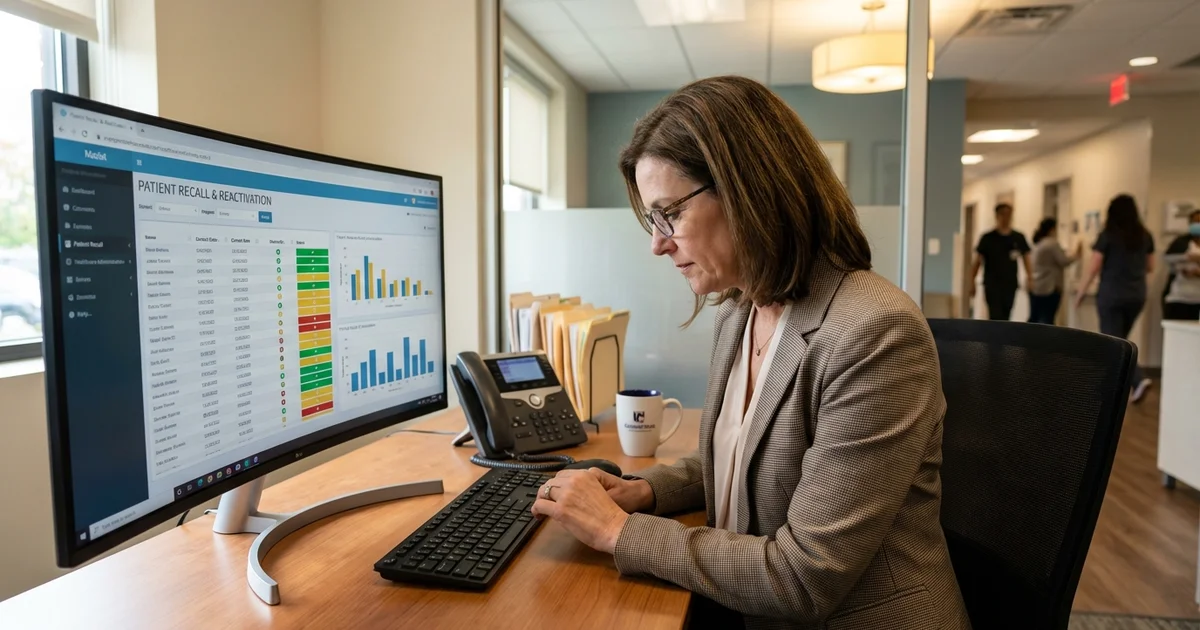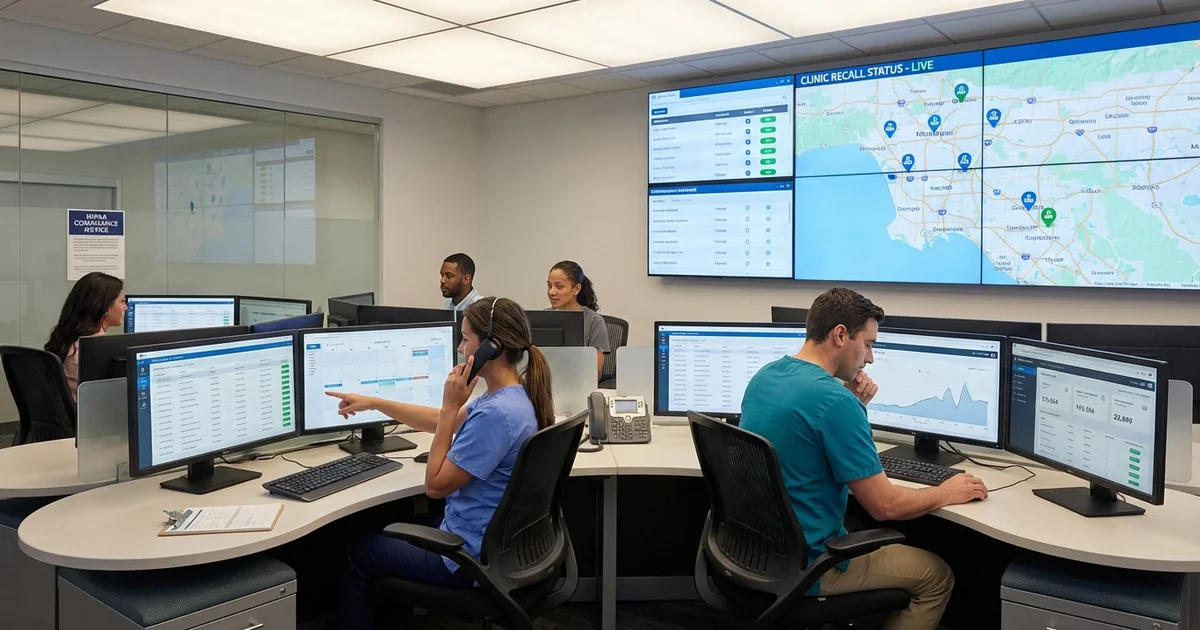

When Vision Care Partners (name changed for confidentiality) analyzed their patient data across 12 optometry locations, they found a problem hiding in plain sight: 4,200 patients who had not visited in 12-24 months. At an average lifetime value of $2,800 per patient, they were looking at $11.7 million in at-risk revenue slowly walking out the door. This case study documents how they recovered 847 of those patients and generated $312,000 in first-year revenue using a systematic dormant patient reactivation campaign, without offering a single discount.
Table of Contents
- What Was the Challenge?
- What Was the Approach?
- What Were the Results?
- How Did Individual Locations Perform?
- What Worked and Why?
- What Would They Do Differently?
- What Was the Ongoing Impact?
What Was the Challenge?
Vision Care Partners operates 12 optometry locations across three metropolitan areas, serving 28,000 active patients who had been seen within the previous 18 months. Their average revenue per patient runs $520 annually, with an average patient tenure of 5.4 years. Like many growing healthcare groups, their marketing budget was focused almost entirely on new patient acquisition.
The dormant patient problem became visible during a routine data audit. The team discovered 4,200 patients who had not been seen in 12-24 months and an additional 2,100 patients inactive for more than 24 months. Combined, 22% of their patient database was inactive. The practice was spending heavily to acquire new patients while simultaneously losing existing ones through the back door, creating the classic replacement treadmill that erodes growth.
Previous efforts to address the problem had produced disappointing results. Generic “we miss you” postcards generated a 2% response rate. Birthday and anniversary emails saw minimal engagement. A front desk initiative to “call the recall list” was abandoned after two weeks because practice managers were too consumed with daily operations to sustain the effort. The outreach lacked consistency, follow-through, and any real measurement of what was working.
What Was the Approach?
Vision Care Partners engaged a dedicated reactivation team to execute a 90-day campaign targeting their 4,200 dormant patients (12-24 months inactive). Rather than trying another generic outreach blast, they designed the campaign around three core principles that addressed the specific reasons their previous attempts had failed. Each principle targeted a different failure mode: discounting devalued the service, single-channel outreach missed patients, and lack of accountability let effort fade.
Principle 1: No Discounts
The leadership team made a deliberate decision: no discounts, no promotions, no “special offers.” This was counterintuitive to some on the team, but the reasoning was sound. Discounting trains patients to wait for deals before booking. It devalues the clinical service in the patient’s mind. And patients who return for a discount often do not convert to full-price services on subsequent visits, creating a revolving door of discount-seekers rather than loyal patients. The full framework behind this approach is detailed in our guide to reactivation without discounts.
Instead of leading with price, the messaging emphasized the value of the care itself. Texts and emails highlighted the health benefits of annual comprehensive eye exams. They reminded patients that vision insurance benefits had renewed and were available to use. Messages were personalized with the provider’s name (“Dr. [Name] would like to see you”) to reinforce the doctor-patient relationship. And they promoted convenience factors like new online scheduling and extended hours that removed friction from the booking process.
Principle 2: Multi-Channel, Multi-Touch
The campaign used a sequenced approach across channels:
Week 1-2: SMS campaign to all 4,200 patients
SMS Template
Hi [Name], it's Vision Care [Location]. Dr. [Provider] noticed your annual eye exam is overdue. Your vision benefits are ready to use! Reply YES to schedule or call [phone]. Reply STOP to opt out.
Week 3-4: Email follow-up to non-responders (3,100 patients) Subject: “[Name], your annual eye exam is due”. Emphasized vision benefit utilization. One-click scheduling link. Provider photo to reinforce relationship.
Week 5-8: Phone outreach to high-value non-responders (1,200 patients) Prioritized by estimated lifetime value. Scripted calls with objection handling. Specific appointment times offered. Voicemail with callback number.
Week 9-12: Final push and postcard to unreachables (400 patients) Second phone attempt. Postcard to patients with no valid phone/email. “Last chance” SMS to mobile-reachable non-responders.
Principle 3: Location-Level Accountability
One of the biggest reasons previous recall efforts failed was the absence of location-level tracking. When performance is measured only at the network level, underperforming locations hide behind the average. This is a common pattern in multi-location healthcare operations where standardization gaps erode overall results. Each of the 12 locations received weekly performance reports:
| Metric | Tracked | Why |
|---|---|---|
| Patients targeted | By location | Baseline |
| Contact rate | SMS/phone | Outreach effectiveness |
| Response rate | By channel | Message resonance |
| Appointments booked | Running total | Progress to goal |
| Show rate | Completed/booked | Quality of bookings |
| Revenue generated | From reactivations | ROI measurement |
This created healthy competition between locations and surfaced best practices from top performers.
What Were the Results?
The 90-day campaign produced results that exceeded expectations across every metric. The combination of no-discount messaging, multi-channel sequencing, and location-level accountability created a system where each component reinforced the others.
What Did the 90-Day Campaign Achieve?
| Metric | Result |
|---|---|
| Patients targeted | 4,200 |
| Patients contacted (reached) | 3,640 (87%) |
| Patients responding | 1,124 (31% of contacted) |
| Appointments booked | 912 (81% of responders) |
| Appointments completed | 847 (93% show rate) |
| Reactivation rate | 20.2% |
What Was the Financial Impact?
| Revenue Category | Amount |
|---|---|
| Exam revenue (847 × $185 avg) | $156,695 |
| Eyewear/contact lens revenue (58% uptake) | $142,380 |
| Follow-up appointments (within 90 days) | $13,200 |
| Total first-year revenue | $312,275 |
What Did the Campaign Cost?
| Cost Item | Amount |
|---|---|
| SMS platform (4-message sequence) | $672 |
| Email platform | Included in existing tools |
| Dedicated calling team (8 weeks) | $4,800 |
| Postcards (400 pieces) | $320 |
| Campaign management | $1,200 |
| Total campaign cost | $6,992 |
What Was the ROI?
The return on investment calculation tells a compelling story. With $312,275 in first-year revenue against a total campaign cost of $6,992, the first-year ROI comes to 4,365%, a return multiple of 44.7x. For every dollar invested in the campaign, the practice recovered nearly $45.
The lifetime value math is even more striking. At an average patient lifetime value of $2,800 over 5.4 years, the 847 reactivated patients represent $2.37 million in recovered lifetime value. This is revenue that was walking out the door before the campaign and would have required significant new patient acquisition spend to replace. For a detailed methodology on calculating these returns, see our patient reactivation ROI guide.
How Did Individual Locations Perform?
Performance varied significantly across the 12 locations, reinforcing the importance of tracking results at the individual site level rather than relying on network averages. The spread between the best and worst performing locations was nearly 8 percentage points, which translated to meaningful revenue differences.
| Location | Targeted | Reactivated | Rate | Revenue |
|---|---|---|---|---|
| Downtown Metro | 520 | 124 | 23.8% | $45,600 |
| Suburban North | 410 | 98 | 23.9% | $36,100 |
| Eastside | 380 | 82 | 21.6% | $30,200 |
| West Valley | 350 | 71 | 20.3% | $26,200 |
| Southgate | 320 | 62 | 19.4% | $22,800 |
| Lakeside | 340 | 65 | 19.1% | $24,000 |
| Northbrook | 290 | 54 | 18.6% | $19,900 |
| Riverside | 310 | 57 | 18.4% | $21,000 |
| Hilltop | 280 | 49 | 17.5% | $18,100 |
| Central Park | 360 | 62 | 17.2% | $22,800 |
| Oakwood | 320 | 51 | 15.9% | $18,800 |
| Meadowview | 320 | 72 | 22.5% | $26,500 |
When the team analyzed why some locations outperformed others, clear patterns emerged. The top performers, with reactivation rates of 23-24%, shared two characteristics: strong existing provider-patient relationships and consistent messaging execution across all channels. Staff at these locations followed the scripts, made timely follow-up calls, and treated the campaign as a priority rather than a distraction.
Mid-range performers at 17-20% executed the basics but lacked the consistency and follow-through of the top tier. Below-average performers at 15-17% turned out to have practical problems: stale contact data that reduced reach and inconsistent follow-up that allowed warm leads to cool. The network average of 20.2% masked these differences, which is precisely why location-level tracking proved so important. For more on how healthcare operations benchmarks reveal performance gaps, see our benchmarking guide.
What Worked and Why?
Why Did Provider Personalization Matter?
Messages that referenced the specific doctor by name (“Dr. [Provider] noticed your exam is overdue”) outperformed generic practice messages by 35% in response rate.
How Did Vision Benefit Reminders Help?
Many patients did not realize their vision insurance had renewed and their benefits were available. The benefit-focused messaging resonated include “your vision benefits are ready to use”, “your plan covers an annual exam at no additional cost”, and “use your benefits before they expire”.
Why Did Specific Appointment Offers Convert Better?
When calling patients, offering specific times (“I have Tuesday at 2pm or Thursday at 10am”) converted better than open-ended questions (“When would you like to come in?”).
How Did Objection Handling Training Help?
Phone staff received scripts for common objections:
- “I’ve been too busy” → Acknowledge, offer convenient times
- “I’m not having any problems with my vision” → Emphasize preventive nature
- “I’ve been going somewhere else” → Thank them, update records, close gracefully
- “I can’t afford it right now” → Mention insurance coverage, payment options
Why Was Show Rate Focus Critical?
Booking appointments meant nothing without showing up. The campaign included:
- Confirmation requests at booking
- Reminder sequence (3-day, 1-day, same-day)
- Pre-appointment call for high-value patients
- Result: 93% show rate vs. network average of 82%
What Would They Do Differently?
The post-campaign review was candid about what could have been better. These lessons apply to any practice considering a similar effort.
The biggest regret was not starting with data cleaning. Twelve percent of phone numbers and 18% of emails in the dormant list were invalid, which meant the campaign was wasting effort on unreachable patients from day one. Running a data hygiene pass before launch would have improved contact rates and allowed the team to focus resources on patients they could actually reach.
The team also wished they had segmented more aggressively from the start. Patients dormant for 12-18 months responded at 24%, while those dormant for 18-24 months responded at just 15%. This nine-point gap suggests that earlier intervention produces significantly better results. Practices that implement automated patient recall segmentation can catch patients before they drift into the harder-to-reach longer-dormant category.
The 8-week phone campaign could have been extended to 10-12 weeks. Returns would have diminished, but the marginal cost of additional calls was low relative to the value of each reactivated patient.
Perhaps most importantly, the campaign was a one-time effort when it should have been the foundation for an ongoing process. Establishing a monthly reactivation cadence would prevent the dormant list from accumulating again and turn patient recovery into a predictable revenue stream rather than a periodic project.
What Was the Ongoing Impact?
The six-month follow-up data told an encouraging story about the quality of the reactivated patients. Seventy-eight percent of them returned for a second visit or purchase within six months, which is higher than the typical patient retention rate for the network. Average revenue per reactivated patient reached $680, compared to $520 for the network average. This makes sense: these patients already had a relationship with the practice and were returning to a provider they knew, which made them more likely to proceed with recommended eyewear and follow-up care.
The campaign also catalyzed lasting operational changes. Vision Care Partners implemented monthly reactivation runs targeting newly dormant patients before they drift past the 12-month mark. They built automated SMS sequences that trigger at 6, 9, and 12 months of inactivity. Location-level accountability dashboards became a permanent fixture in monthly operations reviews. And they added quarterly deep-dive campaigns targeting long-dormant patients who need more intensive outreach.
With these ongoing processes in place, the group projects recovering 1,200 or more dormant patients annually, representing $400,000 or more in additional revenue. All of this comes without increasing the marketing spend on new patient acquisition, making it one of the most capital-efficient growth strategies available to multi-location healthcare groups.
Key Takeaways
This case study demonstrates several principles for dormant patient recovery:
-
Discounts are not necessary: The value proposition is the care itself. Patients return for the relationship and their health, not for 20% off.
-
Multi-channel beats single-channel: SMS reached the most patients, but phone converted the most. Using all channels captured the full opportunity.
-
Provider personalization matters: “Dr. [Name] noticed…” outperformed generic practice messaging significantly.
-
Location-level tracking creates accountability: Performance varies. Identify best practices from top performers and address gaps in underperformers.
-
Show rate is as important as booking rate: A booked appointment that no-shows recovers zero revenue. Build confirmation and reminder processes into the campaign.
-
Recently dormant patients respond better: Focus resources on 12-18 month dormant before they drift further away.
-
One campaign is not enough: Ongoing reactivation processes prevent dormant lists from accumulating.
For the complete framework to run your own reactivation campaign, see our 30-day dormant patient reactivation playbook. For ROI calculation methodology, review our patient reactivation ROI guide.
Enterprise groups can scale these results with our multi-location recall solution.
Related Reading
- Centralized Patient Recall for Multi-Location Healthcare
- Optometry Recall Campaign: Beat the January Slump
- Dental Hygiene Recall: The DSO Valuation Driver
Reactivating dormant patients is one of the highest-ROI investments a practice can make. Talk to our team about how MyBCAT combines call answering with patient recall to keep your schedule full.
Sources
- Arini AI: Improve Patient Retention and Recall Rate
- Artisan Growth Strategies: Healthcare Patient Acquisition and Retention Costs
- RevenueWell: Perfect Dental Recall Campaign Note: Company name and specific details have been modified to protect confidentiality. Results are based on actual campaign performance metrics.