
Dental Service Organizations face a unique challenge: maintaining the personalized care that keeps patients coming back while operating at scale across dozens or hundreds of locations. The DSOs that achieve sustainable growth understand that patient retention is not a local problem to be solved independently at each practice. It is an enterprise capability requiring centralized systems, standardized processes, and location-level accountability. This guide provides the framework for building retention systems that scale.
Table of Contents
- Why Is DSO Patient Retention So Critical?
- What Are the Retention Benchmarks for DSOs?
- How Should You Structure the Centralized Retention Framework?
- How Do You Build the Technology Stack?
- What Does a Standardized Recall Workflow Look Like?
- How Do You Create Location-Level Accountability?
- What Staff Training and Scripts Are Needed?
- How Should You Manage the Retention Team?
- How Do You Measure Retention Success?
- What Are the Most Common DSO Retention Challenges?
- What Does the DSO Retention Roadmap Look Like?
Why Is DSO Patient Retention So Critical?
Patient retention directly impacts DSO economics and enterprise value:
The math of retention at scale:
- Average DSO practice: 2,500 active patients
- Annual attrition rate: 15-25% (industry typical)
- Cost to acquire new patient: $150-300
- Lifetime value of retained patient: $3,000-5,000
For a 20-location DSO:
- Total active patients: 50,000
- At 20% attrition: 10,000 patients lost annually
- Replacement cost: $1.5-3 million per year
- If retention improves 5%: $375,000-750,000 saved annually
Enterprise value impact: DSOs typically trade at 6-12x EBITDA. Every percentage point of improved retention that flows to the bottom line multiplies across that multiple. A $500,000 annual retention improvement at 8x EBITDA represents $4 million in enterprise value.
What Are the Retention Benchmarks for DSOs?
High-performing DSOs target these metrics across their networks:
Tier 1: Core Retention Metrics
| Metric | Industry Average | Top Quartile DSO | Elite DSO |
|---|---|---|---|
| Annual active patient retention | 75-80% | 82-87% | 88-92% |
| Hygiene recall rate | 65-70% | 75-82% | 83-88% |
| Treatment plan acceptance | 40-50% | 55-65% | 68-75% |
| Patient NPS score | 30-40 | 50-60 | 65+ |
Tier 2: Operational Metrics
| Metric | Target | Why It Matters |
|---|---|---|
| Pre-scheduled hygiene rate | 80%+ | Reduces recall outreach volume |
| Confirmation rate | 90%+ | Predicts show rate |
| No-show rate | Under 8% | Direct chair utilization impact |
| Same-day fill rate | 75%+ | Recovers cancellation revenue |
| Reactivation rate (12-24 month dormant) | 20-30% | Captures at-risk patients |
Tier 3: Growth Indicators
| Metric | Target | Calculation |
|---|---|---|
| Net patient growth | 5%+ annually | New patients - lost patients |
| Family capture rate | 60%+ | Family members as patients |
| Referral rate | 15%+ | New patients from referrals |
How Should You Structure the Centralized Retention Framework?
Scaling retention requires balancing central control with local execution:
What Should You Centralize?
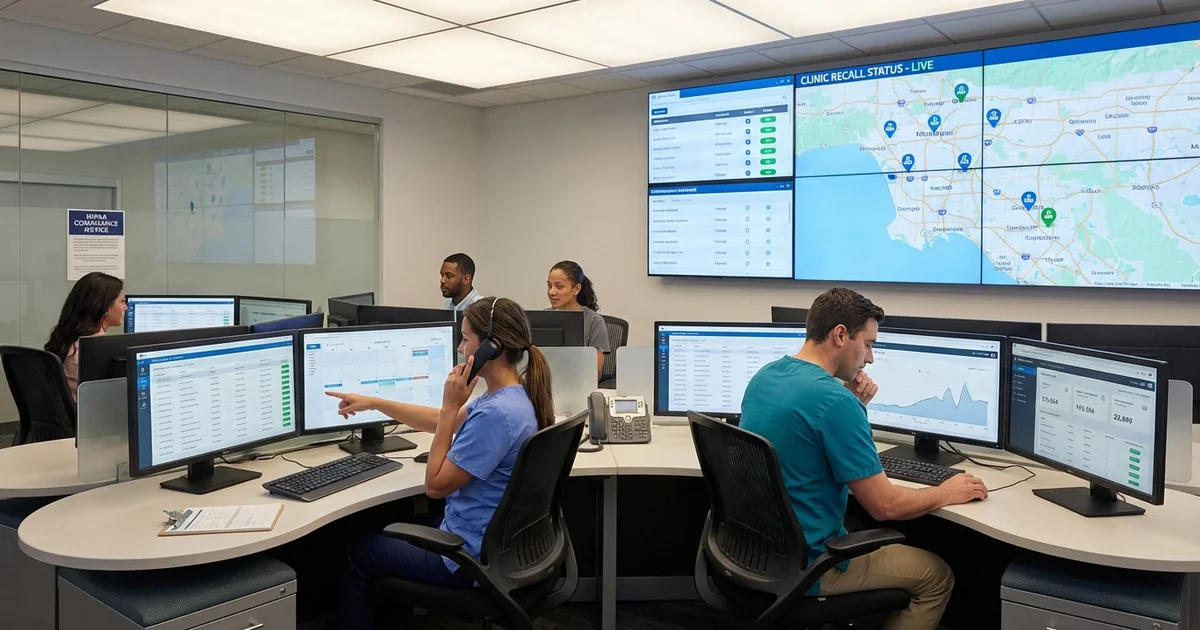
The technology infrastructure forms the backbone of centralized retention. An enterprise-deployed practice management system ensures all locations operate from the same patient database, eliminating data silos that create gaps in recall. A patient communication platform capable of SMS, email, and voice outreach at scale handles the volume of messages required across dozens of locations. Analytics and reporting dashboards give leadership real-time visibility into performance, while call center infrastructure supports phone-based outreach for high-value patients who do not respond to digital channels. For a comprehensive look at centralized recall implementation, see our dedicated guide.
Standards and protocols ensure consistency without stifling the local relationships that drive patient loyalty. Recall cadence and timing rules define when each touchpoint fires so that every patient receives outreach on the same schedule regardless of location. Message templates and brand voice keep communication professional and recognizable. Escalation pathways for non-responders ensure that patients who do not engage with digital outreach are escalated to phone calls and, if necessary, to provider-level intervention. Script libraries for common scenarios equip staff to handle objections and questions consistently, using proven language that converts conversations into booked appointments.
Monitoring and accountability close the loop between strategy and execution. Weekly performance reporting by location creates visibility that prevents underperformance from hiding behind network averages. Benchmark comparisons across the network help locations understand where they stand relative to their peers, fostering healthy competition. Exception flagging alerts leadership when a location falls below minimum thresholds, triggering intervention before small problems become chronic issues. Best practice identification from top performers allows the network to learn from what is working and replicate it across all sites, which is a hallmark of effective healthcare operations benchmarking.
What Should Remain Local?
While centralization handles the systems and standards, certain elements must remain local to preserve the patient relationships that drive retention. Provider-specific personalization means that recall messages reference the actual dentist or hygienist the patient sees, reinforcing the personal connection. Local appointment availability matters because each practice has its own schedule, and offering specific appointment times rather than generic reminders produces significantly higher booking rates. Community and market nuances affect messaging tone and channel preferences, since a suburban family practice communicates differently than an urban professional-focused office.
Execution timing should adapt to local conditions. Call scheduling should work around patient volume so that front desk staff are not trying to make recall calls during peak check-in times. Staff assignments should reflect local capacity, with busier practices receiving additional support from the centralized team during high-volume periods.
Continuous improvement at the location level allows the network to learn from ground-level experience. Location-specific problem solving addresses issues that may not be visible in network-wide data, such as a nearby competitor opening or a major employer leaving the area. Staff feedback and suggestions often surface practical improvements that leadership would not identify from dashboards alone. Local patient preference learning captures insights about what works in each market and feeds them back into the centralized system.
How Do You Build the Technology Stack?
DSO retention technology must support both scale and personalization:
What Are the Core Platform Requirements?
The practice management system must support enterprise-wide operations with a unified patient database that spans all locations, built-in recall automation capabilities, multi-location reporting that allows both network-level and site-level analysis, and integration APIs that connect to the communication tools needed for outreach.
The patient communication platform handles the actual outreach. It needs automated recall sequences across SMS and email channels, two-way texting with intelligent routing so that patient replies reach the right person, voice and IVR capabilities for high-touch outreach to patients who require phone calls, appointment confirmation workflows that reduce no-shows, and HIPAA-compliant infrastructure throughout. Choosing the right balance of automated versus human recall is one of the most consequential decisions in building the technology stack.
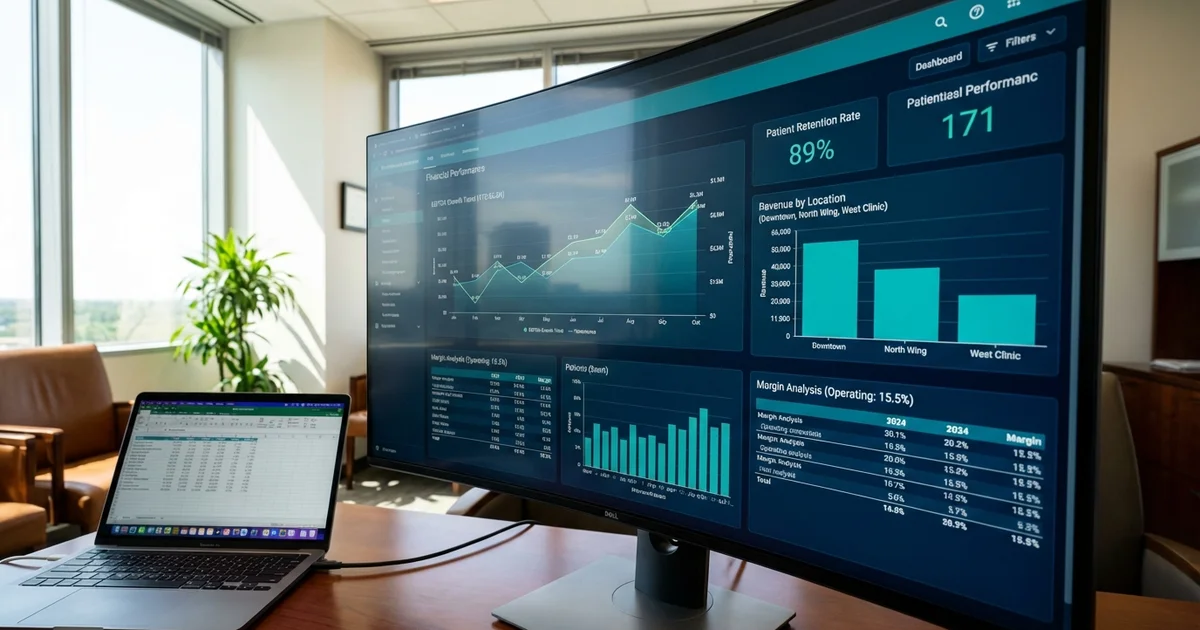
Analytics and reporting translate all this activity into actionable intelligence. Real-time dashboards by location give practice managers the data they need to make daily decisions. Network-wide aggregation helps DSO leadership see the big picture and allocate resources. Trend analysis and forecasting predict future recall volumes and resource needs. Exception reporting and alerts surface problems early so they can be addressed before they impact retention metrics.
How Does the Integration Architecture Work?
The key integration points determine how well the system functions in practice. Patient data must sync at a daily minimum, though real-time synchronization is preferred to avoid recall messages going out to patients who have already booked. Appointment status updates need to flow bidirectionally so that the recall system and PMS always agree on whether a patient is scheduled. Response capture and attribution track which messages prompted a patient to book, enabling the team to optimize channel mix and messaging over time. Outcome tracking records whether each booked patient actually showed up, rescheduled, or no-showed, completing the feedback loop that drives continuous improvement.
Build vs. Buy Considerations
| Capability | Build In-House | Buy/Partner |
|---|---|---|
| PMS | Rarely | Almost always |
| Communication platform | Sometimes (at scale) | Usually |
| Recall automation | Sometimes | Often |
| Analytics | Often (custom needs) | Sometimes |
| Call center | Depends on scale | Often for specialized |
Rule of thumb: Build when you have unique requirements that differentiate your operations. Buy when the capability is commoditized and your advantage comes from execution, not technology.
What Does a Standardized Recall Workflow Look Like?
Consistency across locations requires documented workflows:
What Is the Standard Recall Sequence?
Pre-appointment scheduling (at checkout):
Automated reminder sequence (standard):
Non-responder escalation:
How Should You Handle Overdue Patient Outreach?
0-30 days overdue:
30-90 days overdue:
90+ days overdue:
How Do You Create Location-Level Accountability?
DSO retention success requires clear ownership at each location:
What Should the Practice Manager Dashboard Show?
Every practice manager should see daily:
| Metric | Today | This Week | MTD | vs. Goal |
|---|---|---|---|---|
| Recall appointments scheduled | 12 | 58 | 180 | 95% |
| Confirmations pending | 15 | - | - | - |
| No-shows today | 1 | 5 | 12 | Good |
| Same-day fills | 1 | 4 | 10 | 83% |
| Patients past due (0-30) | - | - | 45 | Action |
| Patients past due (30-90) | - | - | 28 | Monitor |
What Should the Weekly Location Review Cover?
Every location should review weekly:
Performance metrics:
- Recall rate vs. target and vs. network average
- Pre-scheduling rate
- No-show rate
- Reactivation results
Action items:
- Patients requiring phone outreach
- Data quality issues (bad phone numbers, emails)
- Schedule optimization opportunities
Escalation triggers:
- Recall rate below 70% for two consecutive weeks
- No-show rate above 12%
- Pre-scheduling rate below 70%
How Does Network-Level Governance Work?
DSO leadership monitors:
Monthly scorecards:
- Location ranking by retention metrics
- Trend direction for each location
- Network average and standard deviation
- Top and bottom performer analysis
Quarterly deep dives:
- Root cause analysis for underperformers
- Best practice extraction from top performers
- Technology and process improvement initiatives
- Resource allocation for struggling locations
What Staff Training and Scripts Are Needed?
Retention depends on consistent patient interactions:
What Is the Front Desk Pre-Scheduling Script?
Pre-Scheduling Script
"[Patient Name], Dr. [Provider] would like to see you in 6 months for your next cleaning. Let's get that scheduled now so you don't have to worry about it later. I have availability in [Month]. Do mornings or afternoons usually work better for you?"
[Schedule appointment]
"Great, you're all set for [Date] at [Time]. You'll receive a reminder before your appointment. Is this phone number still the best way to reach you?"
What Is the Phone Recall Script?
Phone Recall Script
"Hi, this is [Name] from [Practice Name]. I'm calling for [Patient Name].
[If patient answers:]
Hi [Patient], I'm calling because your [cleaning/exam] is coming due, and Dr. [Provider] wanted me to reach out. We have availability [offer 2-3 specific times]. What works best for you?
[If resistance:]
I understand schedules are busy. What if we looked at [alternative times]? The important thing is getting you in when it works for your schedule.
[If voicemail:]
Hi [Patient], this is [Name] from [Practice Name]. Your [cleaning] is due, and we'd love to see you. Please call us back at [phone] or text us to schedule. You can also book online at [website]. We look forward to hearing from you!"
How Should You Handle Common Objections?
“I’m too busy right now.”
Response Script
"I completely understand. Everyone's calendar is packed these days. What if we scheduled something a few weeks out when things might calm down? I can also send you a link to book online whenever it's convenient."
“I’ll call you back.”
Response Script
"Absolutely! Before I let you go, what day of the week usually works best? I can text you a few options for that day."
“I’m not having any problems.”
Response Script
"That's great to hear! The goal of your regular visits is to keep it that way. Dr. [Provider] likes to see you every 6 months to catch any changes early, when they're much easier to address."
“I don’t have insurance anymore.”
Response Script
"I'm sorry to hear that. We do work with patients in that situation. We have payment options and can discuss what makes sense for you. Your oral health is important regardless of insurance status."
How Should You Manage the Retention Team?
Larger DSOs may centralize some or all retention functions:
When Should You Consider a Centralized Call Center?
A centralized call center becomes worth considering when the DSO reaches 20 or more locations, when local execution varies significantly across sites, when individual practices struggle to staff retention roles alongside their other front desk responsibilities, or when the organization needs extended hours coverage that individual offices cannot provide. The typical structure includes dedicated patient retention representatives who specialize in recall outreach, call routing by location and provider so that patients hear familiar practice names, access to all location schedules so agents can offer specific appointment times, and quality monitoring with coaching to maintain consistent performance. For a deeper look at healthcare call center ROI at the enterprise level, see our analysis.
Metrics for call center:
| Metric | Target |
|---|---|
| Calls per hour | 15-20 |
| Contact rate | 40-50% |
| Booking rate (of contacts) | 35-45% |
| Quality score | 90%+ |
How Does the Hybrid Model Work?
Many DSOs use a hybrid approach:
In the hybrid model, the centralized team handles functions that benefit from specialization and scale. Dormant patient reactivation campaigns require dedicated effort that practice staff rarely sustain alongside daily operations. After-hours and overflow calls ensure that no patient outreach attempt goes unanswered simply because the local office is closed or busy. Quality assurance and training maintain consistent standards across the network. Technology and reporting management requires specialized skills that are more efficiently centralized.
The local team retains the functions that depend on personal relationships and immediacy. Pre-scheduling at checkout is most effective when handled by the staff the patient just interacted with, since the recommendation feels natural and personal. Same-day and next-day confirmations work best from the local number that patients recognize. High-touch patient relationships, particularly with long-term patients, benefit from the continuity of seeing the same faces at each visit. Provider-specific follow-ups carry more weight when they come from the practice where the patient receives care.
How Do You Measure Retention Success?
Track these KPIs to validate your retention strategy:
Leading Indicators (predict future retention)
| Indicator | Frequency | Target |
|---|---|---|
| Pre-scheduling rate | Weekly | 80%+ |
| Confirmation rate | Weekly | 90%+ |
| Patient satisfaction scores | Monthly | 85%+ satisfied |
| Staff retention (front desk) | Quarterly | 85%+ annual |
Lagging Indicators (measure actual retention)
| Indicator | Frequency | Target |
|---|---|---|
| Annual active patient retention | Monthly (rolling 12) | 85%+ |
| Hygiene recall rate | Monthly | 80%+ |
| Dormant patient reactivation | Monthly | 20%+ |
| Net patient growth | Quarterly | 5%+ |
Financial Indicators
| Indicator | Frequency | Target |
|---|---|---|
| Hygiene production per location | Monthly | Trending up |
| Revenue per patient | Quarterly | Stable or up |
| Patient acquisition cost | Quarterly | Stable or down |
| Lifetime value | Annually | Increasing |
What Are the Most Common DSO Retention Challenges?
Challenge 1: Post-Acquisition Integration
Problem: Acquired practices have different systems, workflows, and cultures.
The solution is a structured integration playbook that addresses retention processes within the first 90 days. Technology should be standardized within 60 days to bring the new practice onto the enterprise PMS and communication platform. Staff training on DSO protocols ensures that the acquired team understands new workflows and expectations. Leadership should exercise patience on metrics during the transition period, recognizing that it typically takes 6 to 12 months for retention rates to normalize after an ownership change.
Challenge 2: Provider Variation
Problem: Some providers have much higher retention than others.
Addressing provider variation requires transparency combined with support. Identifying top performers and extracting their best practices gives the entire network a playbook to follow. Provider-level retention reporting, presented with appropriate context so that it measures effectiveness rather than assigns blame, creates awareness and accountability. Peer coaching programs pair high-performing providers with those who need improvement, fostering a culture of learning rather than competition. Patient experience feedback loops give providers direct insight into how patients perceive their care, which often motivates improvement more effectively than management directives.
Challenge 3: Staff Turnover
Problem: High front desk turnover disrupts patient relationships and execution.
The solution focuses on reducing the impact of turnover rather than eliminating it entirely. Documented workflows reduce ramp-up time for new hires so they can become productive quickly. Centralized training programs deliver consistent onboarding regardless of which location a new employee joins. Competitive compensation for retention-specific roles recognizes that these positions directly impact revenue and should be paid accordingly. Technology that reduces administrative burden frees staff to focus on patient interactions rather than manual data entry, which improves both employee satisfaction and patient experience.
Challenge 4: Technology Fragmentation
Problem: Different practices on different systems.
Technology fragmentation is one of the most common obstacles DSOs face, particularly those that have grown through acquisitions. The solution begins with enterprise PMS standardization, prioritized immediately after each acquisition closes. Where full standardization is not yet practical, an integration layer that normalizes data across systems provides a bridge that enables centralized reporting and outreach. A central communication platform should operate regardless of which PMS a location uses, since patient outreach cannot wait for system migrations. Phased migration with clear timelines keeps the transition moving forward without overwhelming any single location with too much change at once.
What Does the DSO Retention Roadmap Look Like?
Phase 1: Foundation (Months 1-3)
The foundation phase focuses on understanding the current state and building the measurement infrastructure. This means auditing current retention metrics across all locations to establish a baseline, standardizing definitions and calculations so that every location measures retention the same way, implementing a central reporting dashboard that gives leadership visibility, and documenting current workflows at each location to identify gaps and variation.
Phase 2: Standardization (Months 4-6)
Standardization brings consistency to execution. The enterprise communication platform should be deployed and configured for all locations. Standard recall sequences replace the ad hoc approaches that each practice was using previously. All front desk staff receive training on the approved scripts and workflows. Weekly location reviews begin to create the cadence of accountability that sustains performance over time.
Phase 3: Optimization (Months 7-12)
With the foundation and standards in place, optimization adds the programs that drive step-change improvements. A dormant patient reactivation program targets the patients who have already slipped through the standard recall process. A pre-scheduling initiative pushes the network toward the 80 percent pre-scheduled target that significantly reduces outbound recall volume. Performance benchmarks and accountability frameworks ensure that every location knows its targets and is held responsible for results. A best practice sharing program channels the insights from top performers to the rest of the network.
Phase 4: Scale (Year 2+)
The scale phase extends the retention capability to match the growing network. A centralized call center for specialized functions like reactivation and after-hours outreach becomes viable at this stage. Advanced analytics and predictive modeling help the team identify at-risk patients before they become dormant. Continuous improvement based on network learning ensures that the system gets better over time. And as new locations are acquired, the retention programs expand to cover them within the standard integration timeline.
Key Takeaways
DSO patient retention at scale requires:
Centralized infrastructure provides the foundation: enterprise technology platforms that unify data across locations, standardized workflows and scripts that ensure consistent execution, and network-wide analytics and reporting that create visibility and accountability at every level.
Local execution translates that infrastructure into patient outcomes. Practice manager accountability means that each location has a named person responsible for retention results. Staff training and coaching develop the skills needed to execute recall workflows effectively. Patient relationship ownership ensures that the personal connections driving retention remain strong even as systems become more centralized.
Continuous improvement keeps the system evolving. Best practice identification from top performers creates a playbook that underperformers can follow. Root cause analysis for struggling locations addresses the specific issues holding them back rather than applying generic solutions. Regular review and optimization cycles ensure that the retention strategy adapts to changing patient expectations, competitive dynamics, and operational realities.
The bottom line: DSOs that treat retention as an enterprise capability, not a collection of local problems, achieve 5-10 percentage points higher retention than industry average. At scale, those percentage points translate to millions in retained revenue and significantly higher enterprise value.
For the technical implementation of centralized recall, see our centralized patient recall guide. For the financial impact of retention on EBITDA, review our multi-location healthcare EBITDA guide.
Related Reading
- PE-Backed Healthcare Operations: KPIs That Drive Valuation
- Scaling Optometry Network Operations: 5 to 50 Locations
- Multi-Location Healthcare EBITDA: Retention Protects Margins
Dental groups that answer every call book more patients. Talk to our team about how MyBCAT helps dental practices capture every opportunity.