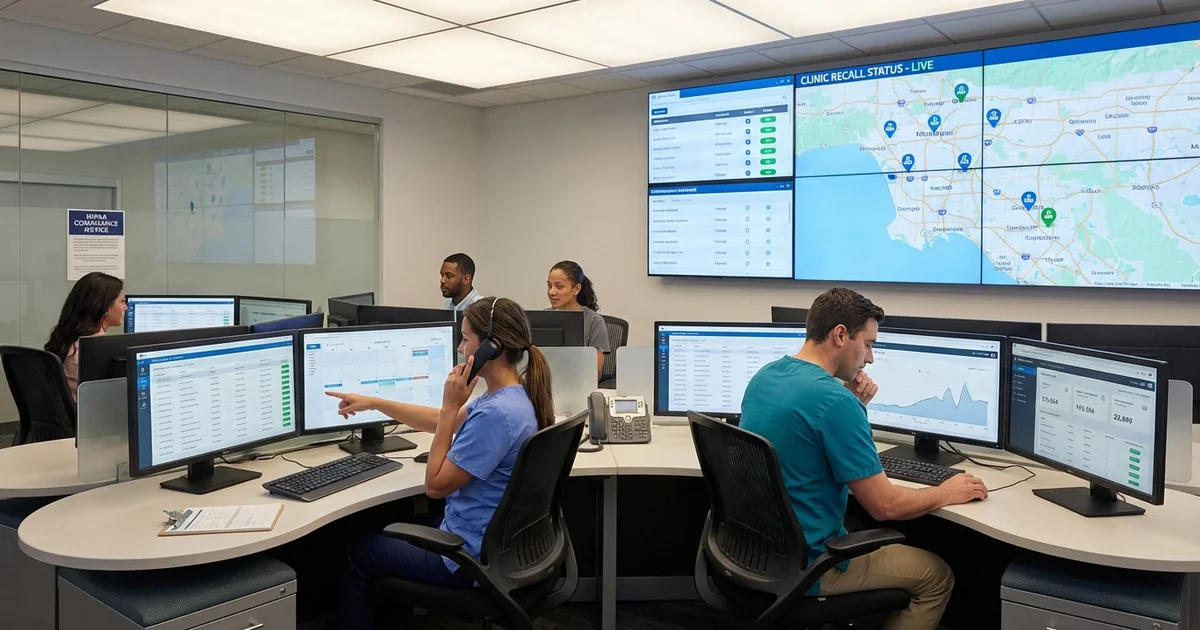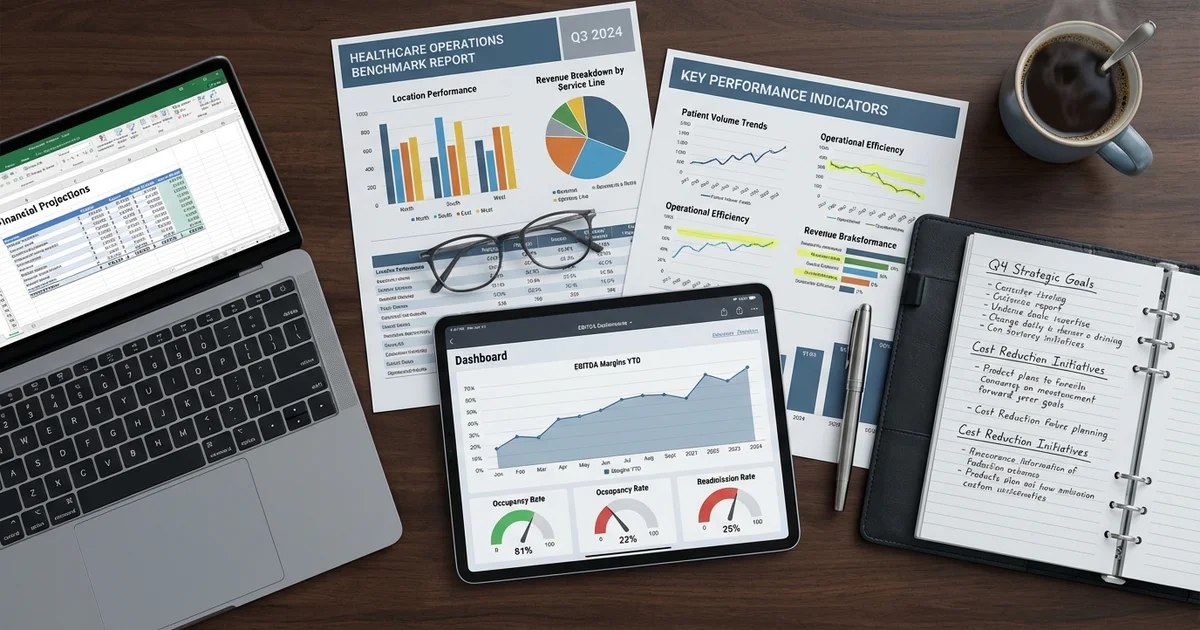


When one location achieves 8% no-shows and another struggles at 18%, the problem is not the patients. It is the lack of standardization. No-shows are a systems problem, and systems problems require systematic solutions. Multi-location healthcare groups that achieve consistently low no-show rates do so through standardized protocols, centralized technology, and network-wide accountability. This guide provides the framework for standardizing no-show reduction across your locations.
Table of Contents
- How Big Is the No-Show Problem at Scale?
- What Does the Standardization Framework Look Like?
- What Technology Is Required for Multi-Location No-Show Reduction?
- What Does the Implementation Roadmap Look Like?
- What Standard Operating Procedures Should You Follow?
- What Messaging Templates Should You Use?
- How Do You Measure No-Show Reduction Success?
- What Are Common Implementation Challenges?
How Big Is the No-Show Problem at Scale?
No-shows impact multi-location groups disproportionately:
Financial impact calculation:
Annual No-Show Cost Formula
Annual No-Show Cost = Total Appointments x No-Show Rate x Average Revenue x (1 - Recovery Rate)
Example for 20-location network:
20-Location Network No-Show Impact
Annual appointments: 240,000 | No-show rate: 15%
No-shows: 36,000 | Average revenue: $350 | Recovery rate: 40%
Annual lost revenue: 36,000 x $350 x 0.60 = $7,560,000
The variance problem:
| Location Type | No-Show Rate | Notes |
|---|---|---|
| Best performers | 6-8% | Consistent processes |
| Network average | 12-15% | Mixed execution |
| Struggling locations | 18-25% | No standardization |
| Variance cost | $2-5M/year | Gap between best and average |
If every location performed like the best, the example network would save $3-5 million annually.
What Does the Standardization Framework Look Like?
Effective no-show reduction requires standardization across four domains:
Domain 1: Reminder Protocols
The standard reminder sequence:
| Timing | Channel | Content | Owner |
|---|---|---|---|
| Booking confirmation | Email + SMS | Appointment details, add to calendar | Automated |
| 7 days before | Preparation info, cancellation policy | Automated | |
| 3 days before | SMS | Confirmation request | Automated |
| 1 day before | SMS | Final reminder, directions | Automated |
| Same day (AM) | SMS | Morning-of reminder (for PM appointments) | Automated |
Standardization requirements: Same sequence at all locations. Same messaging templates (localized for location info). Same timing. Same technology platform. Centrally managed, locally monitored.
Domain 2: Confirmation Protocols
Standardized confirmation process:
Requests reschedule → Trigger call queue
Cancels → Cancel, trigger fill protocol
No response → Add to callback list
Flag for potential no-show, prepare backup
Domain 3: Same-Day Recovery Protocols
Standardized no-show recovery:
Contact waitlist | Check same-day requests | Offer to next-day
Domain 4: Accountability Systems
Location-level accountability:
| Metric | Frequency | Target | Accountability |
|---|---|---|---|
| No-show rate | Weekly | <10% | Location manager |
| Confirmation rate | Daily | >85% | Front desk lead |
| Same-day fill rate | Weekly | >60% | Location manager |
| Recovery rate | Weekly | >50% | Scheduling team |
Network-level governance: Weekly scorecard by location. Monthly review of top/bottom performers. Quarterly best practice sharing. Annual performance impact on compensation.
What Technology Is Required for Multi-Location No-Show Reduction?
What Does a Centralized Reminder Platform Require?
Must-have capabilities:
| Capability | Requirement | Notes |
|---|---|---|
| Multi-channel delivery | SMS, email, voice | Patient preference support |
| Two-way texting | Confirmations, reschedule requests | Response handling |
| Integration | All location PMS systems | Real-time sync |
| Automation | Rule-based sequencing | Minimal manual intervention |
| Opt-out management | Central compliance | TCPA/HIPAA compliance |
| Reporting | Location and network views | Performance tracking |
What Does the Integration Architecture Look Like?
Critical integrations: Appointment data (real-time or near-real-time). Patient contact preferences. Confirmation status updates (bidirectional). No-show status tracking.
How Do You Manage the Waitlist?
Automated waitlist fill process:
What Does the Implementation Roadmap Look Like?
Phase 1: Assessment and Planning (Weeks 1-4)
Baseline documentation: [ ] Current no-show rate by location (12-month average). [ ] Current reminder protocols (document variation). [ ] Current technology systems inventory. [ ] Staff roles and responsibilities.
Gap analysis:
| Element | Standard | Current | Gap |
|---|---|---|---|
| Reminder sequence | 5-touch | [Document] | [Identify] |
| Confirmation process | Automated + phone | [Document] | [Identify] |
| Recovery protocol | Same-day fill | [Document] | [Identify] |
| Technology platform | Centralized | [Document] | [Identify] |
Phase 2: Technology Setup (Weeks 5-12)
Platform deployment: [ ] Select/configure centralized reminder platform. [ ] Integrate with all location PMS systems. [ ] Configure standard reminder sequences. [ ] Set up confirmation workflows. [ ] Build reporting dashboards. [ ] Test across representative locations.
Phase 3: Protocol Standardization (Weeks 13-20)
Documentation and training: [ ] Create standard operating procedures. [ ] Develop training materials. [ ] Train location managers. [ ] Train front desk staff. [ ] Conduct pilot at 3-4 locations. [ ] Refine based on pilot feedback.
Phase 4: Network Rollout (Weeks 21-32)
Phased rollout: [ ] Deploy to locations in waves (3-5 per wave). [ ] Monitor closely during transition. [ ] Address issues as they arise. [ ] Confirm standardization at each location. [ ] Complete network deployment.
Phase 5: Optimization (Ongoing)
Continuous improvement: Weekly performance monitoring. Monthly variance analysis. Quarterly process refinement. Annual technology assessment.
What Standard Operating Procedures Should You Follow?
SOP 1: Appointment Confirmation
Purpose: Confirm all appointments 3+ days in advance
Procedure:
- System sends automated confirmation request (Day -3)
- Patient responses processed automatically
- Unconfirmed patients added to callback queue (Day -2, 9am)
- Staff makes confirmation calls (Day -2, 10am-12pm)
- Second attempt for unreached (Day -2, 2pm-4pm)
- Final text to unconfirmed (Day -1, 9am)
- Unconfirmed flagged for potential no-show
Accountability: Front desk lead reviews confirmation rate daily
SOP 2: No-Show Recovery
Purpose: Recover revenue from missed appointments
Procedure:
- At appointment time, check for patient arrival
- If not arrived by T+5min, call patient immediately
- If reached: assess situation, reschedule or hold
- If not reached: leave voicemail, mark as no-show at T+15min
- Trigger same-day fill protocol immediately
- Next day: reschedule outreach (SMS + phone)
Accountability: Location manager reviews recovery rate weekly
SOP 3: Waitlist Management
Purpose: Fill cancellations and no-shows quickly
Procedure:
- Maintain active waitlist in scheduling system
- When slot opens: query waitlist for matches
- Send automated offers to top 5 matches
- First responder gets appointment
- Update waitlist status
- If no waitlist response in 2 hours: offer to next-day patients
Accountability: Scheduling coordinator maintains waitlist
What Messaging Templates Should You Use?
Reminder Text (Standard)
SMS Template - Reminder
[Practice Name]: Hi [First Name], reminder of your [Appointment Type] on [Date] at [Time] with [Provider]. Reply C to confirm, R to reschedule, or X to cancel. Questions? Call [Phone]. Reply STOP to opt out.
Confirmation Request
SMS Template - Confirmation
[Practice Name]: [First Name], please confirm your appointment tomorrow [Date] at [Time]. Reply C to confirm. Need to reschedule? Reply R or call [Phone]. Reply STOP to opt out.
No-Show Follow-Up
SMS Template - No-Show Follow-Up
[Practice Name]: Hi [First Name], we missed you today! Your health is important to us. Reply YES to reschedule or call [Phone]. We look forward to seeing you. Reply STOP to opt out.
Waitlist Offer
SMS Template - Waitlist Offer
[Practice Name]: Hi [First Name]! An appointment just opened TODAY at [Time]. Would you like it? Reply YES within 30 minutes to claim. Reply STOP to opt out.
How Do You Measure No-Show Reduction Success?
What Does the Weekly Scorecard Look Like?
| Location | No-Shows | Rate | Confirmations | Fill Rate | vs. Target |
|---|---|---|---|---|---|
| Downtown | 12 | 7.2% | 89% | 75% | ✓ |
| Suburban A | 18 | 9.5% | 85% | 62% | ✓ |
| Suburban B | 24 | 12.8% | 78% | 48% | ⚠️ |
| Suburban C | 31 | 16.4% | 71% | 35% | ✗ |
What Should the Monthly Performance Report Include?
| Metric | This Month | Last Month | YoY | Target |
|---|---|---|---|---|
| Network no-show rate | 10.2% | 11.4% | -3.5% | <10% |
| Confirmation rate | 84% | 82% | +5% | 85%+ |
| Same-day fill rate | 58% | 52% | +12% | 60%+ |
| Revenue recovered | $142K | $128K | +18% | $150K |
| Location variance | 8.2% | 9.5% | -14% | <8% |
What Does a Quarterly Deep Dive Cover?
Analysis components:
- Location-level performance trends
- Root cause analysis for underperformers
- Best practice extraction from top performers
- Technology effectiveness assessment
- Staff training needs identification
- Protocol refinement recommendations
What Are Common Implementation Challenges?
Challenge 1: PMS Variation
Problem: Multiple PMS systems across locations Solution: Integration middleware that normalizes data and enables centralized reminders regardless of source system
Challenge 2: Staff Resistance
Problem: “We’ve always done it this way” Solution:
- Show data on variance and opportunity
- Involve front-line staff in protocol design
- Celebrate early wins
- Make compliance easy (automation)
Challenge 3: Technology Adoption
Problem: Inconsistent use of new tools Solution:
- Adequate training before go-live
- Super-users at each location
- Regular check-ins during transition
- Accountability for tool usage
Challenge 4: Maintaining Consistency
Problem: Standards drift over time Solution:
- Regular audits and mystery shopping
- Automated compliance monitoring
- Ongoing reinforcement in team meetings
- Performance tied to incentives
Key Takeaways
Standardizing no-show reduction across multiple locations requires:
Standardized protocols:
- 5-touch reminder sequence
- Automated + phone confirmation process
- Same-day recovery procedures
- Waitlist fill protocols
Centralized technology:
- Single reminder platform
- Integrated with all PMS systems
- Automated workflows
- Unified reporting
Network-wide accountability:
- Weekly location scorecards
- Monthly performance reviews
- Best practice sharing
- Compensation alignment
Expected outcomes:
- No-show rate from 15% to <10%
- Variance reduction across locations
- $2-5M annual revenue recovery (20-location example)
- Improved patient satisfaction
The locations that achieve the best no-show rates are not lucky. They follow disciplined, standardized processes. When you standardize those processes across your network, every location can perform like the best.
For the recovery protocols that complement no-show reduction, see our no-show recovery program guide. For centralized implementation, review our centralized patient recall guide. Every missed call costs your practice revenue. Talk to our team about how MyBCAT helps healthcare practices answer every call and keep schedules full.