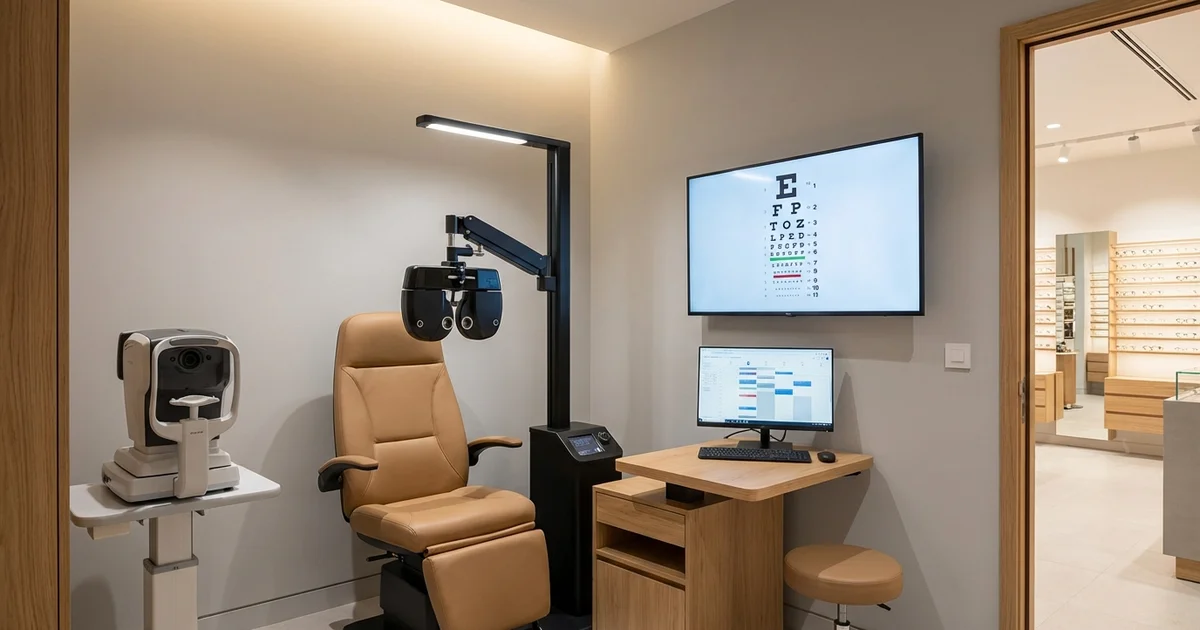
The January slump hits optometry practices hard. Post-holiday slowdowns leave schedules with gaps and revenue unpredictable. Yet top-performing practices use this exact period to run recall campaigns that generate 50x+ ROI and achieve 85-87% recall rates. One practice reported gaining $49,000 in revenue from 59 reactivated patients in just 90 days (a 140x return on their campaign investment). This guide provides the specific strategies optometry practices use to fill the January slump and maintain consistent patient flow year-round.
Table of Contents
- What Does Ignoring Optometry Recall Actually Cost?
- Why Does the January Slump Happen?
- The January Recall Campaign Framework
- How Should You Build a Multi-Channel Campaign Strategy?
- How Do You Measure Campaign Success?
- How Do You Build a Year-Round Recall Strategy Beyond January?
- What Technology Supports Optometry Recall?
What Does Ignoring Optometry Recall Actually Cost?
Before covering campaign tactics, understand what poor recall costs your practice:
Patient lifetime value at stake: The average optometry patient has a lifetime value of approximately $4,200. For a practice with 2,000 active patients experiencing 10% annual attrition (conservative industry estimate), that represents $840,000 in lost revenue each year from patients who drift away without active recall. At higher attrition rates (15-17%), losses can exceed $1.2 million annually.
The exam-to-eyewear connection: Recall does not just recover exam revenue. Patients who return for annual exams also purchase eyewear and contact lenses. Practices with strong recall (87% rate) report average revenue per patient (ARPP) of $630, compared to $210 at practices with poor recall, a 3x difference.
Industry benchmarks:
| Metric | Average Practice | Top Performer |
|---|---|---|
| Recall rate | 62% | 85-87% |
| Complete exams per 100 active patients | 43 | 51+ |
| Reactivation rate (dormant patients) | 15-20% | 25-30% |
| No-show reduction with reminders | N/A | 50-85% |
Why Does the January Slump Happen?
The post-holiday slowdown affects optometry practices for predictable reasons:
Why January is slow: Patients used vision benefits in Q4 (use-it-or-lose-it behavior). Holiday spending reduces discretionary purchases. New Year resolutions prioritize other health goals. Weather and illness reduce appointment-keeping.
The opportunity: January’s slow period is actually ideal for recall campaigns because include staff have capacity for outbound calling, appointment availability is high (easy to schedule), patients with january benefit renewals need reminders, and the “new year, new health” messaging resonates.
The January Recall Campaign Framework
Phase 1: Pre-Campaign Preparation (December)
Segment your patient list:
| Segment | Definition | Priority | Channel |
|---|---|---|---|
| Due in January | Annual exam due date in Jan | Highest | SMS + Phone |
| Recently lapsed (3-6 months overdue) | Last exam 15-18 months ago | High | SMS + Phone |
| Long lapsed (6-12 months overdue) | Last exam 18-24 months ago | Medium | Phone + Mail |
| Very long lapsed (12+ months) | Last exam 2+ years ago | Lower | Phone (personal) |
Clean your data: Verify phone numbers and email addresses. Update insurance information where possible. Flag patients with vision plans renewing in January.
Prepare messaging: Draft campaign messages that acknowledge the new year and tie to annual eye health include “new year, clear vision” theme, insurance/vision plan benefit reminders, and any january-specific promotions.
Phase 2: Campaign Launch (First Two Weeks of January)
Day 1-3: SMS blast to due and recently lapsed patients
SMS Template
Hi [Name], happy new year from [Practice Name]! Your annual eye exam is due. Start 2026 with clear vision. Reply YES to schedule or call [phone]. Your [VSP/vision plan] benefits are ready to use!
Day 4-7: Email campaign to full list
Subject lines that work include “your vision benefits reset. schedule your 2026 exam”, “[name], your annual eye exam is due”, and “start the new year seeing clearly”.
Day 8-14: Phone calls to non-responders
Prioritize: High-value patients who did not respond to SMS/email. Patients with insurance requiring annual exams. Patients with progressive conditions (diabetics, glaucoma suspects).
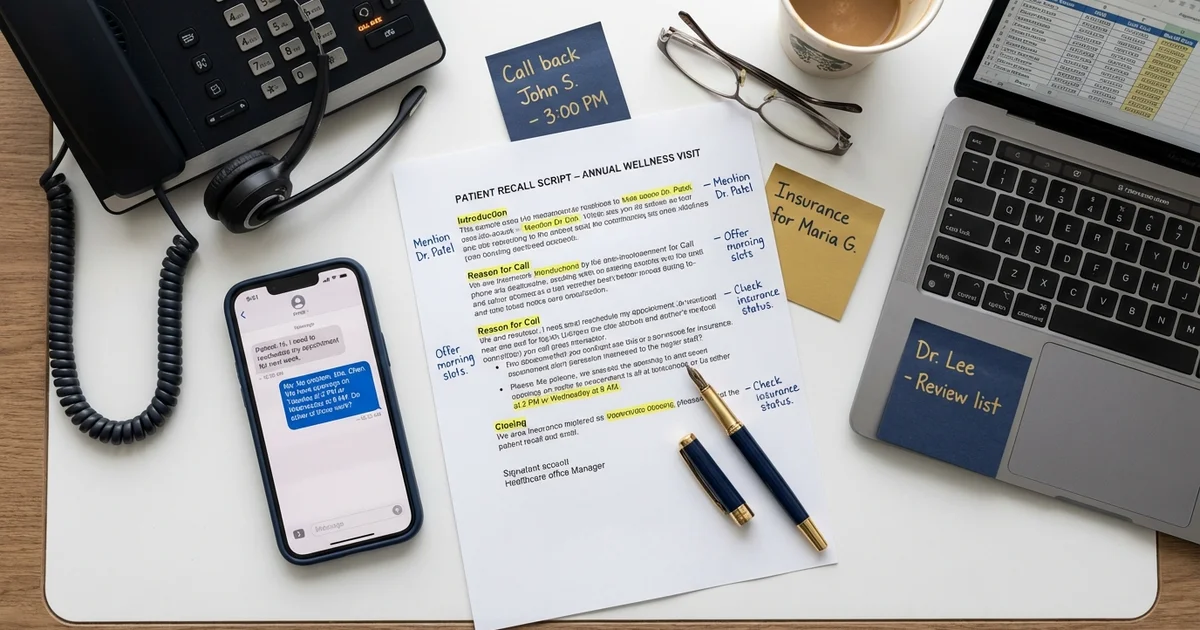
Phone script:
Phone Script
"Hi [Name], this is [Caller] from [Practice Name]. I'm calling because your annual eye exam is due, and with your vision benefits renewed for the new year, I wanted to help you get scheduled.
Dr. [Provider] likes to see you once a year to keep your prescription current and check for any changes. I have availability [offer specific times]. What works best for you?"
Phase 3: Follow-Up and Extension (Weeks 3-4)
Second SMS to non-responders:
SMS Template
[Name], just following up from [Practice Name]. Your eye exam is now overdue. We have openings this week if you'd like to use your vision benefits. Reply YES or call [phone].
Direct mail to unreachables: For patients with no valid phone/email, send a postcard include eye-catching design with practice branding, clear call-to-action with phone number, mention vision plan benefits, and qr code to online scheduling.
How Should You Build a Multi-Channel Campaign Strategy?
Industry data shows multi-channel campaigns typically outperform single-channel approaches significantly. Here is how to optimize each channel:
SMS (Highest Engagement)
Best practices: Send at 6 PM when patients are available. Keep under 160 characters when possible. Include clear call-to-action (reply YES, call number). Personalize with first name and specific due service.
Expected results: 95%+ delivery rate. 15-25% response rate. 50-85% no-show reduction when used for confirmations.
Email (Reach and Documentation)
Best practices: Send mornings (Tuesday-Thursday optimal). Subject line with patient name increases opens 26%. Include one-click scheduling link. Mobile-optimized design.
Expected results: 20-30% open rate. 5-10% click-through rate. Provides paper trail for patient communication.
Phone (Highest Conversion)
Best practices: Call Tuesday-Thursday, 10am-12pm or 2pm-4pm. Leave voicemail with callback number and reason. Have specific appointment times ready to offer. Log all attempts in PM system.
Expected results: 25-35% answer rate. 40-60% booking rate when connected. Essential for high-value and complex patients.
Direct Mail (Unreachables)
Best practices: Use for patients without valid digital contact. Eye-catching design that stands out. Clear call-to-action with multiple response options. Send in branded envelope (higher open rate).
Expected results: 1-3% response rate. Higher cost but reaches patients others miss. Effective for older patient demographics.
How Do You Measure Campaign Success?
Track these KPIs weekly during your January campaign:
| Metric | Target | Formula |
|---|---|---|
| Outreach completion | 100% | Patients contacted / Patients targeted |
| Response rate | 20%+ | Responses / Outreach attempts |
| Booking rate | 40%+ | Appointments booked / Patients contacted |
| Show rate | 85%+ | Appointments completed / Booked |
| Reactivation rate | 20%+ | Dormant patients returning / Dormant targeted |
| Revenue per reactivation | $400+ | Revenue from reactivations / Patients reactivated |
| Campaign ROI | 20x+ | Revenue recovered / Campaign cost |
Real-world benchmark: One optometry practice achieved include 59 patients reactivated in 90 days, $49,000 in recovered revenue, campaign cost: ~$350, and ROI: 140x.
How Do You Build a Year-Round Recall Strategy Beyond January?
The January campaign should not be a one-time effort. Establish ongoing recall systems:
Monthly recall process:
- Run report of patients due next month
- Send automated SMS 30 days before due date
- Follow up at 14 days and 7 days if not scheduled
- Phone call 1 week before due date to non-responders
- Continue outreach for 30 days past due date
- Flag long-overdue patients for quarterly reactivation campaigns
Quarterly reactivation campaigns:
- January: Post-holiday slump recovery
- April: Pre-summer (outdoor/sports vision)
- August: Back-to-school children’s exams
- October: Year-end benefit utilization push
Pre-scheduling at checkout: The most effective recall strategy is scheduling the next appointment before the patient leaves. Train staff to say:
Pre-Scheduling Script
"Dr. [Provider] wants to see you again in 12 months for your annual exam. Let's get that scheduled now so you don't have to worry about it. I have [specific dates] available next January."
What Technology Supports Optometry Recall?
Effective recall campaigns require integrated technology:
Essential capabilities:
- PM/EHR integration for patient due dates
- Automated multi-channel outreach (SMS, email)
- Two-way texting for patient responses
- Online scheduling integration
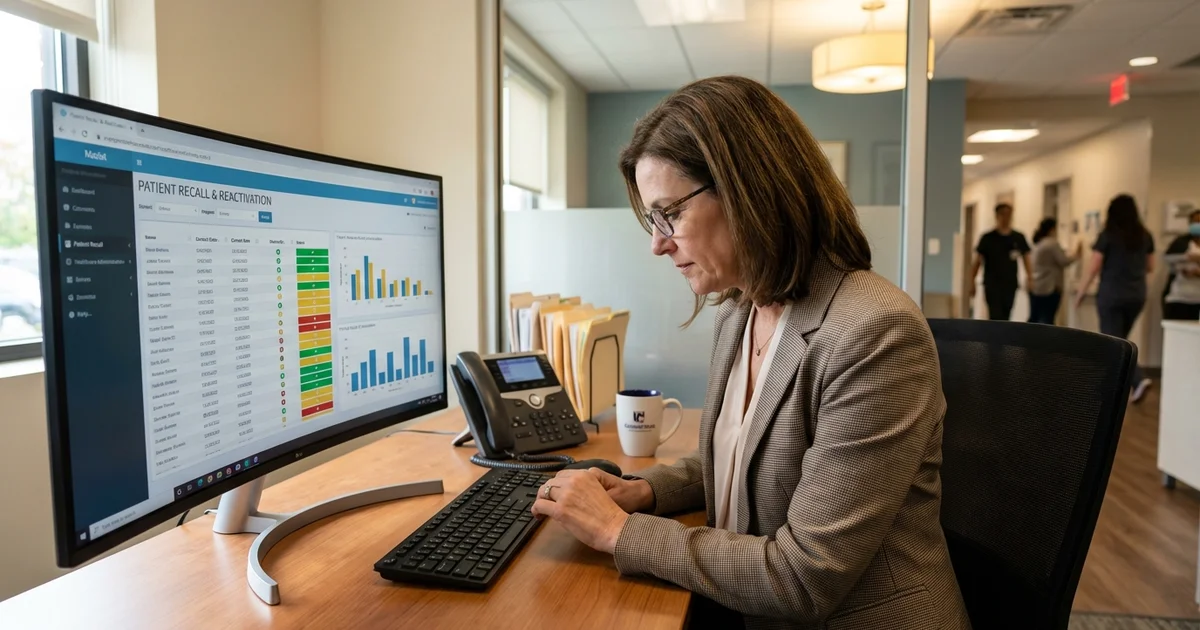
- Dashboard tracking recall metrics
Integration with vision plans: Systems that pull VSP, EyeMed, and other vision plan eligibility help target patients with active benefits and craft relevant messaging.
Key Takeaways
Optometry recall campaigns, especially during the January slump, represent one of the highest-ROI activities available:
- Top practices achieve 85-87% recall rates; average is only 62%
- Patient lifetime value averages $4,200; attrition costs $840K annually for a 2,000-patient practice
- January campaigns should launch early in the month targeting patients with renewed benefits
- Multi-channel campaigns (SMS + email + phone) outperform single-channel by 2-3x
- Expect 20-30% reactivation rates and 50x+ ROI from well-executed campaigns
- Pre-scheduling at checkout is the most effective year-round recall strategy
- Run quarterly campaigns to maintain consistent patient flow
The practices that thrive through the January slump and beyond are those that treat recall as a systematic process, not an occasional effort.
For scripts to use during recall outreach, see our patient recall scripts guide. For the complete reactivation playbook, review our 30-day dormant patient reactivation guide.
Related Reading
Reactivating dormant patients is one of the highest-ROI investments a practice can make. Talk to our team about how MyBCAT combines call answering with patient recall to keep your schedule full.