Optometry groups live in two worlds: clinical care representing roughly 40% of revenue and optical retail representing 60%. Yet most intake systems treat every call the same. The result: clinical appointments get booked while optical opportunities slip away. Groups that design intake specifically for the clinical-retail handoff see 15-20% higher capture rates than those treating every call identically.
This guide provides the framework for building intake workflows that capture both clinical and retail revenue.
Table of Contents
- What Is the Dual-Revenue Challenge in Optometry?
- How Should You Classify Optometry Call Types?
- How Does the Clinical-Retail Routing Decision Tree Work?
- What Are the Scripts for Identifying Optical Opportunities?
- How Can You Streamline VSP and Insurance Verification?
- How Does Intake Connect to Capture Rate Metrics?
- Which Appointment Types Matter Most?
- What Are the Multi-Location Considerations?
- How Should You Approach Technology Integration?
- Key Takeaways
What Is the Dual-Revenue Challenge in Optometry?
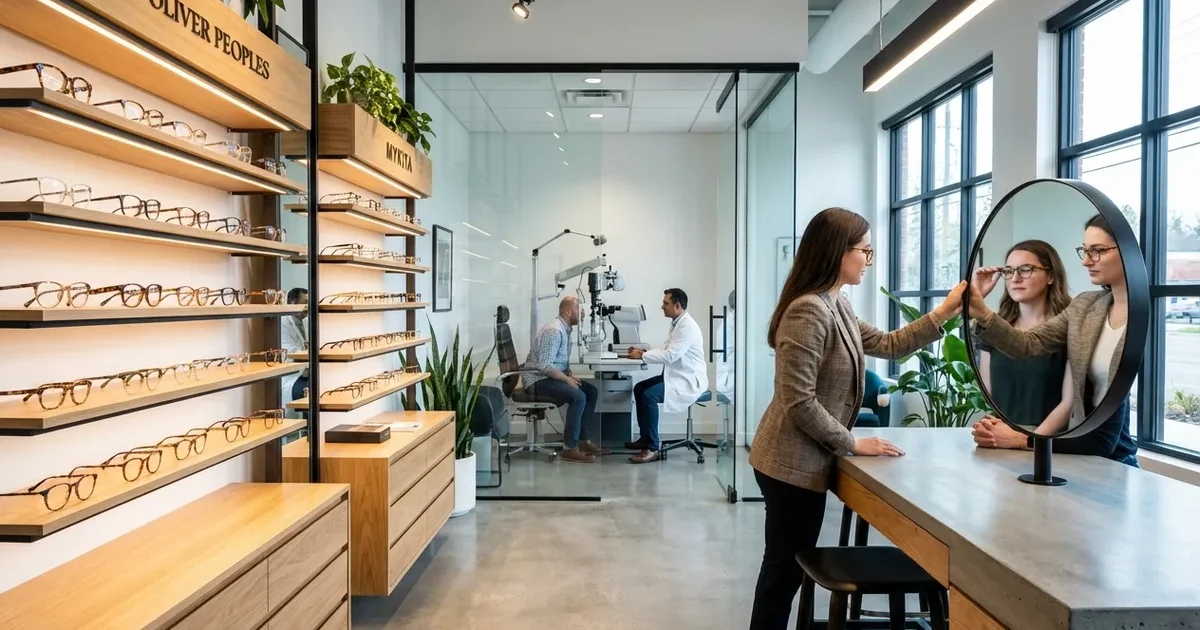
Unlike most healthcare specialties, optometry operates two distinct businesses under one roof. The clinical side provides eye exams, medical eye care, and contact lens fittings. The retail side sells frames, lenses, and contact lenses. Both require the phone to ring, but the calls need different handling.
Why Does This Create Intake Complexity?
Different destinations. A caller asking about an eye exam needs to reach clinical scheduling. A caller asking about frame selection needs to reach the optical team. A caller asking about contact lens reorders might need either, depending on prescription status.
Different expertise. Clinical schedulers need to understand exam types, medical vs. vision coverage, and provider availability. Optical staff need to understand frame inventory, lens options, and retail sales processes.
Different metrics. Clinical success is measured in filled appointments and provider utilization. Optical success is measured in capture rate, average transaction value, and second-pair sales.
Different timing. Clinical appointments are scheduled in advance. Optical purchases often happen on impulse or same-day after receiving a new prescription.
What Is the Cost of Getting It Wrong?
When intake fails to route appropriately, revenue leaks in multiple directions:
Clinical calls sent to optical get frustrated by staff who cannot schedule exams. Optical inquiries sent to clinical miss the sales opportunity entirely. Contact lens reorders bounce between departments. Insurance verification calls clog lines that should be booking revenue.
Groups that audit their call handling often find 20-30% of calls are suboptimally routed, with each misrouted call representing friction that reduces conversion and capture.
How Should You Classify Optometry Call Types?
Understanding call distribution is the foundation for effective routing. Here is the typical breakdown for multi-location optometry groups:
| Call Type | % of Calls | Primary Destination | Secondary Destination |
|---|---|---|---|
| New patient exam scheduling | 25% | Clinical scheduling | - |
| Existing patient exam scheduling | 20% | Clinical scheduling | - |
| Contact lens reorder | 15% | Contact lens team | Clinical (if Rx expired) |
| Frame inquiry / purchase | 15% | Optical / dispensary | - |
| Insurance / VSP verification | 10% | Billing / verification | - |
| Prescription check / copy | 8% | Optical team | Clinical records |
| Other (hours, location, etc.) | 7% | General / auto-attendant | - |
Key Observations
45% of calls are clinical scheduling. These are relatively straightforward: match the patient to an available appointment slot.
30% of calls are optical-related. These require retail skills: product knowledge, inventory awareness, and sales capability.
10% are insurance verification. These calls often take 5-10 minutes each and can clog phone lines if not handled efficiently.
Only 7% are truly general inquiries. Most calls have a clear purpose that should drive routing.
How Does the Clinical-Retail Routing Decision Tree Work?
Effective intake requires quickly identifying call purpose and routing appropriately. This decision tree provides a framework:
Initial Triage Question
“Are you calling about an eye exam or appointment, or about eyewear such as glasses or contacts?”
This single question sorts approximately 75% of calls into the correct path immediately.
Clinical Path
If the caller indicates exam or appointment:
New or existing patient? Medical concern or routine vision exam? Provider preference? Insurance / vision plan information? Schedule appointment.
Optical Path
If the caller indicates eyewear:
- Do you have a current prescription (within 1-2 years)?
- If yes: Route to optical for purchase assistance
- If no: Offer to schedule exam first, then optical appointment
- Glasses or contacts?
- Glasses: Frame consultation availability
- Contacts: Reorder vs. new fitting
- Insurance / vision plan for optical benefits?
How Do You Handle Hybrid Situations?
Some calls require both paths:
“I need an exam and new glasses.” Schedule clinical exam. Note optical interest in appointment. Offer dispensary time after exam or separate optical appointment.
“My contacts are almost out but I think my prescription expired.” Verify prescription status. If expired: Schedule exam with contact lens fitting. If valid: Process reorder.
“I want to use my VSP benefits before they expire.” Determine if exam is needed (check last exam date). Verify VSP eligibility and benefits. Schedule exam if needed, note optical purchase intent.
What Are the Scripts for Identifying Optical Opportunities?
Intake staff can significantly impact capture rate by identifying and flagging optical opportunities during scheduling calls.
Script 1: New Patient Exam Scheduling
After booking the exam:
“Great, I have you scheduled for [date/time] with Dr. [name]. I see you mentioned [insurance/VSP]. Just so you know, your plan typically includes an allowance for glasses or contacts after your exam. Would you like me to set aside some time with our optical team after your appointment to explore your options? We have a great selection of frames, and they can walk you through what your benefits cover.”
Why it works: Plants the seed for optical purchase, creates expectation, and pre-schedules the retail interaction.
Script 2: Existing Patient Calling for Exam
During scheduling:
“I see you were last in [X months ago]. Are you still happy with your current glasses, or are you thinking about updating your look? We have some great new frame styles that just came in.”
Why it works: Opens the conversation about optical without being pushy, uses relationship history.
Script 3: Contact Lens Reorder
During reorder processing:
“I can get that order started for you. By the way, do you have a backup pair of glasses? Many of our contact lens patients like having glasses for evenings or days when they want to give their eyes a rest. Would you like me to check your frame benefit?”
Why it works: Cross-sells to contact lens patients who may not think about glasses.
Script 4: General Inquiry Caller
When call purpose is unclear:
“I’d be happy to help. Are you looking to schedule an eye exam, or were you calling about glasses or contacts? Or maybe both?”
Why it works: Gets immediate clarity and ensures proper routing.
How Can You Streamline VSP and Insurance Verification?
Insurance verification calls are necessary but can consume disproportionate phone time. Here are strategies to manage them efficiently.
What Is the Verification Burden?
A typical VSP verification call takes 5-8 minutes include hold time waiting for vsp representative, patient information lookup, eligibility confirmation, benefits explanation, and documentation.
For a busy location receiving 20 verification calls daily, that is 100-160 minutes of phone time, roughly 2-3 hours that could be answering other calls.
What Are the Best Streamlining Strategies?
Online verification tools. VSP and EyeMed offer online portals for eligibility verification. Train staff to use these first, reserving phone verification for complex situations.
Pre-verification workflow. When appointments are scheduled, trigger verification before the patient arrives. This moves the work off the inbound phone line.
Patient self-service. Direct patients to check their own benefits online before calling. Include links in appointment confirmations.
Dedicated verification time. Batch verification calls during low-volume periods rather than handling them as they come in.
Verification scripts. For calls that must happen, use efficient scripts:
“I can help you understand your vision benefits. Can I get your VSP member ID and date of birth? [Verify online while on phone] Great, I can see you have [benefit summary]. Would you like to schedule an exam to use those benefits?”
How Should You Route Verification Calls?
Not all verification calls need the same handling:
| Caller Type | Routing |
|---|---|
| Patient checking own benefits | Online portal or brief phone assist |
| Patient ready to schedule | Scheduling with inline verification |
| Insurance question only (no scheduling intent) | Brief assist, offer to schedule |
| Complex coverage question | Billing specialist |
How Does Intake Connect to Capture Rate Metrics?
Capture rate, the percentage of exam patients who purchase eyewear, is the key profitability metric for optometry groups. Intake directly impacts capture rate.
How Does Intake Affect Capture Rate?
Expectation setting. Patients who arrive expecting to explore eyewear are more likely to purchase than those who planned only an exam.
Optical appointment scheduling. Pre-scheduling dispensary time creates commitment and removes friction.
Benefit awareness. Patients informed of their optical benefits during scheduling are prepared to use them.
Staff preparation. When intake notes optical interest, dispensary staff can prepare relevant options before the patient arrives.
How Do You Track the Intake-to-Capture Connection?
To measure intake impact on capture, track:
Optical intent flagged at scheduling. What percentage of appointments include notation of optical interest?
Pre-scheduled dispensary time. What percentage of exams have optical appointments attached?
Conversion by intake source. Do patients scheduled with optical discussion convert at higher rates?
Benefit discussion completion. What percentage of scheduling calls include benefits review?
Target Metrics
| Metric | Baseline | Target |
|---|---|---|
| Optical intent captured at scheduling | 30% | 60%+ |
| Pre-scheduled dispensary appointments | 15% | 40%+ |
| Benefits discussed during scheduling | 40% | 80%+ |
| Capture rate (exam to purchase) | 55% | 70%+ |
Which Appointment Types Matter Most?
Optometry scheduling requires appointment types that reflect the clinical-retail complexity.
What Are the Essential Appointment Types?
Comprehensive Eye Exam (New Patient) Duration: 45-60 minutes. Includes: Full exam, dilation if indicated, initial optical consultation. Scheduling note: Ask about glasses/contacts interest.
Comprehensive Eye Exam (Existing Patient) Duration: 30-45 minutes. Includes: Annual exam, prescription update. Scheduling note: Check last optical purchase, suggest update.
Contact Lens Fitting Duration: 30-45 minutes. Includes: Measurements, trial lens, teaching. Scheduling note: Often combined with exam.
Contact Lens Follow-Up Duration: 15-20 minutes. Includes: Fit check, finalization. Scheduling note: May lead to glasses discussion.
Medical Eye Exam Duration: 30-45 minutes. Includes: Specific medical concern evaluation. Scheduling note: Different insurance routing (medical vs. vision).
Dispensary / Optical Consultation Duration: 30-45 minutes. Includes: Frame selection, lens discussion, ordering. Scheduling note: Can be standalone or post-exam.
Glasses Adjustment / Repair Duration: 15 minutes. Includes: Adjustment, minor repair. Scheduling note: Opportunity for second-pair or upgrade discussion.
How Should You Configure Appointment Types?
Configure your scheduling system to:
- Default to appropriate duration by type
- Prompt for optical interest on exam appointments
- Allow easy addition of dispensary time to exam appointments
- Track appointment types for reporting
What Are the Multi-Location Considerations?
Optometry groups with multiple locations face additional intake challenges.
What Are the Standardization Requirements?
Consistent appointment types. All locations should use the same appointment type definitions and durations.
Unified scripts. Clinical-retail routing questions should be identical across locations.
Shared inventory visibility. If a caller wants a specific frame, staff should be able to check availability across locations.
Cross-location scheduling. Patients should be able to book at any location through any phone line.
What Location-Specific Variations Should You Expect?
While standardizing core processes, allow for legitimate variations:
Provider availability. Different locations may have different OD schedules and specialties.
Inventory focus. Some locations may emphasize certain frame lines or price points.
Patient demographics. Locations may serve different populations with different insurance mixes.
Services offered. Not all locations may offer specialty services like vision therapy or myopia management.
Centralized vs. Distributed Intake
| Model | Pros | Cons |
|---|---|---|
| Centralized | Consistency, specialized training, coverage | Less local knowledge, potential disconnect |
| Distributed | Local expertise, relationship continuity | Inconsistency, coverage gaps |
| Hybrid | Best of both, overflow coverage | Complexity, coordination needed |
Most multi-location optometry groups benefit from a hybrid model: local staff for routine scheduling with centralized backup for overflow and after-hours.
How Should You Approach Technology Integration?
Effective optometry intake requires integration across multiple systems.
What Systems Are Required?
Practice Management / EHR
- Patient records and history
- Appointment scheduling
- Prescription management
- Examples: EyeMD, Compulink, RevolutionEHR
Optical Point of Sale
- Frame inventory
- Lens ordering
- Transaction processing
- Examples: Frames Data, My Frame Gallery, integrated PMS
Phone System
- Call routing
- Analytics
- Recording
- Examples: Modern VoIP with healthcare features
Insurance Verification
- VSP, EyeMed portals
- Eligibility checking
- Benefits lookup
What Are the Integration Requirements?
Patient identification. Caller ID should pull patient records automatically.
Scheduling visibility. Phone staff need to see clinical AND optical availability.
Notes transfer. Optical interest noted during scheduling should appear for dispensary staff.
Inventory access. Ability to check frame availability across locations during calls.
Benefits integration. Eligibility status visible during scheduling.
What Are Common Integration Gaps?
- Phone system disconnected from PMS (no caller ID lookup)
- Clinical and optical scheduling in separate systems
- No automated benefit verification
- Inventory siloed by location
- Call notes not visible to clinical or optical staff
Keeping every appointment slot filled starts with answering every call. Talk to our team about how MyBCAT helps optometry practices capture more patients and reduce revenue leakage.
Key Takeaways
-
Optometry has a dual-revenue challenge. With 60% of revenue from optical retail, intake must serve both clinical scheduling and retail sales.
-
Classify calls by type. Understanding the 7 major call types enables appropriate routing and staffing.
-
Use the clinical-retail decision tree. A single triage question (“exam or eyewear?”) sorts 75% of calls correctly.
-
Script for optical opportunity. Train intake staff to identify and flag optical interest during every scheduling call.
-
Streamline VSP verification. Online tools, pre-verification workflows, and efficient scripts reduce phone time burden.
-
Connect intake to capture rate. Track optical intent flagging, pre-scheduled dispensary time, and benefits discussion to measure intake impact.
-
Standardize across locations. Appointment types, scripts, and routing should be consistent, with allowance for legitimate local variation.
-
Integrate technology. Phone, PMS, optical POS, and insurance verification systems should share data for smooth intake.
Last Updated: January 2026
Sources: Review of Optometric Business, MGMA Workforce Survey
Struggling with scheduling across locations? Explore centralized scheduling
Related Reading
- multi-location healthcare intake guide
- the importance of timely appointment scheduling
- why capture rate matters for every optometry business