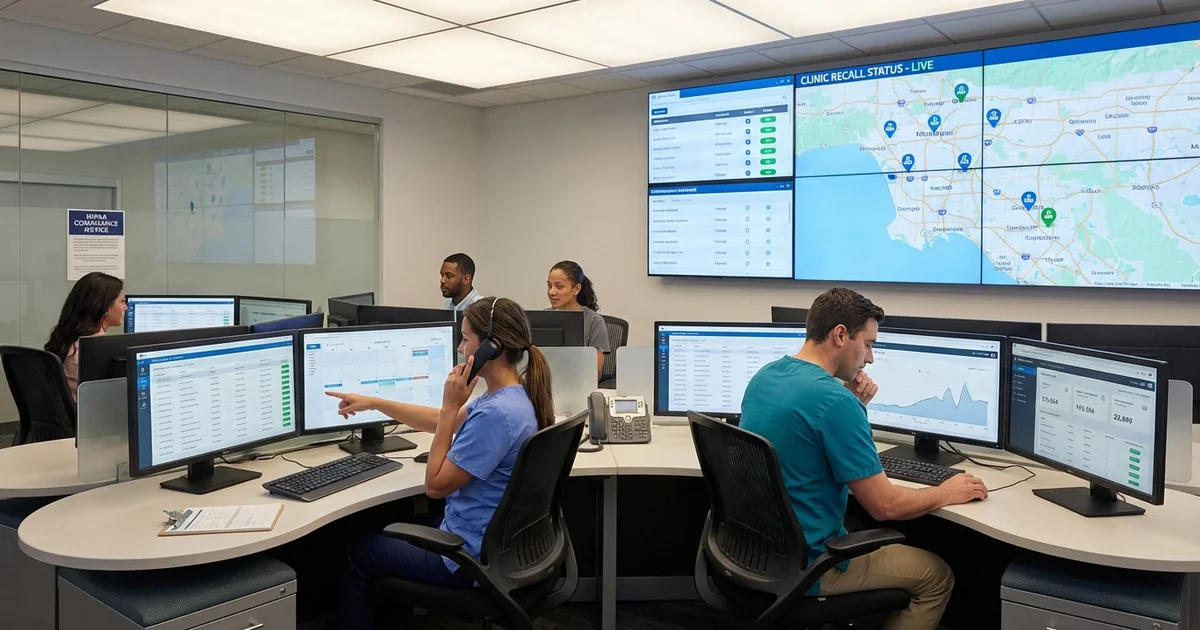


For multi-location healthcare groups, EBITDA is more than an accounting metric. It is the foundation of enterprise value. Every dollar of EBITDA multiplies into $8, $10, or $15 of value depending on your scale and operational quality. Patient retention directly impacts that EBITDA, often more powerfully than revenue growth initiatives that cost money to execute. This guide examines the specific mechanisms by which retention protects and grows EBITDA in multi-location healthcare operations.
Table of Contents
- How Does the EBITDA-Valuation Relationship Work?
- How Does Patient Retention Impact EBITDA?
- What Does the Retention-EBITDA Model Show?
- Which Retention Metrics Impact EBITDA?
- What Are the Most Effective EBITDA-Focused Retention Strategies?
- How Do You Protect EBITDA During Transitions?
- How Do You Measure Retention ROI?
- How Should Multi-Location Retention Governance Work?
How Does the EBITDA-Valuation Relationship Work?
Understanding how EBITDA translates to value is essential for prioritizing operational improvements:
The basic equation:
Enterprise Valuation Formula
Enterprise Value = Adjusted EBITDA x EBITDA Multiple
Current multiples by scale (2025-2026):
| Practice Scale | Revenue | EBITDA Multiple | Example Value |
|---|---|---|---|
| Single location | Under $2M | 3-5x | $1M × 4x = $4M |
| Small multi-site (2-4 locations) | $2-10M | 4-7x | $2M × 5.5x = $11M |
| Regional platform (5-15 locations) | $10-50M | 6-10x | $5M × 8x = $40M |
| Large platform (15+ locations) | $50M+ | 10-15x | $10M × 12x = $120M |
The compounding effect: When you improve operations, you benefit twice:
- EBITDA increases (the numerator)
- Multiple expands because improved operations signal lower risk (the multiplier)
A $1 million EBITDA improvement at 10x multiple adds $10 million to enterprise value. If that improvement also pushes your multiple from 10x to 11x on a $10M EBITDA base, that is another $10 million.
How Does Patient Retention Impact EBITDA?
Patient retention affects EBITDA through multiple mechanisms:
How Does Revenue Stability and Predictability Drive EBITDA?
The connection between retention and revenue stability is straightforward. Retained patients generate predictable, recurring revenue because they return on a known schedule for preventive care and ongoing treatment. That predictability reduces risk in buyer assessments, since acquirers can project future revenue with greater confidence when the patient base is stable. Lower risk directly supports higher multiples, which is why PE-backed healthcare operations prioritize retention metrics in their KPI dashboards. A practice with 90% retention is fundamentally less risky than one with 70% retention, and buyers price that difference into their offers.
Quantified impact:
| Retention Rate | Annual Revenue Stability | Multiple Impact |
|---|---|---|
| 70% | Moderate | Baseline |
| 80% | Good | +0.5-1x |
| 85% | Strong | +1-1.5x |
| 90%+ | Excellent | +1.5-2x |
A 15-location optometry group improved retention from 72% to 84%. Their EBITDA multiple expanded from 8x to 10x at sale, a 25% increase in valuation from the multiple alone.
How Do Reduced Acquisition Costs Improve EBITDA?
The math:
- Cost to acquire new patient: $150-400 (varies by specialty and market)
- Cost to retain existing patient: $20-50 per year
- Acquisition/retention cost ratio: 5-10x
EBITDA impact calculation:
For a 20-location dental group:
Current State (20% Attrition)
- 50,000 active patients
- 10,000 patients lost annually
- $300 cost to replace each
- Annual replacement cost: $3,000,000
Improved State (15% Attrition)
- 2,500 fewer patients to replace
- Savings: 2,500 x $300 = $750,000
- At 10x multiple: $7.5 million value creation
Why Do Retained Patients Generate Higher Revenue?
Retained patients generate more revenue than new patients:
Revenue comparison:
| Patient Type | Year 1 Revenue | Year 2+ Revenue | Lifetime Value |
|---|---|---|---|
| New patient | $400 | N/A (if lost) | $400 |
| Retained patient | $400 | $450+ | $2,500+ |
| Long-term patient (5+ years) | $400 | $500+ | $3,500+ |
Retained patients spend more for several interconnected reasons. Treatment acceptance increases as trust builds over time, with long-term patients accepting recommended treatments at rates 20 to 30 percentage points higher than new patients. They utilize more services because they are comfortable with the practice and its providers, making them more receptive to ancillary offerings like specialty lenses, whitening treatments, or elective procedures. Retained patients also generate referrals, bringing in family members and friends who arrive pre-sold on the practice. Perhaps most importantly, long-term patients exhibit less price sensitivity because their relationship with the provider transcends any single transaction. They are buying care, not comparing prices.
How Does Retention Improve Operational Efficiency?
Retained patients cost less to serve:
Efficiency gains:
| Factor | New Patient | Retained Patient | Efficiency Gain |
|---|---|---|---|
| Check-in time | 10-15 min | 3-5 min | 66% |
| Insurance verification | Required | Usually current | 80% |
| Record setup | Full onboarding | Updates only | 90% |
| Provider introduction | Required | Established | 100% |
| Treatment acceptance | 45-55% | 65-75% | 20-30% |
These efficiencies directly impact labor costs and provider productivity, flowing through to EBITDA. When a practice can see more patients per day because each visit takes less administrative time, the fixed costs of rent, equipment, and staffing are spread across more revenue-generating encounters. This is the operational use that makes retention such a powerful EBITDA driver in multi-location healthcare.
What Does the Retention-EBITDA Model Show?
Let us build a comprehensive model for a 15-location healthcare group:
Baseline Scenario
15-Location Healthcare Group Baseline
Patients per location: 3,000 | Total patients: 45,000
Revenue per patient: $500/year | Total revenue: $22,500,000
EBITDA margin: 18% | EBITDA: $4,050,000
Current retention: 75% | Annual attrition: 11,250 patients
Current multiple: 8x | Current value: $32,400,000
Improved Retention Scenario
Before (75% Retention)
- Annual attrition: 11,250 patients
- EBITDA: $4,050,000
- Multiple: 8x
- Value: $32,400,000
After (85% Retention)
- Annual attrition: 6,750 patients (4,500 fewer)
- Reduced acquisition cost: $1,125,000
- Higher revenue per patient: $337,500
- Operational efficiency: $112,500
- New EBITDA: $5,625,000 (39% increase)
- Multiple expansion: 8x to 9x
- New value: $50,625,000 (56% increase)
The 10% retention improvement (75% to 85%) created $18.2 million in enterprise value, without adding a single location. This is the power of retention as a value creation lever: it improves the numerator (EBITDA) through reduced costs and higher revenue, while simultaneously improving the multiplier through better operational metrics. No acquisition can match the capital efficiency of retaining patients you already have. For the detailed operational playbook on centralizing recall to drive these retention improvements, see our implementation guide.
Which Retention Metrics Impact EBITDA?
Track these metrics to understand retention’s EBITDA contribution:
Primary Retention Metrics
| Metric | Definition | Target | EBITDA Impact |
|---|---|---|---|
| Annual Patient Retention | Patients returning within 18 months | 80-90% | Direct |
| Recall Compliance Rate | Patients completing recommended visits | 70-85% | Direct |
| Treatment Acceptance Rate | Accepted treatment / Recommended treatment | 60-75% | Revenue per patient |
| Referral Rate | New patients from existing patient referrals | 15-25% | Acquisition cost |
Secondary Retention Metrics
| Metric | Definition | Target | EBITDA Impact |
|---|---|---|---|
| No-show Rate | Missed appointments / Scheduled appointments | Under 10% | Chair utilization |
| Same-day Fill Rate | Filled cancellation slots | 75%+ | Revenue recovery |
| Reactivation Rate | Dormant patients recovered | 20-30% | Revenue recovery |
| Patient Lifetime Value | Total revenue over patient tenure | Increasing | Long-term value |
How Does Location-Level Variance Reveal Improvement Opportunities?
Understanding retention variance across locations reveals improvement opportunities:
Example variance analysis:
| Location | Retention Rate | EBITDA Contribution | vs. Average |
|---|---|---|---|
| Downtown | 88% | $380,000 | +15% |
| Suburban A | 85% | $340,000 | +8% |
| Suburban B | 82% | $310,000 | +2% |
| Suburban C | 78% | $280,000 | -5% |
| Suburban D | 72% | $240,000 | -15% |
If Suburban D improved to network average (80%), their EBITDA contribution would increase by approximately $30,000, multiplied by the EBITDA multiple for total value impact. This variance analysis illustrates why healthcare operations benchmarks at the location level are essential for identifying improvement opportunities. When leadership can see exactly which locations underperform on retention and by how much, they can allocate resources to the sites where improvements will generate the greatest EBITDA lift.
What Are the Most Effective EBITDA-Focused Retention Strategies?
Prioritize retention initiatives by EBITDA impact:
Tier 1: High EBITDA Impact, Low Cost
Pre-appointment scheduling is the highest-impact, lowest-cost retention initiative available. By training the front desk to schedule the next visit before the patient leaves, practices can reduce recall outreach costs by 20 to 40 percent and lift EBITDA by 1 to 2 percent of revenue. The investment is minimal since it requires only a workflow change and consistent measurement of pre-scheduling compliance. Practices that implement effective front desk recall workflows see immediate improvements in their recall rates.
Automated recall sequences represent the next tier of impact. For $500 to $2,000 per month in platform costs, practices can achieve a 10 to 15 percent improvement in recall compliance through configured SMS and email sequences that fire at predetermined intervals. The EBITDA lift ranges from 0.5 to 1 percent of revenue, and the implementation involves configuring the communication platform with approved message templates and timing rules.
No-show recovery rounds out the high-impact, low-cost tier. Automated same-day outreach to patients on the waitlist when a cancellation or no-show occurs can recover 40 to 60 percent of same-day openings. The EBITDA impact is 0.5 to 1 percent of revenue. For a comprehensive approach to reducing no-shows across multiple locations, see our dedicated guide.
Tier 2: Moderate EBITDA Impact, Moderate Cost
A dedicated retention team represents a moderate investment with significant returns. At $40,000 to $80,000 per year per FTE, a centralized or per-location retention team can deliver a 5 to 10 percent retention improvement and an EBITDA lift of 1 to 3 percent of revenue. The team handles outbound recall calls, manages non-responder escalations, and coordinates reactivation efforts that would otherwise fall through the cracks at busy practices.
Patient experience programs cost $10,000 to $50,000 per year and improve retention by 5 to 8 percent through systematic satisfaction measurement and improvement. The EBITDA lift ranges from 0.5 to 2 percent of revenue. Implementation involves deploying patient surveys, acting on feedback, and holding locations accountable for experience scores.
Reactivation campaigns target dormant patients who have not visited in 12 to 24 months. At a cost of $0.50 to $5 per patient reached, quarterly campaigns can recover 20 to 30 percent of dormant patients and deliver an EBITDA lift of 0.5 to 1.5 percent of revenue. The ROI on reactivation campaigns is typically among the highest of any retention initiative because the patients already have a relationship with the practice.
Tier 3: High EBITDA Impact, Higher Investment
Technology Platform Upgrade:
- Cost: $50,000-200,000+ implementation
- Impact: Enables all other initiatives at scale
- EBITDA lift: 2-5% of revenue (indirect)
- Implementation: 6-12 month project
Patient Membership Programs:
- Cost: Setup and administrative overhead
- Impact: 90%+ retention in program members
- EBITDA lift: 1-3% of revenue
- Implementation: Design, launch, manage
How Do You Protect EBITDA During Transitions?
Retention becomes critical during ownership transitions or market changes:
What Happens to Retention During M&A Transactions?
Before a transaction, the selling group must document retention metrics thoroughly because sophisticated buyers will verify every claim during due diligence. This means demonstrating a retention trend that is either improving or stable, showing retention broken down by patient cohort so buyers can see how newer patients perform versus established ones, and proving that retention programs produce measurable results. Groups preparing for a pre-sale operational cleanup should prioritize retention documentation alongside financial cleanup.
After the transaction closes, maintaining patient-facing continuity becomes critical. Staff should communicate carefully about ownership changes, emphasizing what will stay the same rather than what will change. Preserving provider relationships is essential because patients are loyal to their doctor, not to the corporate entity. Leadership should monitor retention weekly during the integration period and treat any decline as an urgent issue requiring immediate intervention.
How Does Retention Protect EBITDA During Economic Downturns?
Retention serves as a natural recession defense. Existing patients tend to maintain at least some level of care even when cutting back on discretionary spending, while new patient acquisition flow typically drops first during economic downturns. Strong retention provides a revenue floor that keeps the practice viable even when growth slows. Lower acquisition costs also preserve margins during periods when marketing budgets may be cut.
During downturns, the most effective EBITDA protection tactics center on keeping existing patients engaged. Emphasizing the preventive care value of regular visits helps patients prioritize their health even when budgets are tight. Offering flexible payment options removes financial barriers that might cause patients to delay care. Sending insurance benefit utilization reminders encourages patients to use benefits they have already paid for through premiums. Relationship-focused communication from their provider reminds patients that the practice cares about them as individuals, not just as revenue sources.
What Is the Provider Transition Risk?
The provider transition risk: When a provider leaves, their patients may follow. This can materially impact EBITDA.
Effective mitigation strategies address this risk proactively. Building a strong practice brand alongside the individual provider brand ensures that patients identify with the location and team, not solely with one doctor. Encouraging multi-provider relationships means patients have connections to more than one clinician at the practice. Structured transition protocols guide how departing providers communicate with patients and how the practice introduces replacement providers. Retention incentives for remaining providers help stabilize the team during transitions, which in turn stabilizes the patient base.
Quantified risk:
Without Mitigation
- Provider with 1,500 patients departs
- 40-60% patient loss (600-900 patients)
- Revenue impact: $300,000/year
- EBITDA impact (at 20% margin): $60,000/year
- Value impact (at 10x): $600,000
With Mitigation
- 15-25% patient loss (225-375 patients)
- Revenue impact: $150,000/year
- EBITDA impact: $30,000/year
- Value impact: $300,000
- Mitigation value: $300,000 preserved
How Do You Measure Retention ROI?
Calculate the return on retention investments:
ROI Framework
Retention Investment ROI Formula
ROI = (EBITDA Improvement x EBITDA Multiple) / Investment Cost
Example calculation:
Retention team investment:
- Annual cost: $120,000 (2 FTEs)
- Retention improvement: 5% (80% → 85%)
- Patient base: 50,000
- Patients retained instead of lost: 2,500
- Revenue preserved: 2,500 × $500 = $1,250,000
- EBITDA contribution (at 20%): $250,000
- EBITDA multiple: 10x
- Value creation: $2,500,000
ROI: $2,500,000 / $120,000 = 20.8x return
What Are the Attribution Challenges in Measuring Retention Impact?
Measuring retention impact requires careful attribution:
Measuring retention impact accurately requires tracking retention rates before and after each initiative, broken down by patient cohort, by location, and by the specific touchpoints each patient received. This granularity allows leadership to understand which initiatives actually move the needle and which locations benefit most.
Common attribution pitfalls include crediting all improvement to a single initiative when multiple factors may contribute, ignoring market or competitive changes that independently affect patient behavior, failing to control for changes in patient mix over time, and using measurement windows that are too short to capture the full effect of retention investments.
How Should Multi-Location Retention Governance Work?
Scale retention programs across locations:
Centralized Components
| Component | Why Centralize |
|---|---|
| Technology platform | Consistency, cost efficiency |
| Messaging templates | Brand consistency |
| Analytics and reporting | Comparability |
| Training programs | Quality consistency |
Decentralized Components
| Component | Why Localize |
|---|---|
| Execution timing | Staff availability |
| Provider personalization | Relationship authenticity |
| Market-specific messaging | Local relevance |
| Exception handling | Situational judgment |
Performance Management
Weekly reviews:
- Recall rates by location
- No-show rates and same-day fill
- Reactivation campaign progress
Monthly reviews:
- Retention rates by location
- EBITDA contribution analysis
- Best practice sharing
Quarterly reviews:
- Retention trend analysis
- Initiative ROI assessment
- Strategy adjustments
Key Takeaways
Patient retention directly protects and grows EBITDA in multi-location healthcare:
The mechanisms:
- Revenue stability supports higher multiples
- Reduced acquisition costs drop directly to EBITDA
- Higher revenue per retained patient compounds
- Operational efficiency improves margins
The math:
- 10% retention improvement can create 15-25% EBITDA improvement
- EBITDA improvement multiplies by 8-15x in enterprise value
- A $4M EBITDA practice improving retention by 10% might create $2-5M in value
The priorities:
- Measure retention accurately and consistently
- Start with low-cost, high-impact initiatives
- Track EBITDA impact, not just retention rates
- Protect retention during transitions
The bottom line: In multi-location healthcare, every percentage point of retention improvement flows through to EBITDA, and every dollar of EBITDA multiplies into enterprise value. Retention is not just a patient care metric; it is a financial lever that creates real value for owners and investors.
For strategies to improve retention across locations, see our DSO patient retention strategy guide. For the full framework on PE-backed healthcare operations, review our PE-backed healthcare operations guide.
Related Reading
- PE-Backed Healthcare Operations: KPIs That Drive Valuation
- Scaling Optometry Network Operations: 5 to 50 Locations
- DSO Patient Retention Strategy: Scaling to 10+ Locations
Multi-location healthcare groups need standardized intake across every site. Talk to our team about how MyBCAT provides centralized call answering and patient access for growing organizations.
Sources
- MGMA: Foundational Benchmarks and KPIs for Medical Practice Operations
- Nechay Appraisals: EBITDA Multiples in Medical Practice Valuation
- Clearly Acquired: Average EBITDA Multiples for Healthcare Practices
- Focus Bankers: Medical Practice Valuation
- Raincatcher: Healthcare Company Valuation Multiples
- Physician Side Gigs: EBITDA Multiples in Private Practice