Table of Contents
- Why Does Phone Call Handling Require Centralized Standards?
- How Should Multi-Location Groups Structure Greeting Protocols?
- What Are Effective Hold and Transfer Procedures for Enterprise Groups?
- How Should Groups Approach Training for Call Handling Consistency?
- What Compliance Considerations Apply to Phone Handling at Scale?
- How Should Groups Monitor and Measure Call Handling Quality?
- How Can Technology Support Enterprise Phone Handling?
For dental support organizations and multi-location dental groups, every inbound phone call represents a direct connection point between the organization and its patient population.
When call handling varies from one location to another with different greetings, inconsistent hold procedures, and variable follow-up protocols, the patient experience fragments. This fragmentation creates operational inefficiencies that compound across the portfolio and erode the brand consistency that enterprise groups work to maintain.
This playbook provides a structured approach to standardizing phone call handling across dental group locations. The focus is on operational protocols that scale, quality assurance frameworks that identify variance before it becomes problematic, and training systems that produce consistent agent performance regardless of which location the patient contacts.
Multi-location dental groups operating three or more sites will find actionable frameworks for centralization, QA calibration, and compliance-aware call handling.
Why Does Phone Call Handling Require Centralized Standards?
The Multi-Location Coordination Challenge
A dental group operating across several locations faces coordination challenges that single-site practices never encounter. Each location may have developed its own approach to answering calls, handling holds, and managing inquiries. Without centralized standards, these variations become embedded in local culture, making standardization progressively more difficult as the organization grows through acquisition or de novo expansion.
The American Dental Association provides guidance on standard greetings, scripts, and protocols for handling patient phone calls, covering communication skills, hold procedures, and consistent messaging approaches [1].
These foundational recommendations become especially relevant at scale, where consistency requires deliberate infrastructure rather than emerging organically from team proximity. DSO leadership teams benefit from adopting ADA-aligned protocols because they provide a defensible, industry-recognized baseline for training and QA calibration.
When a patient calls Location A in one market and experiences a professional, well-structured interaction, then calls Location B in another market and encounters a rushed, inconsistent experience, the patient’s perception of the organization may suffer. Enterprise dental groups recognize that the phone call often serves as the first impression. That first impression can shape downstream patient decisions regarding scheduling, retention, and referrals.
Operational Implications of Inconsistent Call Handling
Inconsistent call handling introduces friction into multiple operational systems simultaneously. Scheduling workflows become unpredictable when different locations capture patient information differently or apply varying criteria for appointment prioritization.
Revenue cycle processes encounter complexity when initial patient interactions fail to collect complete insurance verification data. Quality assurance efforts struggle to establish baselines when the underlying processes being measured differ site to site.
For dental groups backed by private equity or operating under DSO structures, these operational inconsistencies have implications for financial performance. The time spent reconciling process variations, retraining staff who move between locations, and managing patient complaints about inconsistent experiences represents overhead that detracts from the organization’s ability to execute on growth objectives.
Industry research suggests that practices maintaining high call answering rates tend to report fewer patient complaints and experience faster appointment slot utilization compared to practices with poor phone responsiveness [7].
Establishing consistent, professional call handling across all locations positions the organization to pursue these operational benefits systematically rather than sporadically. Groups with strong call-handling programs often observe improvements in scheduling efficiency and patient satisfaction scores, though actual results vary based on implementation quality and local market conditions.
Why Standardization Matters More at Scale
When a dental group operates three, five, or ten or more locations, the coordination overhead grows faster than headcount. A single location can rely on informal norms and proximity-based training. A multi-location group cannot. Staff turnover means new hires arrive at different locations with different shadowing experiences. Acquisitions introduce entirely new cultural norms. Expansion into new markets brings regional patient expectations.
Standardization does not mean rigid uniformity. It means defining which elements of the call experience are non-negotiable across the organization and which can flex for legitimate local reasons. This distinction allows operations leaders to maintain brand consistency while respecting reasonable site-level variation.
How Should Multi-Location Groups Structure Greeting Protocols?
Establishing the Standard Greeting Framework
The greeting sets the tone for the entire patient interaction. For multi-location groups, the greeting must accomplish several objectives simultaneously: it must identify the practice clearly, establish professional warmth, and create space for the patient to articulate their needs. A greeting that achieves these objectives in one location but fails in another creates brand inconsistency that patients notice.
A standardized greeting framework typically includes the practice name, the agent’s name, and an offer to assist. The specific wording may vary based on regional market expectations or specialty focus, but the structural elements remain consistent. When every location uses the same core framework, patients experience the organization as cohesive regardless of which number they dial.
Trade publication guidance on phone etiquette emphasizes the importance of answering calls promptly, delivering greetings consistently, practicing active listening, and handling hold procedures professionally [6].
These elements form the foundation of an enterprise-grade call handling protocol. Enterprise dental groups benefit from documenting these standards in a central playbook that all locations reference.
Localizing Within the Framework
While the core greeting structure should remain consistent across locations, multi-location groups often need to accommodate legitimate local variations. A pediatric-focused location may benefit from a slightly warmer, more family-oriented greeting delivery. A location serving a different specialty mix may need adjusted pacing or different service emphasis. These variations can exist within a standardized framework without undermining consistency.
The key is documenting which elements are fixed, such as structure, brand identifiers, and professional standards, and which elements permit localization, such as tone adjustments, pacing, and specialized offerings.
This documentation becomes part of the training materials and quality assurance rubrics, ensuring that agents understand both the required standards and the permitted variations. Operations leaders can then calibrate QA scorecards to reflect this distinction.
Training Agents on Greeting Delivery
Greeting consistency does not emerge from distributing a script; it emerges from deliberate training and reinforcement. Multi-location groups benefit from establishing training programs that include recorded examples of ideal greetings, opportunities for agents to practice with feedback, and ongoing calibration sessions where supervisors review live calls and provide coaching.
New agents joining any location should experience the same core greeting training, ensuring that the organization’s phone handling quality does not depend on which location happens to have strong local training traditions.
Centralized training content, delivered consistently across the portfolio, creates the foundation for consistent patient experiences. This centralized approach also simplifies onboarding when the organization acquires new locations or expands into new markets.
What Are Effective Hold and Transfer Procedures for Enterprise Groups?
Managing Holds Without Losing Patients
When agents must place callers on hold to verify information, consult with clinical staff, or handle administrative tasks, the hold experience itself becomes part of the patient interaction. Extended holds without acknowledgment, abrupt returns from hold, or transfers that require patients to repeat information all create negative impressions that accumulate over time.
Enterprise groups benefit from establishing hold duration targets and procedures for returning to callers if those targets are not met. Agents can be trained to explain why a hold is necessary, provide an estimated duration when possible, and offer alternatives such as callbacks when holds extend beyond acceptable thresholds.
These procedures should be documented and reinforced through quality monitoring. Groups should confirm appropriate hold duration targets with their operational leadership based on site-specific factors and patient population expectations.
The goal is to ensure that every location handles holds consistently. A patient placed on hold at any location should receive the same professional acknowledgment, periodic check-ins if the hold extends, and courteous return to conversation. This consistency requires documented procedures, agent training, and ongoing quality assurance.
Transfer Protocols That Preserve Context
Multi-location groups often route calls between locations or between front desk and clinical teams. Each transfer creates risk: risk of losing the caller, risk of requiring information repetition, risk of creating frustration that colors the patient’s perception of the organization.
Effective transfer protocols include warm handoffs wherever possible, where the transferring agent introduces the receiving party to the call context before completing the transfer. When warm transfers are not feasible, agents can provide the receiving party with essential context through internal communication systems.
Patients generally prefer not to repeat basic information such as name, date of birth, or reason for calling after a transfer, and reducing repetition tends to improve satisfaction scores.
For centralized call centers serving multiple locations, transfer protocols become especially critical. The centralized agent must understand which location’s team should receive the transfer, what information that team needs, and how to execute the handoff smoothly. These procedures require documentation and regular calibration to maintain effectiveness across the organization.
Technology Infrastructure for Effective Transfers
The technology stack supporting phone operations significantly influences transfer quality. Phone systems that support warm transfers, display caller context to receiving agents, and log transfer patterns enable the procedures described above. Legacy phone systems that lack these capabilities may require workarounds or upgrades.
Multi-location groups benefit from evaluating their phone infrastructure against the operational requirements of consistent, professional call handling. The investment in appropriate technology tends to support improved patient satisfaction, reduced agent frustration, and better data capture for operational analysis.
Groups considering infrastructure upgrades should assess their current state and develop roadmaps for addressing gaps in consultation with their IT and operations teams.
How Should Groups Approach Training for Call Handling Consistency?
Centralized Training Content Development
Training content should be developed centrally to ensure consistency across the organization. This includes scripts, role-play scenarios, call recordings demonstrating ideal behaviors, and assessment rubrics. When training content varies by location, call handling quality tends to vary as well.
Peer-reviewed research examining effective patient communication suggests that skilled communication approaches contribute to patient trust, treatment adherence, and overall satisfaction [5].
Training programs benefit from emphasizing these communication principles while providing specific, actionable guidance on how to implement them during phone interactions. DSO training leads can reference academic literature on patient communication to inform curriculum development.
The American Dental Association provides resources on handling inquiries from prospective patients, building rapport, and converting phone calls into appointments [3].
These materials can inform training content development, ensuring that the organization’s approach aligns with professional standards and best practices. Centralized training also simplifies compliance with any organization-wide quality standards.
Onboarding New Agents to Enterprise Standards
When new agents join any location within the organization, their onboarding should include comprehensive phone handling training. This training should not rely solely on local shadowing, which transmits both good practices and local deviations. Instead, centralized training modules should establish the foundation, with local shadowing serving to familiarize agents with site-specific logistics rather than teaching core phone skills.
The onboarding period should include call monitoring with feedback, ensuring that new agents internalize the organization’s standards before handling calls independently. This investment in thorough onboarding helps protect the organization against quality degradation as teams change and locations add staff. Groups with strong onboarding programs tend to see faster time-to-proficiency for new hires.
Ongoing Training and Skill Development
Training is most effective as an ongoing process rather than a one-time event. Phone handling skills require ongoing reinforcement, particularly as call volumes increase, new services are introduced, or organizational protocols evolve. Multi-location groups benefit from establishing regular training touchpoints including skill refreshers, protocol reviews, and recertification cycles.
These ongoing training elements should be consistent across locations, delivered through centralized platforms where possible. When training occurs locally, the content and delivery standards should be specified centrally to prevent drift.
Quality assurance data should inform training focus areas, creating a feedback loop where monitoring reveals skill gaps and training addresses them. This continuous improvement approach supports sustained performance across the organization.
What Compliance Considerations Apply to Phone Handling at Scale?
Privacy and Patient Information
Phone interactions frequently involve patient health information, creating privacy obligations that extend to call handling procedures. Groups operating at scale should consider training agents to verify caller identity before discussing protected health information, to avoid leaving detailed health information in voicemail messages that could be accessed by unauthorized individuals, and to handle requests for records appropriately.
The American Dental Association provides guidance on phone call privacy requirements and voicemail message guidelines for dental practices [4]. Multi-location groups should confirm with their compliance counsel that protocols align with these professional standards and any applicable privacy regulations.
Compliance requirements should be integrated into training, reinforced through quality monitoring, and documented in operational procedures. Groups should review specific privacy obligations with their legal and compliance teams to ensure alignment with current regulations.
Consent and Communication Practices
Outbound calling for appointment reminders, recall campaigns, or follow-up introduces additional compliance considerations. The ADA provides guidance on consent requirements and considerations for appointment confirmations and similar outbound communications [2].
Multi-location groups benefit from establishing clear protocols for obtaining and documenting patient consent for various communication types, with specific implementation reviewed by compliance counsel.
These protocols should be implemented consistently across all locations, with technology systems supporting consent documentation and retrieval. Agents should be trained on consent requirements and the procedures for verifying consent status before initiating outbound communications. Groups should confirm their specific consent protocols with legal counsel to ensure alignment with applicable regulations.
Documentation and Record-Keeping
Compliance frameworks generally require documentation of policies, procedures, and training. Multi-location groups should maintain centralized documentation of phone handling protocols, training curricula, and quality monitoring programs. This documentation serves both operational purposes such as onboarding, troubleshooting, and continuous improvement and compliance purposes such as demonstrating due diligence and supporting audits.
The documentation should be version-controlled, with clear processes for updates and communication of changes to all affected locations. Outdated documentation creates compliance risk and operational confusion; maintaining current, accessible documentation requires deliberate infrastructure. Operations teams should establish review cycles to ensure documentation remains current.
How Should Groups Monitor and Measure Call Handling Quality?
Quality Assurance Program Design
Quality assurance programs for phone handling should include regular call monitoring, scoring against defined rubrics, feedback delivery to agents, and aggregate reporting for operational leadership. The program should cover all locations uniformly, using consistent scoring criteria to enable meaningful comparisons across the organization.
Call samples should be selected systematically rather than relying solely on supervisor discretion. Random sampling ensures that monitoring captures representative performance rather than cherry-picked examples. Targeted sampling based on specific concerns or performance indicators can supplement random sampling for coaching purposes.
QA scorecards should reflect the organization’s priorities including greeting consistency, information capture accuracy, hold procedure compliance, professional tone, and other elements defined in the organization’s standards.
These scorecards should be calibrated regularly across the QA team to ensure scoring consistency. Enterprise healthcare groups typically track these KPIs to benchmark performance across locations.
Analytics and Performance Tracking
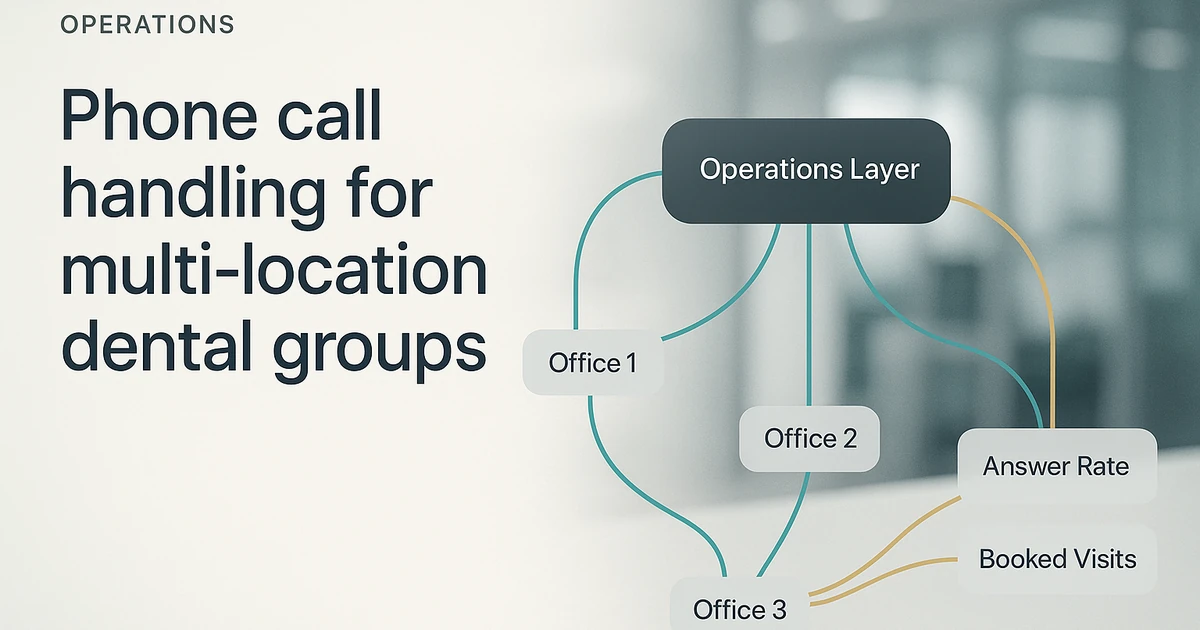
Beyond individual call quality, multi-location groups should track aggregate performance metrics: answer rates, hold times, transfer completion rates, and similar operational indicators. These metrics should be reportable at location, regional, and organizational levels to enable appropriate accountability and benchmarking.
Technology systems should capture the data required for these analytics automatically. Manual data collection is labor-intensive and error-prone; automated capture from phone systems provides consistent, comprehensive data for analysis.
Dashboards presenting key metrics enable operational leaders to identify issues quickly and track improvement over time. Groups with mature analytics capabilities can correlate call metrics with downstream outcomes like scheduling rates and patient retention.
Acting on Quality Data
Quality data only creates value when it drives action. Multi-location groups should establish processes for reviewing quality metrics regularly, identifying locations or individuals requiring intervention, and implementing corrective measures. These processes should include clear accountability for follow-up and documentation of improvement efforts.
When quality issues emerge at specific locations, the response should include diagnosis to understand why the location is underperforming, intervention to determine what training, coaching, or resource adjustments are needed, and monitoring to confirm whether the intervention is producing improvement. This structured approach to quality improvement creates accountability and enables continuous elevation of organizational performance.
How Can Technology Support Enterprise Phone Handling?
EHR and Practice Management Integration
Phone interactions frequently require access to patient records including verifying appointments, checking insurance information, and noting patient concerns. When phone systems integrate with electronic health records and practice management systems, agents can access relevant information during calls without manual lookups or system switching.
Integration requirements should be considered during both phone system selection and EHR/PMS decisions. The ability to surface patient context during inbound calls, log call notes directly to patient records, and trigger appropriate workflows such as appointment creation, insurance verification, and clinical follow-up creates efficiency gains that compound across high call volumes.
Multi-location groups should evaluate their current integration state and develop roadmaps for addressing gaps. Technology investments that reduce per-call handling time, improve data capture accuracy, and enhance agent experience tend to support better patient interactions, though specific outcomes depend on implementation quality and organizational context.
Centralized Call Centers and Distributed Models
Some multi-location groups operate centralized call centers that handle calls for all locations. Others maintain distributed phone operations at each location. Hybrid models combine centralized intake with local support for complex or location-specific matters. Each model has implications for phone handling consistency.
Centralized models offer natural standardization since agents in a single center can be trained, monitored, and managed uniformly. However, centralization requires robust technology for routing calls appropriately and ensuring that centralized agents have access to location-specific information.
Distributed models may align better with organizational culture or patient expectations but require more deliberate effort to maintain consistency. The protocols, training, and quality monitoring described throughout this playbook become essential infrastructure for achieving standardization in distributed environments.
Emerging Technology Considerations
Technology evolution continues to introduce new capabilities relevant to phone handling. Automated systems can handle certain routine inquiries. Analytics tools can identify patterns in call data. Quality monitoring can be augmented with automated scoring of certain call elements.
Multi-location groups should stay informed about technology developments while maintaining focus on the fundamentals: professional, consistent, efficient phone handling that serves patients well and supports operational objectives. Technology should enhance these fundamentals, not substitute for them. Groups evaluating AI-augmented phone systems should assess fit with their specific patient population and operational requirements.
Related Reading
- Enterprise Call Answering for Healthcare Groups
- DSO Call Center KPI Benchmarks for Enterprise Healthcare
- Multi-Location Healthcare Intake Guide
- DSO Centralized Patient Scheduling Operations
- AI Phone Answering for Dental Offices
Sources
- American Dental Association - Patient Phone Calls: Standard Telephone Greetings and Scripts
- American Dental Association - Follow the Rules When Phoning Patients
- American Dental Association - Phone Calls from Prospective Patients
- American Dental Association - HIPAA 20 Questions
- NIH PMC - An Overview of Dentist–Patient Communication in Quality Dental Care
- DentistryIQ - Mastering Dental Front Desk Etiquette for a Lasting Impression
- Resonate - Call Answering Rates in Dental Clinics Statistics
Managing phone call handling across 3+ dental locations? Request an Enterprise Assessment for your group.