
Table of Contents
- Why Do Multi-Location Dental Groups Struggle with Lead Capture?
- What Makes Phone Systems Different at Enterprise Scale?
- How Do Compliance Requirements Shape Phone Infrastructure?
- What Technology Decisions Matter for Centralized Lead Capture?
- How Should DSOs Approach Phone System Implementation?
- What Ongoing Operations Support Lead Capture Success?
When a DSO operates three, ten, or forty locations, the phone becomes more than a communication tool. It becomes the entry point for patient acquisition across an entire portfolio. Every unanswered ring, every inconsistent greeting, every missed callback represents leakage that compounds at scale.
For operations leaders responsible for standardizing patient access across a dental group, the question is not whether phone infrastructure matters but how to build systems that perform consistently across every site.
Multi-location dental groups face a fundamentally different challenge than single practices. The complexity is not additive; it is multiplicative. Staffing variations, technology fragmentation, and compliance oversight all interact in ways that make centralized lead capture both more difficult and more valuable. This playbook examines how enterprise dental organizations approach phone system decisions with the operational rigor their scale demands.
Why Do Multi-Location Dental Groups Struggle with Lead Capture?
The challenges that plague single-location practices become systemic failures when they occur across a portfolio. Understanding these failure modes is the first step toward building infrastructure that prevents them.
The Fragmentation Problem Across Sites
Most DSOs grow through acquisition, inheriting a patchwork of phone systems, answering protocols, and patient communication workflows. One location might use a VoIP system with call recording; another relies on traditional landlines with no visibility into call outcomes.
A third might have implemented an answering service independently, creating yet another data silo. This fragmentation means that operations leaders have no single source of truth for understanding how their patient access function performs across the organization.
The impact extends beyond reporting difficulties. When each location handles calls differently, the patient experience becomes inconsistent. A prospective patient calling Location A might reach a trained scheduler within moments, while the same call to Location B goes to voicemail during peak hours.
For groups focused on building a unified brand, this inconsistency undermines the value proposition of operating at scale. The fragmentation also makes it nearly impossible to identify which locations need additional support, training, or staffing adjustments.
Staff Inconsistency and Training Gaps
Dental practices across the industry face ongoing staffing challenges, and technology adoption has become one response to these pressures. When staff turnover occurs at individual locations, the institutional knowledge about phone handling often walks out the door.
New hires receive varying levels of training depending on who onboards them and how busy the practice happens to be that week. The result is a constant drift away from whatever standards the organization has attempted to establish.
For multi-location groups, this training inconsistency creates a persistent quality problem. Even when corporate operations develops excellent call scripts and protocols, the execution varies dramatically based on local management attention and staff tenure.
Without systematic QA processes that span the entire organization, these variations go undetected until they surface as patient complaints or unexplained acquisition shortfalls. The burden of maintaining consistent training across locations often falls on practice management systems that were never designed for this level of oversight.
Lost Visibility Into Call Performance
Perhaps the most consequential challenge is the lack of cross-location visibility. When a VP of Operations wants to understand why patient acquisition dipped at certain locations, phone performance data is often the last place they can look because it does not exist in a usable form. Call volumes, answer rates, conversion outcomes, and follow-up completion exist in fragments across different systems, if they are tracked at all.
Missed calls represent a meaningful source of revenue leakage for dental practices, but quantifying that leakage requires data that most fragmented systems cannot provide.
The absence of visibility creates a management vacuum. Location managers cannot be held accountable for phone performance metrics that are not being measured. Operations leaders cannot allocate resources to the locations that need them most. The organization operates with a significant blind spot in one of its most important patient touchpoints.
What Makes Phone Systems Different at Enterprise Scale?
The requirements for phone infrastructure shift fundamentally when an organization operates multiple locations. Decisions that are straightforward for a single practice become strategic choices with operational and financial implications across the portfolio.
Volume Complexity Versus Single-Site Operations
A single dental practice might handle a manageable number of calls per day, with one or two front desk staff covering the phones alongside their other responsibilities. At enterprise scale, the math changes entirely. Call volume across a multi-location group can overwhelm traditional staffing models, particularly during peak periods when multiple locations experience high demand simultaneously.
The volume complexity also creates opportunities that do not exist at smaller scale. With sufficient call volume, organizations can staff dedicated phone teams with appropriate coverage across operating hours. They can implement skills-based routing that matches callers with agents trained for specific scenarios. They can amortize the cost of sophisticated phone technology across enough call volume to make enterprise-grade features economically viable.
The Need for Unified Reporting
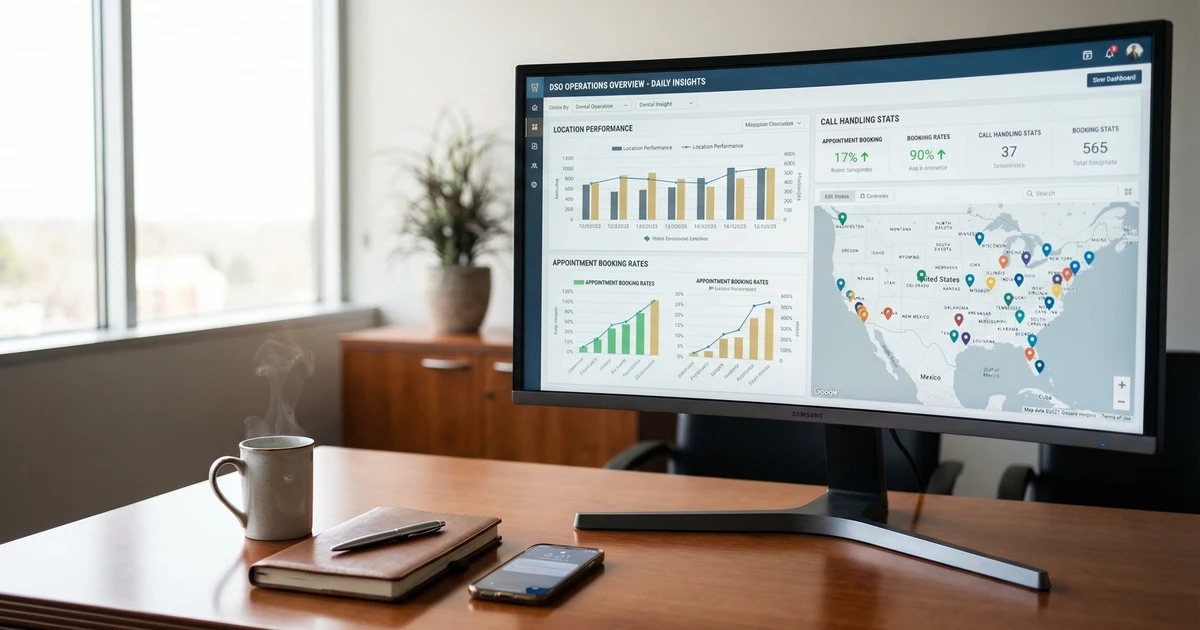
Operations leaders managing multi-location dental groups need to see performance data across their entire portfolio in a single view. They need to compare locations against each other and against organizational benchmarks. They need to identify trends that might indicate emerging problems before those problems become crises. This requirement for unified reporting shapes every decision about phone infrastructure.
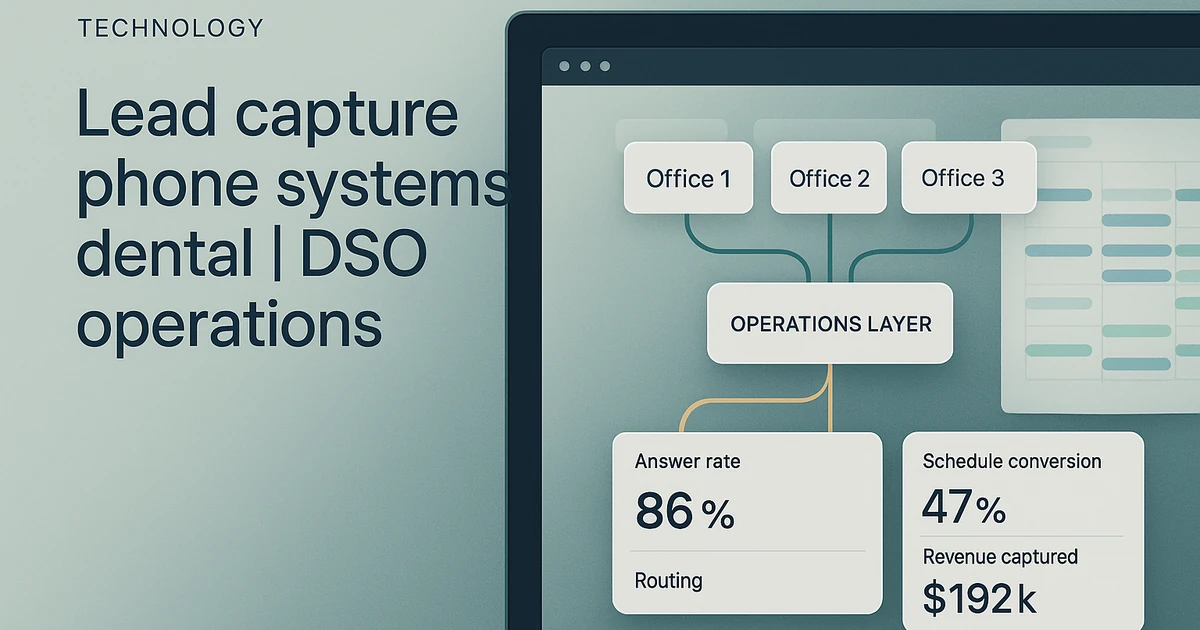
The reporting need extends beyond simple metrics like call volume and answer rate. Enterprise dental groups want to understand the full patient acquisition funnel: how many calls came in, how many reached a live person, how many resulted in scheduled appointments, and how many of those appointments actually occurred.
Connecting these touchpoints requires phone systems that integrate with practice management software and can track calls through to outcomes.
Integration Requirements Multiply
Every location in a dental group likely runs some form of practice management system, but the specific systems vary based on when each practice was acquired and what technology decisions were made historically. Digital dentistry technology adoption continues to evolve, and phone infrastructure must connect with these evolving systems.
A phone platform that integrates well with one practice management system may have limited or no integration with another. For operations teams trying to build unified workflows, these integration gaps create manual workarounds and data quality problems.
The integration challenge is not limited to practice management systems. Multi-location groups often want their phone systems to connect with CRM platforms for tracking prospective patients, analytics tools for performance monitoring, and communication platforms for patient follow-up. Each integration point represents a potential failure mode and an ongoing maintenance requirement.
How Do Compliance Requirements Shape Phone Infrastructure?
Healthcare organizations operating phone systems that handle patient information face specific regulatory considerations. For multi-location dental groups, these considerations influence vendor selection, system architecture, and operational procedures.
HIPAA Considerations for Call Handling
Phone conversations in dental practices often involve protected health information. Patients call to discuss symptoms, treatment plans, insurance details, and other sensitive topics.
The HHS has provided guidance on how healthcare organizations should approach compliance when using tracking technologies and systems that capture patient communications. Organizations should work with their compliance teams to evaluate how their phone systems handle, store, and transmit this information.
For multi-location groups, the compliance picture becomes more complex. Each vendor in the phone infrastructure stack must be evaluated for appropriate safeguards. Business associate agreements need to cover the specific ways that patient information flows through the system. The decentralized nature of multi-location operations means that compliance depends not just on technology choices but on consistent procedures at every site.
Documentation and Audit Trail Needs
Enterprise dental organizations typically face more rigorous audit requirements than single practices. Whether the scrutiny comes from private equity sponsors, insurance company audits, or internal compliance teams, the organization needs to demonstrate that appropriate controls exist around patient communications. Phone systems that cannot provide detailed audit trails create risk.
The documentation need influences technology decisions. Call recording, while valuable for training and quality assurance, creates its own compliance considerations around consent and data retention. Organizations must balance the operational benefits of comprehensive call documentation against the additional compliance burden it creates.
Vendor Evaluation Through a Compliance Lens
When evaluating phone system vendors, multi-location dental groups should consider compliance posture alongside functionality and price. This includes understanding how vendors handle data security, what certifications or attestations they can provide, and how they support customers in meeting regulatory requirements.
Organizations adopting AI and automation in their practices face additional considerations around how these technologies interact with patient data.
The vendor evaluation process often reveals that enterprise-grade phone solutions designed for healthcare come with a premium compared to general-purpose business phone systems. For multi-location groups, this premium may be justified by the reduced compliance risk and the operational features that support scale.
What Technology Decisions Matter for Centralized Lead Capture?
Technology choices for phone infrastructure affect operations across every location. The decisions made at the platform level constrain or enable what the organization can accomplish operationally.
Deployment Model and Security Oversight
The choice between cloud-hosted and on-premise phone infrastructure involves tradeoffs that vary based on organizational context. Cloud solutions typically offer easier deployment across multiple locations and reduce the burden of managing hardware at each site.
On-premise solutions may offer more control over data handling, which some organizations prefer for compliance reasons. Many enterprise dental groups end up with hybrid approaches, using cloud platforms while maintaining certain controls on-premise.
The deployment decision also affects disaster recovery and business continuity. When phone infrastructure lives in a single on-premise system, a local outage takes down patient communications for that location entirely. Cloud-based systems can provide failover capabilities that route calls to other locations or to backup answering resources when primary systems fail.
Workflow Handoffs and System Connections
The value of phone system integration depends on identifying which workflow handoffs actually matter for operational outcomes. Not every possible integration delivers proportionate value relative to its implementation cost and ongoing maintenance burden. Operations teams should focus on the connections that directly affect patient experience and staff efficiency.
The most valuable integrations typically involve scheduling workflows, where call outcomes translate directly into appointments in the practice management system. Dental software integrations that support this workflow reduce manual data entry, minimize errors, and provide the connection between phone activity and patient acquisition outcomes that operations leaders need for performance management.
Cross-Location Visibility for QA and SLA Monitoring
Enterprise dental groups need phone infrastructure that supports the management model they intend to operate. If the organization wants to hold regional managers accountable for phone performance in their locations, the system must provide regional rollups.
If the organization wants to run centralized QA programs, the system must support call sampling and scoring workflows. Understanding DSO call center KPI benchmarks helps operations leaders establish appropriate targets.
The analytics capabilities of phone systems vary significantly. Basic platforms may provide call counts and durations. More sophisticated systems offer conversion tracking, sentiment analysis, and the ability to correlate phone performance with downstream patient outcomes. For organizations building data-driven operations, these analytics capabilities often become the deciding factor in platform selection.
How Should DSOs Approach Phone System Implementation?
Deploying phone infrastructure across multiple locations requires a structured approach. The implementation process itself can become a source of operational disruption if not managed carefully.
Phased Rollout Considerations
Most enterprise dental groups find that attempting to deploy new phone systems across all locations simultaneously creates unacceptable risk. A phased rollout allows the organization to learn from early deployments, refine training materials, and address unexpected issues before they affect the entire portfolio.
Centralized scheduling for dental offices often begins with pilot locations before expanding organization-wide.
The sequencing of locations in a phased rollout requires thought. Some organizations start with their highest-performing locations, reasoning that strong teams will adapt more easily to new systems.
Others start with underperforming locations, where the new infrastructure might deliver the most improvement. Still others choose locations based on technical factors like existing infrastructure compatibility or geographic clustering that enables efficient on-site support.
Change Management Across Locations
Phone system changes affect front desk staff who use the systems daily. These team members may have developed workflows and workarounds around existing systems that new technology disrupts.
Resistance to change is a predictable response, and operations teams should plan for it. DSO change management approaches for centralizing intake provide frameworks that apply to phone system implementations.
Effective change management typically includes clear communication about why changes are happening, involvement of location-level staff in the implementation process, adequate training time before go-live, and readily available support during the transition period. Organizations that underinvest in change management often find that technically sound implementations fail to deliver expected results because staff do not adopt new workflows.
Defining Success Metrics Before Launch
Before implementing new phone infrastructure, operations leaders should establish how they will measure success. This includes defining the specific metrics they will track, setting targets for those metrics, and identifying how performance will be evaluated over time. Without these definitions in place before launch, post-implementation assessments often devolve into debates about whether the project succeeded rather than analyses of what to do next.
The metrics framework should connect phone performance to business outcomes that matter to organizational leadership. Call answer rates matter, but they matter most when connected to appointment conversion rates and ultimately to patient acquisition and retention. Building these connections into the measurement framework from the start ensures that phone system investments can be evaluated in business terms.
What Ongoing Operations Support Lead Capture Success?
Implementing phone infrastructure is the beginning, not the end, of the operational work. Sustained performance requires ongoing attention to quality, training, and continuous improvement.
QA Calibration and SLA Monitoring
Enterprise dental groups that achieve consistent phone performance typically operate formal quality assurance programs. These programs sample calls from across the organization, evaluate them against defined standards, and feed findings back into training and coaching processes.
Multi-location call center QA calibration ensures that quality standards are applied consistently regardless of which location or team member handles a call.
SLA monitoring provides the operational framework for accountability. When the organization defines expected performance levels and tracks actual performance against those expectations, location managers and regional leaders have clear visibility into where their teams stand. This visibility enables proactive intervention when performance dips, rather than reactive scrambling after problems surface through patient complaints or acquisition shortfalls.
Continuous Training and Protocol Updates
Phone handling protocols cannot be static documents created once and forgotten. Patient needs evolve, competitive dynamics shift, and organizational priorities change. The training and protocols that supported effective phone performance last year may not address this year’s challenges. Operations teams should build mechanisms for continuous protocol refinement based on QA findings, competitive intelligence, and feedback from front-line staff.
Training programs should address both initial onboarding and ongoing skill development. New hires need foundational training on systems, protocols, and organizational standards. Experienced staff benefit from advanced training that helps them handle complex scenarios and continuous reinforcement of best practices.
Medical answering service partners can sometimes support training program development based on their experience across many healthcare organizations.
Feedback Loops From Front-Line Staff
The staff members who handle patient calls daily have visibility into operational realities that do not appear in dashboards or reports. They know which patient questions come up repeatedly, which workflows create friction, and which policies confuse callers. Organizations that build systematic channels for capturing and acting on this front-line feedback often identify improvement opportunities that would otherwise go unnoticed.
Feedback mechanisms can range from simple suggestion systems to structured continuous improvement programs. The specific approach matters less than the commitment to actually using the feedback to drive changes. Staff quickly learn whether their input leads to action or disappears into a void, and their engagement with feedback processes reflects their experience over time.
Related Reading
- Missed Calls and Dental Revenue
- DSO Centralized Patient Scheduling Operations
- DSO Call Center KPI Benchmarks for Enterprise Healthcare
- Dental Software Integrations
- Multi-Location Call Center QA Calibration for Healthcare
Sources
- HHS HIPAA Guidance on Online Tracking Technologies
- MGMA Operations-Management Resources
- ADA News: Technology Can Help Mitigate Staffing Shortages
- ADA: Digital Dentistry and Technology
- ADA Response to HHS on AI Adoption in Dentistry
- DenteMax: Why Missed Phone Calls Are Dental Offices’ Largest Revenue Loss
Managing lead capture phone systems across 3+ locations? Request an Enterprise Assessment for your dental group.