
Table of Contents
- How Should Enterprise Groups Define Appointment Reminders?
- What Reminder Events Should Be Standardized Across Locations?
- How Should Centralized Teams Manage Channels and Consent?
- How Do PMS Integrations Support Reminder Governance?
- What QA, SLA, and Reporting Model Fits Multi-Location Operations?
- How Should Buying Committees Roll Out Reminder Operations?
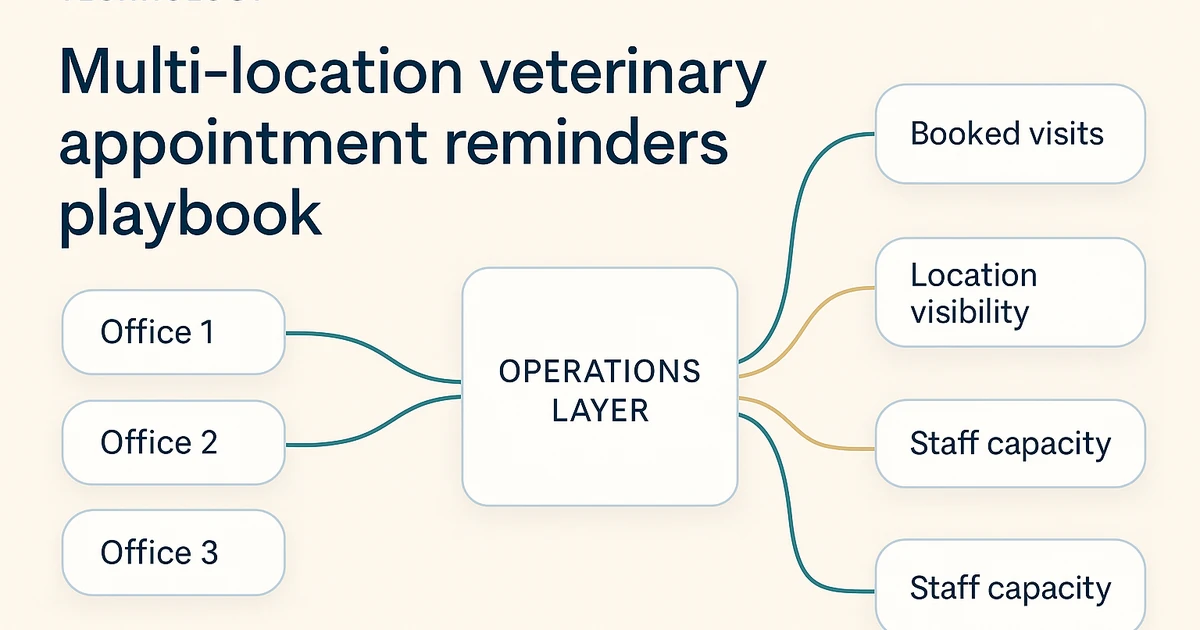
Multi-location veterinary appointment reminders stop being a front desk task once a group operates across 3+ locations. At that point, the issue is not whether one hospital sends a text before a visit.
The issue is whether every location follows the same appointment status logic, consent rules, exception handling, escalation path, and reporting cadence.
For COOs, VPs of Operations, and buying committees, reminders sit inside a broader veterinary access model. They connect preventive-care demand, schedule integrity, call center workload, and client communication risk.
The veterinary operations hub should therefore treat reminders as part of centralized patient access, not as a feature buried inside one practice management system.
A scalable reminder program should also distinguish appointment reminders from recall, reactivation, and follow-up. Patient recall identifies clients who need to schedule care.
No-show recovery handles missed appointments after the fact. Appointment reminders govern already-booked visits, so the operational objective is a cleaner schedule and clearer visibility into unconfirmed appointments across the group.
How Should Enterprise Groups Define Appointment Reminders?
Appointment reminders are often described as simple notifications. In a multi-location veterinary group, that definition is too narrow.
A reminder program is a controlled workflow that pulls appointment data from the scheduling system, applies a standardized communication policy, records client responses, and routes exceptions before the schedule becomes unstable.
This matters because veterinary organizations rarely scale with identical starting conditions. Acquired locations may use different templates, different front desk habits, and different assumptions about when a client should receive a message.
Centralization does not mean every hospital loses operational context. It means the group has one governance model with controlled variation where clinical or market needs justify it.
Governance before message copy
The first enterprise decision is governance. Operations leaders should define who owns reminder policy, who approves message templates, who audits opt-out handling, and who resolves disputes between location preferences and group standards.
Without that ownership, reminders become a patchwork of vendor defaults and front desk workarounds.
Governance should sit close to patient access leadership because reminder quality affects scheduling, inbound calls, and escalation volume.
A centralized team can keep the reminder logic consistent while allowing hospital leaders to flag edge cases. That structure gives buying committees a more reliable basis for vendor evaluation than a feature checklist alone.
Reminder, recall, and reactivation boundaries
Reminder workflows apply to appointments already on the calendar. Recall workflows apply to clients due or overdue for preventive care. Reactivation workflows apply to dormant clients who may require a different conversation, more context, and often human follow-up.
The boundaries matter for reporting. If appointment reminders, vaccine recall, dental follow-up, and dormant-client outreach are mixed into one campaign bucket, operators cannot tell which workflow is creating call volume or which handoff is failing.
The cleaner approach is to define each outreach type, assign owners, and report them separately inside the operating dashboard.
What Reminder Events Should Be Standardized Across Locations?
The reminder event library is where enterprise standardization becomes real. Rather than letting each location decide what triggers outreach, the group should define approved events, source fields, audience exclusions, and escalation rules.
This gives the operating team a consistent control surface while still allowing veterinarians to make case-specific clinical judgments.
Preventive-care reminders deserve special attention because they connect directly to wellness demand. AAHA provides peer-reviewed canine vaccination guidance with recommended vaccination and revaccination schedules plus client education resources, which makes it useful context for vaccine-due and overdue reminder logic across locations.
(1) For feline patients, the AAHA/AAFP life stage guidelines outline preventive care, booster vaccination, wellness exams, dental care, screenings, and senior checkups by life stage, all of which create recurring care categories that reminder workflows must handle carefully.
(2)
Vaccine and wellness event definitions
A strong event library starts with clear labels. Vaccine due, vaccine overdue, wellness exam due, dental follow-up, diagnostic follow-up, and pre-visit confirmation should not be treated as interchangeable message types. Each has a different operational purpose and may require different channel rules, call routing, or staff involvement.
Groups should also document which system field triggers each event. If one location uses a reminder date and another relies on appointment type text, reporting will degrade. A standardized event dictionary helps operations, clinical leadership, and technology teams agree on what the workflow is actually doing.
Visit classification and data quality
Reminder quality depends on how accurately the organization classifies visits. A clinical wellness-visit classification study in cats and dogs is relevant here because it shows why accurate visit classification supports targeted wellness, follow-up, and recall workflows at scale.
(3) Enterprise teams do not need to turn every scheduling decision into a data science project, but they do need a consistent taxonomy.
Poor classification creates operational noise. Wellness visits may receive messages meant for sick visits. Follow-up appointments may be treated like routine confirmations. Centralized data hygiene, template governance, and QA review help the group identify those mismatches before they become a pattern across multiple locations.
How Should Centralized Teams Manage Channels and Consent?
Channel strategy is not just a preference exercise. Veterinary clients may interact with scheduling tools, telehealth tools, pet record portals, text messaging, phone calls, and video services.
WIRED’s review of digital veterinary services describes tools that support text, phone, video, appointment requests, pet records, and reminders, which is practical context for how clients may encounter veterinary communication outside a traditional front desk workflow.
(4)
At enterprise scale, the buying committee should treat channel selection as a compliance and operations decision. SMS, email, phone, and portal messaging each create different consent, deliverability, staffing, and documentation considerations.
Groups should confirm their approach with legal and compliance counsel, especially when reminders are automated, promotional content is mixed with operational content, or opt-out requests must flow across multiple systems.
SMS and voice reminder controls
SMS and automated voice workflows should be designed around clear consent and opt-out handling.
The FCC guidance is relevant for veterinary practices using automated texts or voice reminders because it frames unwanted-call risk, consent considerations, and opt-out expectations when outreach is scaled across locations. (5)
A centralized reminder model should therefore include a consent source of truth, a suppression process, and an escalation path when a client disputes outreach. The team should also define what agents can say when a client asks why they received a message. That script should be plain, respectful, and consistent across the group.
Email and promotional boundary review
Email reminders may look operational, but recall campaigns and reactivation campaigns can drift into commercial messaging depending on content and context.
The FTC guidance on CAN-SPAM explains requirements for commercial email, including truthful header information, non-deceptive subject lines, sender identification, and opt-out handling. (6)
For veterinary groups, the practical move is to separate operational appointment notices from broader marketing or promotional outreach.
Legal and compliance teams should review templates, and operations should avoid letting locations customize subject lines or sender names without approval. Centralized template control is less about bureaucracy and more about limiting inconsistent practices across the portfolio.
How Do PMS Integrations Support Reminder Governance?
Reminder programs become fragile when the practice management system is not treated as the source of truth. If appointment status changes in one system but the reminder platform does not receive the update, clients may receive messages that create confusion and inbound call volume.
That is why PMS integrations belong in the reminder business case, not as a technical afterthought.
A multi-location group should map the full data path before selecting or expanding a reminder platform. The map should show where appointment status is created, where client preferences live, where opt-outs are stored, where agent notes are captured, and where executive reporting is assembled.
This is also where centralized front desk outsourcing can support exceptions that automation should not handle alone.
Appointment status as the source of truth
The schedule should drive the reminder workflow. Booked, confirmed, canceled, rescheduled, missed, and completed statuses need consistent definitions across locations. If those statuses differ by site, centralized reporting becomes less useful and the contact center has to interpret inconsistent signals.
Operations leaders should ask vendors how quickly status changes flow between systems, how failed syncs are flagged, and how duplicate records are handled. The goal is not to chase a perfect integration promise. The goal is to understand where the handoffs can break and how the operating team will see and resolve those issues.
Exception routing for human follow-up
Automation is appropriate for routine reminders when controls are in place, but exception handling still needs trained people.
Unconfirmed appointments, disputed opt-outs, language needs, anxious clients, and clinical questions should route to a defined queue with clear ownership. A reminder platform without exception routing can shift work back to the hospitals in a less visible form.
For buying committees, the operational question is whether the vendor can combine automation, agent workflows, and reporting. An enterprise model should show which exceptions stay with the centralized team, which return to the location, and which require clinical review. That routing logic is what makes reminder governance scalable.
What QA, SLA, and Reporting Model Fits Multi-Location Operations?
A reminder program should have an operating cadence, not just a launch date. QA leaders need to review message accuracy, response handling, opt-out documentation, and escalation quality. Operations leaders need portfolio-level visibility into unconfirmed appointments, avoidable call volume, template drift, and location-level adoption.
Veterinary capacity pressure makes this operating discipline more important. Axios reported on long veterinary wait times and overloaded clinics, citing AVMA context on overworked providers; that supports the operational argument for protecting schedule quality and addressing avoidable scheduling friction where possible.
(7) A reminder program cannot solve capacity constraints alone, but poor reminder governance can make the calendar harder to manage.
QA scorecards and calibration
QA should review both automation and human handling. For messages, the scorecard should look at event accuracy, approved language, channel selection, and opt-out handling. For agents, it should review tone, documentation, escalation decisions, and whether the correct workflow was followed.
SLA calibration should be internal and explicit. The group can define how quickly certain exception types should be reviewed, which events require location involvement, and which queues need priority handling.
The key is to set standards the group can measure consistently rather than copying generic benchmarks that do not reflect its operating model.
Executive dashboards and EBITDA context
The executive dashboard should separate leading indicators from financial interpretation. Leading indicators include unconfirmed appointment patterns, exception volume, template compliance, and channel response patterns.
Financial interpretation belongs in the operating review, where leaders can connect scheduling discipline, labor allocation, and EBITDA impact without pretending a reminder platform alone creates a guaranteed result.
PE-backed platforms should also watch variation by location. If one hospital consistently generates more exceptions, the root cause may be template setup, schedule hygiene, staffing behavior, or a system integration issue. The dashboard should help operators ask sharper questions, not just admire a rollup chart.
How Should Buying Committees Roll Out Reminder Operations?
Rollout should start with operating design before vendor configuration. The buying committee should align clinical leadership, operations, compliance, IT, and contact center leadership around the event library, channel rules, reporting model, and exception queues.
That alignment prevents the implementation from becoming a series of location-by-location compromises.
A pilot program can be useful when the group treats it as a controlled operating test. The pilot should validate data feeds, template governance, consent handling, agent routing, and executive reporting. It should also reveal whether the workflow supports acquired locations with different system habits and documentation quality.
Pilot scope and rollout governance
Pilot scope should be narrow enough to govern but broad enough to expose real variation. A group might test representative appointment types, species categories, and location workflows without attempting to redesign every outreach process at once.
The point is to learn where standardization holds and where controlled variation is justified.
Rollout governance should include a decision log. When the team approves a template change, channel rule, or exception path, that decision should be recorded and carried into the next deployment wave. This creates a record for later locations and gives the buying committee a practical way to manage change requests.
RFP questions for enterprise reminder vendors
Procurement should ask operational questions, not only feature questions. A vendor may support reminders, but that does not mean it can support centralized QA, consent tracking, PMS integration, and portfolio reporting at enterprise scale.
Useful RFP questions include:
- How do you define and store appointment status changes across integrated systems?
- How are consent, opt-out, and suppression rules documented across locations?
- Which reminder templates can be centrally locked, and which fields can locations edit?
- How are unconfirmed appointments, disputed messages, and clinical questions routed?
- What reporting views are available for executives, contact center managers, and location leaders?
- How do you support a pilot program that can scale to 3+ locations?
Related Reading
Reminder operations connect to several adjacent workflows. The articles below expand on intake, after-hours coverage, technology governance, and appointment reminder design for operators who need a broader patient access view.
Use these links as navigation, not as factual support for the claims above. Internal links help the buying committee compare related operating models. The external source pack below is the support set for factual claims in this article.
Veterinary operating context
Veterinary reminder work depends on intake quality, call handling, and the broader technology stack. If those systems are inconsistent, reminders can surface the inconsistency rather than solve it.
These resources are useful when an operations leader wants to place reminders inside the wider veterinary access model instead of treating them as a standalone communication feature.
- Animal Hospital Patient Intake
- After-Hours Veterinary Call Management
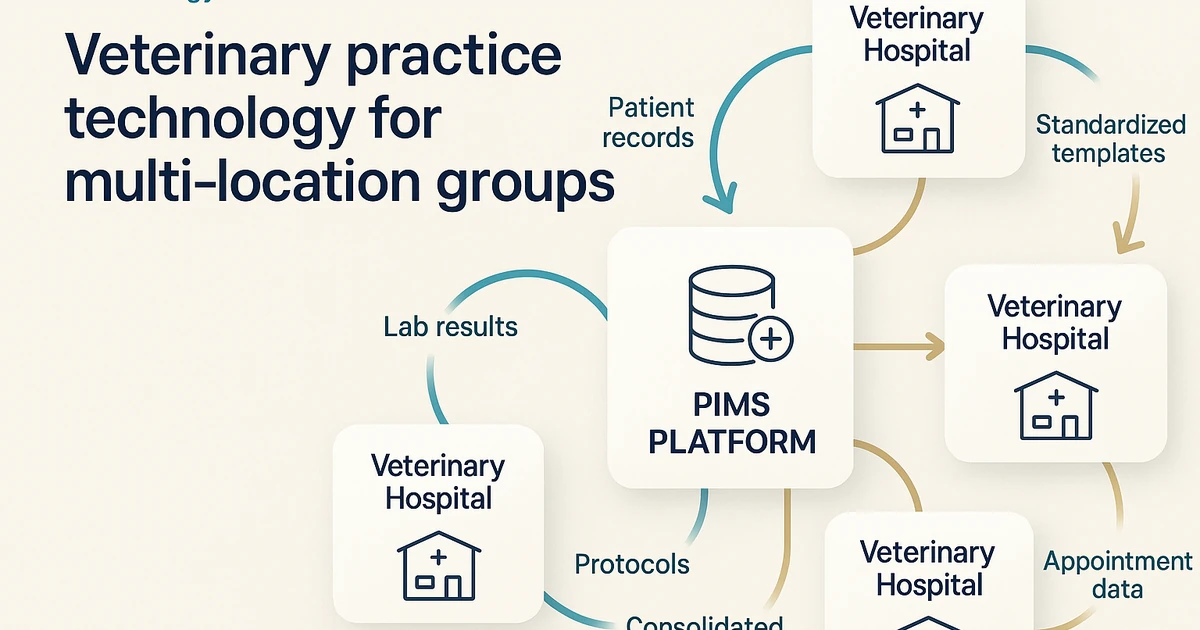
- Veterinary Practice Technology
Scheduling and reminder operations
Reminder governance also overlaps with general scheduling discipline. The same operating questions appear across human healthcare and veterinary groups: who owns the workflow, what gets centralized, and how exceptions are routed.
These resources give the buying committee additional context for reminder design, schedule protection, and multi-location patient access operations.
Sources
- 2022 AAHA Canine Vaccination Guidelines
- 2021 AAHA/AAFP Feline Life Stage Guidelines
- Development and Validation of a Machine Learning Algorithm for Clinical Wellness Visit Classification in Cats and Dogs
- The Best Veterinary Telemedicine Services
- Stop Unwanted Robocalls and Texts
- CAN-SPAM Act: A Compliance Guide for Business
- Vet wait times remain high due to pandemic
Managing veterinary appointment reminders across 3+ locations? Request an Enterprise Assessment for your group.