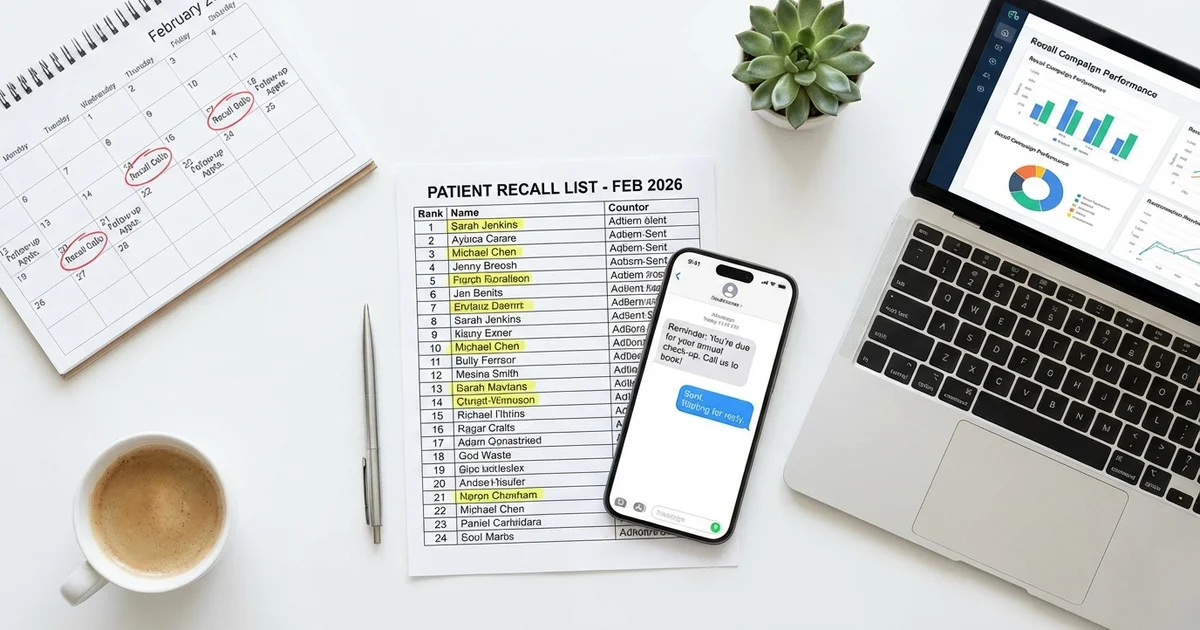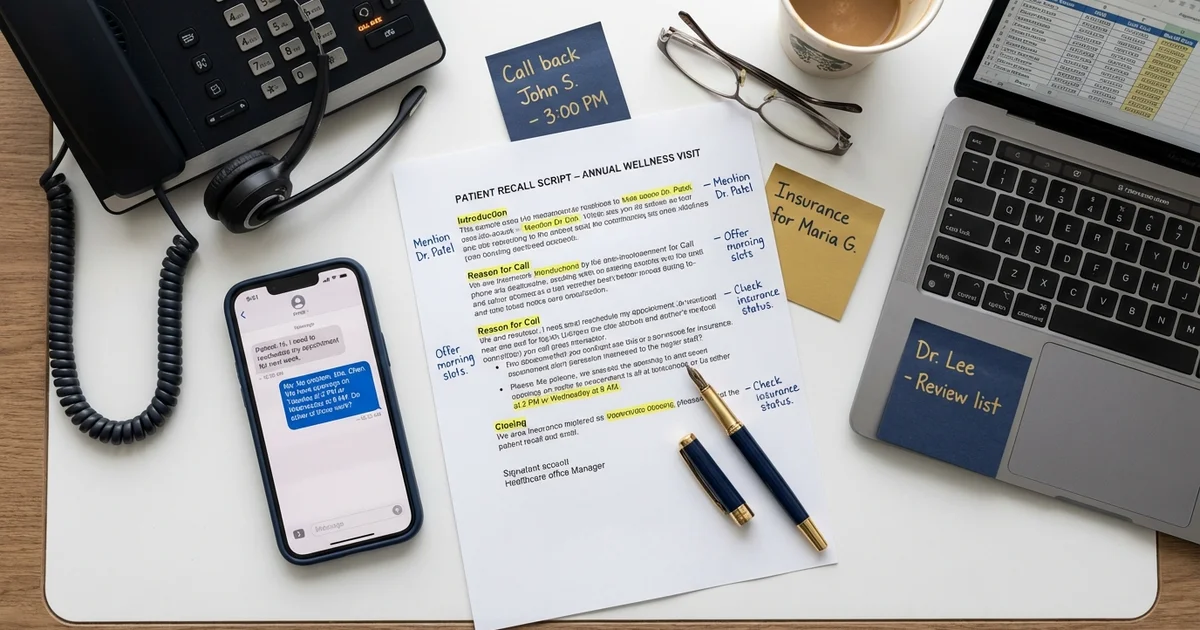

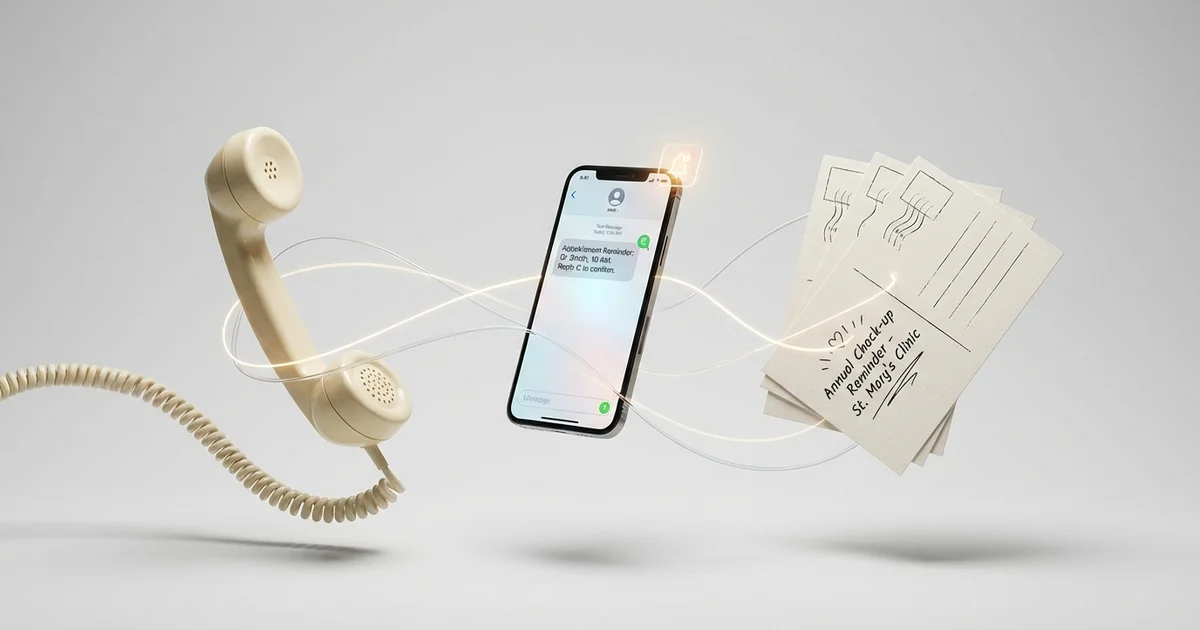
The debate over which patient recall channel works best misses the point. Top-performing practices do not choose one channel. They deploy all three strategically as part of a structured recall campaign framework, selecting channels based on patient demographics, dormancy duration, and lifetime value. SMS achieves 98% open rates. Phone calls convert 40-60% of connected patients. Postcards reach patients that digital channels miss entirely. This guide provides the data to decide when to use each channel and how to combine them for maximum recall effectiveness.
Table of Contents
- How Does Each Recall Channel Perform?
- Why Is SMS the Digital Workhorse for Patient Recall?
- When Should You Use Phone Calls for Recall?
- Where Do Postcards Fit in Your Recall Strategy?
- How Do You Select the Right Channel by Patient Segment?
- What Does an Effective Multi-Channel Sequence Look Like?
- How Do Channel Costs Compare?
- What Technology and Automation Do You Need?
- How Does Channel Performance Vary by Healthcare Specialty?
- Multi-Location Considerations
- How Do You Measure Channel Effectiveness?
How Does Each Recall Channel Perform?
Each recall channel has distinct strengths:
| Channel | Open/Reach Rate | Response Rate | Conversion Rate | Best For |
|---|---|---|---|---|
| SMS/Text | 98% open | 15-25% | 30-50% of responses | Quick actions, confirmations |
| Phone calls | 25-40% answer | N/A | 40-60% of connections | High-value, complex cases |
| Postcards | 80-90% delivered | 1-3% | Variable | Older demographics, no digital |
| 20-30% open | 5-10% click | Variable | Educational content |
Multi-channel impact: SMS + email alone: 50-65% no-show reduction. All channels combined: 70-85% no-show reduction. Top campaigns achieve 20%+ reactivation rates and 50x+ ROI.
Why Is SMS the Digital Workhorse for Patient Recall?
Text messaging has become the primary recall channel for most healthcare practices due to its reach and efficiency.
Strengths: 98% open rate (vs. 20-30% for email). 90% read within three minutes. Low cost per contact ($0.03-0.05). Two-way communication enables instant responses. Easy to automate and scale. Patients prefer it: 97% want appointment reminders via SMS.
Limitations: Character limits constrain messaging. Requires opt-in consent (TCPA/HIPAA). Cannot include protected health information. Less effective for older patients (65+). Impersonal for long-dormant patients.
Ideal use cases: Standard recall reminders (due/overdue). Appointment confirmations. Recently dormant patients (6-18 months). Working-age patients (18-64). High-volume outreach campaigns.
Cost analysis: Cost per message: $0.03-0.05. Typical reactivation rate: 5-8%. Effective cost per reactivation: $0.50-1.00. ROI potential: 50x+ for well-executed campaigns.
When Should You Use Phone Calls for Recall?
Phone calls remain the most effective channel for converting uncertain patients, but come with significant labor costs.
Strengths: Highest conversion rate when connected (40-60%). Enables objection handling in real-time. Builds personal relationship with practice. Can address concerns and questions immediately. Required for high-value and complex cases. More effective for older demographics.
Limitations: Labor intensive (8+ minutes per patient including attempts). 86% of people ignore calls from unknown numbers. Only 25-40% answer rate. Not scalable without dedicated staff. Expensive per-contact cost.
Ideal use cases: High-value patients ($2,000+ lifetime value). Long-dormant patients (18+ months). Patients who did not respond to SMS/email. Complex medical situations. Older patients (65+). Personal outreach from the doctor.
Cost analysis: Staff time per call: 8+ minutes average. For 500 patients: 67+ staff hours. Cost per connected patient: $2-5. Typical conversion: 15-25%. Effective cost per reactivation: $10-20.
Where Do Postcards Fit in Your Recall Strategy?
Direct mail postcards serve a specific niche: reaching patients who cannot or will not engage digitally.
Strengths: Physical presence creates tangible reminder. No opt-in required. Reaches patients without valid phone/email. Effective for older demographics. Brand building through visual design. Can include promotional offers.
Limitations: Highest cost per unit. Slowest delivery (days vs. seconds). No immediate response mechanism. Lower response rate (1-3%). Cannot track opens. Production lead time required.
Ideal use cases: Patients with no valid digital contact info. Older patient populations (65+). “We miss you” campaigns for long-dormant. Brand awareness with high-quality design. Geographic-specific campaigns. Patients who opted out of digital.
Cost analysis: Cost per postcard: $0.50-1.00 (design, print, postage). Typical response rate: 1-3%. Effective cost per reactivation: $30-100. ROI: Lower than digital but reaches unreachable patients.
How Do You Select the Right Channel by Patient Segment?
Match your channel to the patient for maximum effectiveness:
By Age/Demographics
| Age Group | Primary Channel | Secondary | Notes |
|---|---|---|---|
| 18-34 | SMS | Digital natives, instant response | |
| 35-54 | SMS | Phone | Working hours matter |
| 55-64 | SMS + Phone | May need phone follow-up | |
| 65+ | Phone | Postcard | Digital adoption varies |
By Dormancy Duration
| Dormancy | Primary Channel | Strategy |
|---|---|---|
| 6-12 months | SMS | Standard sequence (3-4 messages) |
| 12-18 months | SMS + Phone | SMS first, phone to non-responders |
| 18-24 months | Phone | Personal outreach, acknowledge gap |
| 24+ months | Phone + Postcard | High-touch, “we’d love to see you again” |
By Patient Value
| Lifetime Value | Channel Investment | Rationale |
|---|---|---|
| High ($2,000+) | Phone primary | Worth staff time |
| Medium ($500-2,000) | SMS + Phone backup | Efficient with escalation |
| Lower (<$500) | SMS only | Automated outreach |
What Does an Effective Multi-Channel Sequence Look Like?
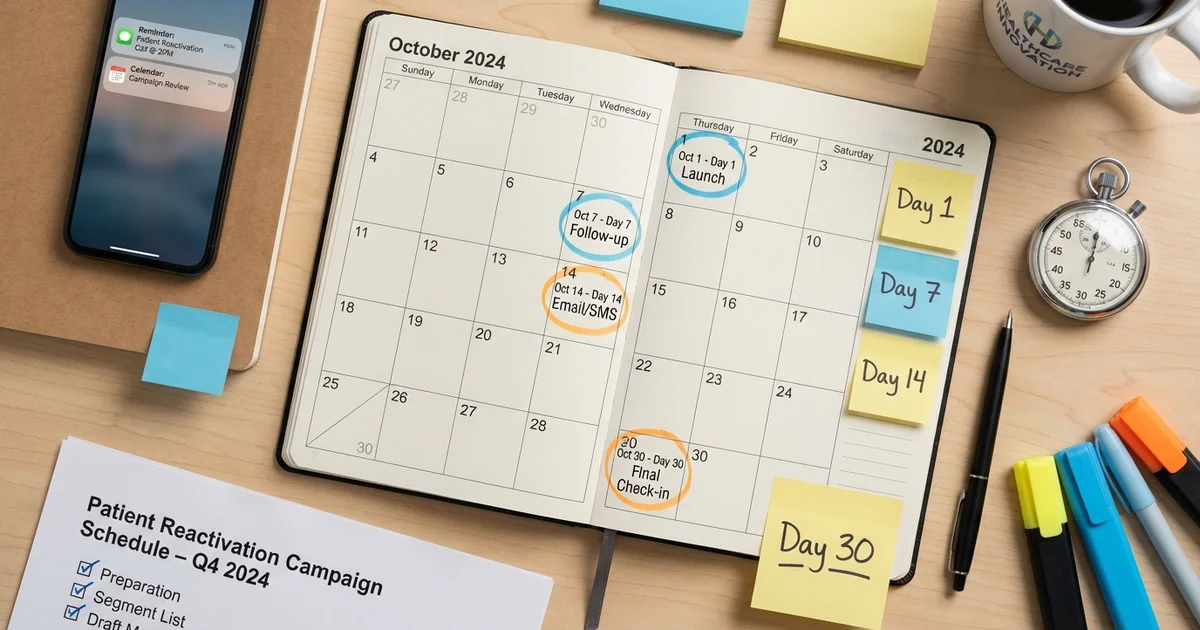
The most effective recall campaigns use all channels in a strategic sequence:
Recommended cadence:
| Day | Channel | Message Type | Target |
|---|---|---|---|
| 1 | SMS | Initial reminder | All patients |
| 3 | Detailed information | All patients | |
| 7 | SMS | Follow-up | Non-responders |
| 14 | SMS | Urgency message | Non-responders |
| 21 | Phone | Personal call | High-value non-responders |
| 30 | Postcard | ”We miss you” | Unreachable non-responders |
Why this sequence works: Low-cost digital channels filter responsive patients first. Phone calls reserved for patients worth the investment. Postcards catch patients that digital misses. Each touchpoint builds on previous ones.
How Do Channel Costs Compare?
When evaluating channels, consider both direct costs and staff time:
Cost per 1,000 patients reached:
| Channel | Direct Cost | Staff Time | Total Investment | Typical Reactivations | Cost/Reactivation |
|---|---|---|---|---|---|
| SMS (4-msg sequence) | $120-200 | 2-4 hours | $200-300 | 50-80 | $3-6 |
| Phone calls | $0 | 133+ hours | $2,000-4,000 | 100-150 | $15-40 |
| Postcards | $500-1,000 | 2-4 hours | $600-1,100 | 10-30 | $40-100 |
| Multi-channel | $620-1,200 | 40-80 hours | $1,500-3,000 | 150-200 | $10-20 |
Key insight: SMS has the best cost-per-reactivation, but phone calls may still be worth the investment for high-value patients where the lifetime value justifies the labor cost.
What Technology and Automation Do You Need?
Scaling multi-channel recall requires the right technology:
Essential platform capabilities: PM/EHR integration for patient due dates. Multi-channel outreach (SMS, email, automated calls). Two-way messaging for responses. Delivery and engagement tracking. Segment patients by demographics and value. Automated sequence workflows.
Integration benefits: Automatic patient segmentation. Trigger-based outreach timing. Response tracking across channels. Activity logging in patient record. Performance analytics and reporting.
How Does Channel Performance Vary by Healthcare Specialty?
Different specialties see varying results by channel:
Dental: SMS most effective for hygiene recalls. Phone for complex treatment follow-up. Postcards for recare reminders to older patients.
Optometry: SMS for annual exam reminders. Phone for vision benefit explanations. Postcards for “your benefits are expiring” campaigns.
Medical/Primary Care:
- SMS for preventive care reminders
- Phone for chronic condition management
- Multi-channel for wellness visits
Multi-Location Considerations
For healthcare groups operating multiple sites:
Standardize:
- Channel selection criteria by patient segment
- Messaging templates and sequences
- Compliance language across channels
- Performance metrics and reporting
Localize:
- Practice name and phone numbers
- Provider names
- Location-specific availability
- Local market demographics
Centralize:
- Outreach execution and tracking
- Performance benchmarking across locations
- Best practice sharing from top performers
- Compliance monitoring
How Do You Measure Channel Effectiveness?
Track these metrics by channel to optimize your mix:
| Metric | SMS Target | Phone Target | Postcard Target |
|---|---|---|---|
| Delivery/reach rate | 95%+ | 25-40% answer | 90%+ delivered |
| Response rate | 15-25% | 40-60% of connected | 1-3% |
| Booking rate | 30-50% | 40-60% | Variable |
| Cost per reactivation | $3-6 | $15-40 | $40-100 |
| ROI | 50x+ | 20-50x | 5-15x |
Key Takeaways
Choosing between recall postcards, texts, and phone calls is not about picking a winner. It is about strategic deployment based on patient characteristics:
- SMS/Text: Primary channel for most patients; 98% open rate, lowest cost, highest scalability
- Phone calls: Reserve for high-value patients and long-dormant; 40-60% conversion when connected
- Postcards: Niche for patients without digital contact and older demographics
- Multi-channel: Combines all three for 70-85% no-show reduction
Decision framework:
- Start with SMS for all eligible patients
- Escalate to phone for non-responders with high value or long dormancy
- Use postcards for patients unreachable by digital
- Track results by channel and patient segment to optimize over time
The practices achieving the best recall results treat channel selection as a science, not a preference. Match the channel to the patient, measure results, and adjust accordingly.
For ready-to-use scripts for each channel, see our patient recall scripts guide. For SMS-specific templates, review our reactivation text message templates.
Related Reading
- Patient Recall Solution
- Reactivation Call Centers for Multi-Location Medical Groups
- Reactivation Text Templates: SMS Scripts That Work
- Reactivation Campaign KPIs: Metrics for Multi-Location Groups
Reactivating dormant patients is one of the highest-ROI investments a practice can make. Talk to our team about how MyBCAT combines call answering with patient recall to keep your schedule full.