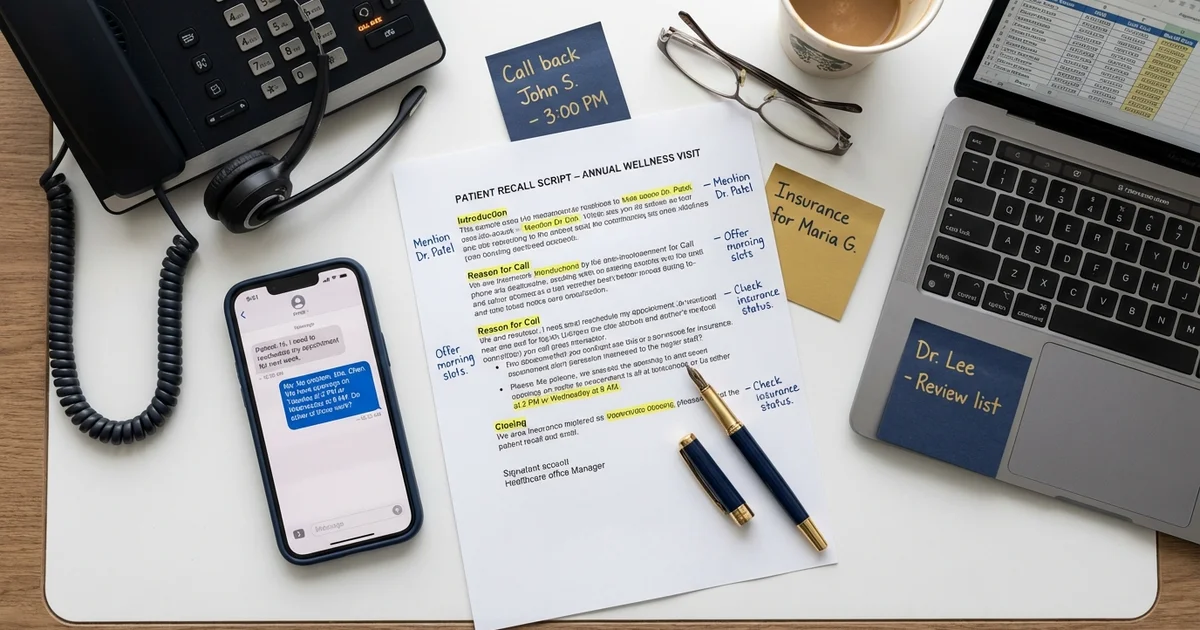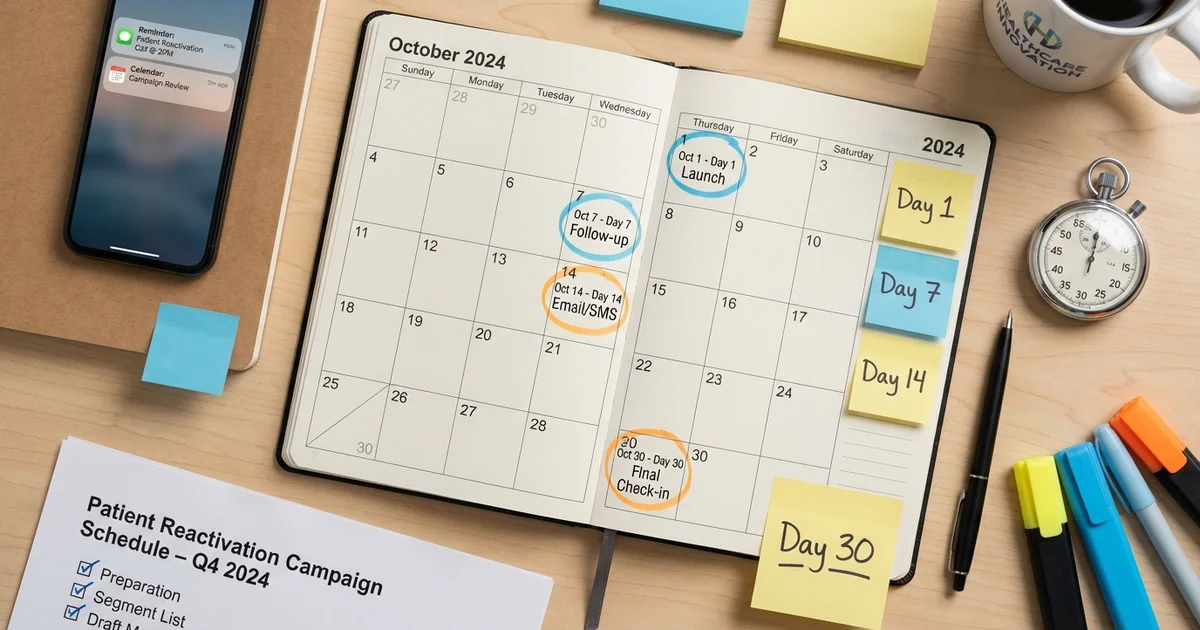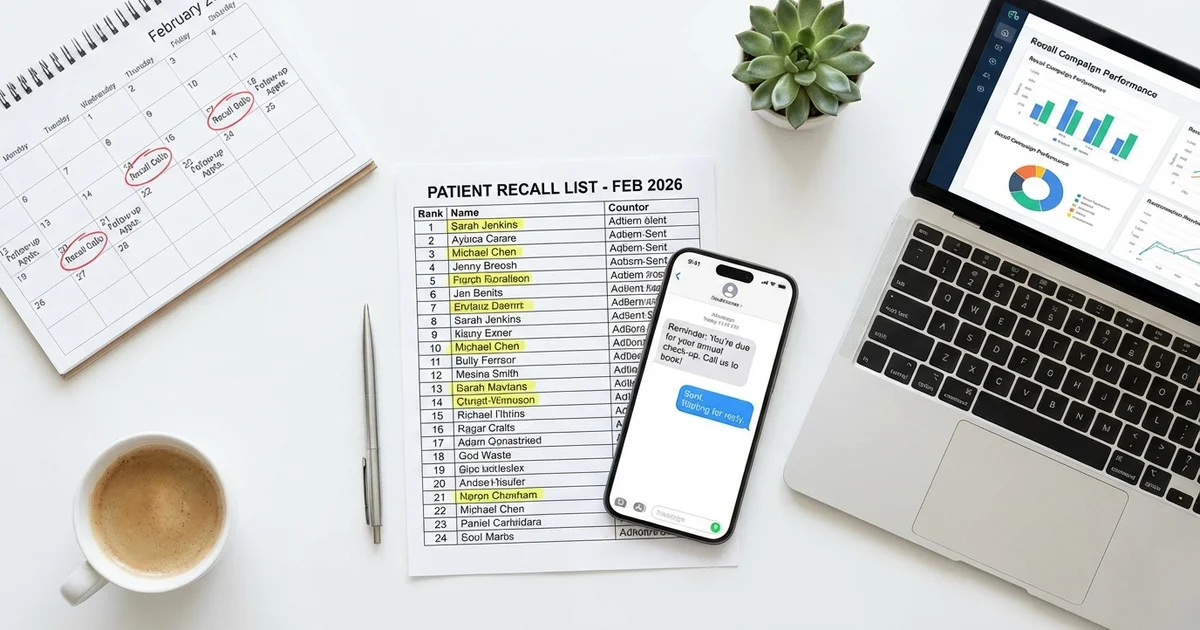
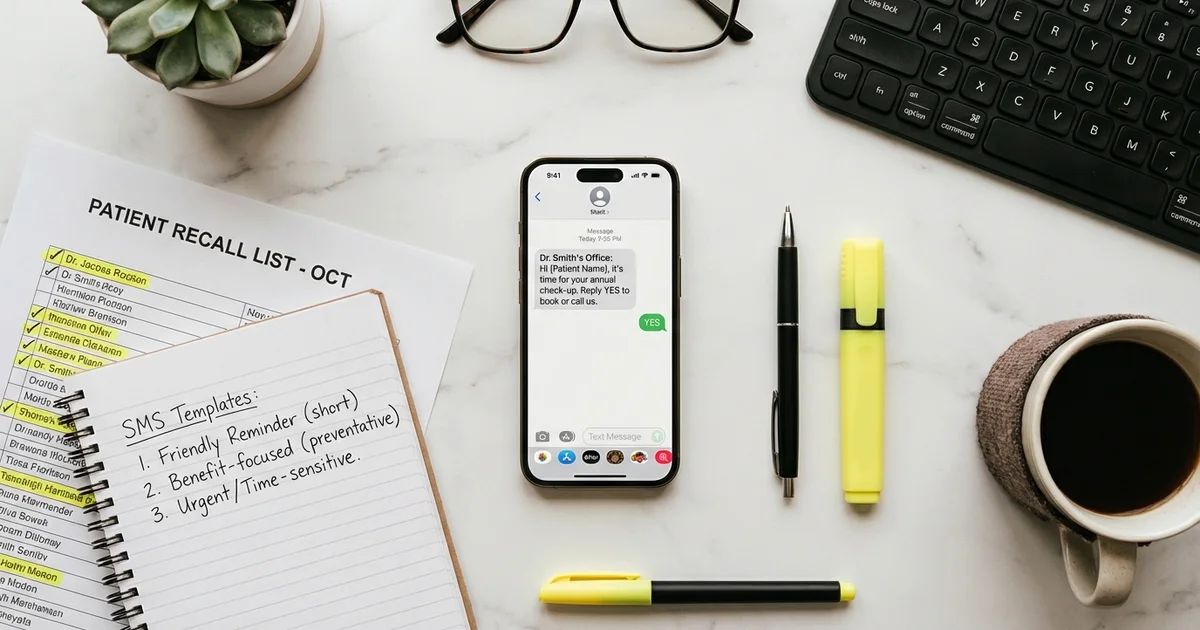
The difference between a text message that gets ignored and one that brings a patient back often comes down to the words you choose. SMS achieves a 98% open rate (compared to 20-30% for email) and 90% of texts are read within three minutes. Yet many healthcare reactivation messages sound robotic, impersonal, or worse, like spam. These templates complement our broader patient recall scripts guide, focusing specifically on SMS. This guide provides ready-to-use reactivation text message templates that feel personal, respect HIPAA compliance, and convert dormant patients back to active status.
Table of Contents
- Why Does SMS Work for Patient Reactivation?
- What Are the HIPAA Compliance Fundamentals?
- Template Categories
- What Templates Should You Avoid?
- What Are the Timing Best Practices?
- How Do You Measure Template Effectiveness?
- What Are the Multi-Location Considerations?
- What Technology Do You Need?
Why Does SMS Work for Patient Reactivation?
Before reviewing templates, understand why text messaging outperforms other channels for reactivation:
SMS engagement statistics:
| Metric | Value | Comparison |
|---|---|---|
| Open rate | 98% | Email: 20-30% |
| Read within 3 minutes | 90% | Email: hours to days |
| Personalization impact | +70% response | vs. generic messages |
| Patient preference | 93% | opt in for healthcare SMS |
| Return likelihood | 85% higher | when provider offers texting |
Why patients respond to text:
- Immediacy: No login required, no spam folder
- Convenience: Reply in seconds between activities
- Preference: 97% of patients want appointment reminders via SMS
- Less intrusive: Feels like a conversation, not a sales pitch
What Are the HIPAA Compliance Fundamentals?
Before sending any reactivation texts, ensure compliance:
Required elements:
- Business Associate Agreement (BAA): Your SMS platform must sign one
- Patient consent: Documented opt-in for text communication
- Opt-out option: Every message must include “Reply STOP” or similar
- No PHI in message body: Never include diagnoses, test results, or specific conditions
- Encrypted platform: Use HIPAA-compliant texting apps, not standard SMS
What you CAN include:
- Patient first name
- Appointment reminders (without condition details)
- Practice name and contact info
- Links to secure patient portals
- General wellness prompts
What you CANNOT include:
- Specific diagnoses or conditions
- Test results or lab values
- Treatment details
- Insurance information
- Any protected health information (PHI)
Template Categories
Category 1: Gentle First Touch (6-12 Months Dormant)
These templates work for patients who have been away for six months to a year. The tone is warm and assumes life simply got busy.
Template 1A: The Check-In
SMS Template
Hi [First Name], this is [Practice Name]. We noticed it's been a while since your last visit. Just checking in. How have you been? Reply YES if you'd like to schedule, or call us at [phone]. Reply STOP to opt out.
Character count: ~213 (may span 2 SMS segments) | Tone: Caring, conversational
Template 1B: The We-Miss-You
SMS Template
[First Name], we miss seeing you at [Practice Name]! Your annual [exam/cleaning/checkup] is overdue. We have openings this week. Reply YES to schedule or call [phone]. Reply STOP to opt out.
Character count: ~190 (may span 2 SMS segments) | Tone: Friendly, personal
Template 1C: The Health Reminder
SMS Template
Hi [First Name], [Practice Name] here. Regular [checkups/cleanings/exams] help catch issues early. You're overdue. Let's get you scheduled. Reply YES or call [phone]. Reply STOP to opt out.
Character count: ~189 (may span 2 SMS segments) | Tone: Educational, non-pushy
Category 2: Benefit-Focused (Insurance/Vision Plan Angle)
Tie reactivation to tangible patient benefits without being salesy.
Template 2A: New Year Benefits
SMS Template
Hi [First Name], your 2026 benefits are active at [Practice Name]! Don't let them expire unused. We have openings this month. Reply YES to book or call [phone]. Reply STOP to opt out.
Character count: ~183 (may span 2 SMS segments) | Tone: Helpful, timely
Template 2B: Year-End Push
SMS Template
[First Name], your [insurance/vision plan] benefits reset soon. Use them before they expire! [Practice Name] has openings in December. Reply YES to schedule. Reply STOP to opt out.
Character count: ~180 (may span 2 SMS segments) | Tone: Urgent, practical
Template 2C: Covered Appointment
SMS Template
Hi [First Name], your preventive [exam/cleaning] may be covered at no cost under your plan. [Practice Name] would love to see you again. Reply YES or call [phone]. Reply STOP to opt out.
Character count: ~186 (may span 2 SMS segments) | Tone: Value-oriented
Category 3: Provider-Personalized
Messages that reference the specific provider build stronger emotional connection.
Template 3A: Doctor’s Request
SMS Template
Hi [First Name], Dr. [Provider] noticed you're overdue for your annual [exam/checkup] and wanted me to reach out. We have availability this week. Reply YES to book. Reply STOP to opt out.
Character count: ~187 (may span 2 SMS segments) | Tone: Personal, authoritative
Template 3B: Team Message
SMS Template
[First Name], the team at [Practice Name] misses seeing you! Dr. [Provider] has openings this month for your checkup. Reply YES to schedule or call [phone]. Reply STOP to opt out.
Character count: ~179 (may span 2 SMS segments) | Tone: Warm, team-oriented
Category 4: Long-Dormant Patients (18+ Months)
For patients who have been away longer, acknowledge the gap and offer a fresh start.
Template 4A: The Fresh Start
SMS Template
Hi [First Name], it's [Practice Name]. We know it's been a while, and that's okay! We'd love to see you again whenever you're ready. Reply YES to schedule. Reply STOP to opt out.
Character count: ~178 (may span 2 SMS segments) | Tone: Non-judgmental, welcoming
Template 4B: The Changes Message
SMS Template
[First Name], a lot has changed at [Practice Name]: new [hours/services/technology]. We'd love to welcome you back. Reply YES to schedule or call [phone]. Reply STOP to opt out.
Character count: ~178 (may span 2 SMS segments) | Tone: Inviting, fresh
Template 4C: The Direct Ask
SMS Template
Hi [First Name], we haven't seen you in a while and wanted to check if you're still interested in being a patient. Reply YES to schedule. Reply STOP to opt out.
Character count: ~180 | Tone: Direct, respectful
Category 5: Specialty-Specific Templates
Dental Reactivation:
SMS Template -- Dental
Hi [First Name], [Practice Name] here. Your 6-month cleaning helps prevent costly issues later. We have hygiene openings this week. Reply YES to book. Reply STOP to opt out.
Optometry Reactivation:
SMS Template -- Optometry
[First Name], when was your last eye exam? Annual exams catch vision changes and eye health issues early. [Practice Name] has openings. Reply YES to schedule. Reply STOP to opt out.
Medical Practice Reactivation:
SMS Template -- Medical Practice
Hi [First Name], [Practice Name] here. Preventive care helps you stay healthy. You're due for your annual wellness visit. Reply YES to schedule or call [phone]. Reply STOP to opt out.
Category 6: Follow-Up Sequences
The most effective reactivation uses a sequence of 3-4 messages spaced appropriately.
Sequence Day 1 (Initial):
SMS Template -- Day 1
Hi [First Name], this is [Practice Name]. Your [exam/cleaning/checkup] is overdue. Just wanted to make sure you knew! Reply YES to schedule or call [phone]. Reply STOP to opt out.
Sequence Day 5 (Gentle Follow-Up):
SMS Template -- Day 5
[First Name], just following up from [Practice Name]. We have openings this week if you'd like to get your [appointment type] scheduled. Reply YES or call [phone]. Reply STOP to opt out.
Sequence Day 10 (Value Add):
SMS Template -- Day 10
Hi [First Name], one more note from [Practice Name]. Your [preventive visit] may be covered by insurance at no cost. Want to check? Reply YES to schedule. Reply STOP to opt out.
Sequence Day 21 (Final):
SMS Template -- Day 21 (Final)
[First Name], this is our last message about scheduling. We're here when you're ready. Just reply or call [phone]. Take care! - [Practice Name] Reply STOP to opt out.
What Templates Should You Avoid?
Certain message types hurt more than help:
Too generic:
Avoid This Template
"Your appointment is due. Call us."
No personalization, no warmth, no reason to respond.
Too salesy:
Avoid This Template
"SPECIAL OFFER! 20% off your next cleaning! Book now! Limited time!"
Feels like spam, damages brand trust.
Contains PHI:
Avoid This Template
"Hi John, your diabetes checkup is overdue. Dr. Smith needs to discuss your A1C levels."
HIPAA violation. Never include conditions or specific health details.
Too many messages:
Sending daily texts to non-responders leads to opt-outs and complaints.
No opt-out:
Any message without “Reply STOP to opt out” or similar is a legal requirement violation for all commercial SMS.
What Are the Timing Best Practices?
When you send matters as much as what you send:
Optimal send times:
- Tuesday-Thursday: Highest engagement
- 10am-12pm: Morning productivity window
- 2pm-4pm: Afternoon lull
- 6pm-8pm: Evening (for working patients)
Times to avoid:
- Monday mornings (inbox overload)
- Friday afternoons (weekend mode)
- Before 9am or after 9pm (intrusive)
- Weekends (unless patient-preferred)
Message spacing:
- Initial text: Day 1
- First follow-up: Day 4-5 (if no response)
- Second follow-up: Day 10-14
- Final message: Day 21-30
- Then pause for 60-90 days before next sequence
How Do You Measure Template Effectiveness?
Track these metrics to optimize your templates:
| Metric | Target | How to Calculate |
|---|---|---|
| Delivery rate | 95%+ | Delivered / Sent |
| Response rate | 15-25% | Replies / Delivered |
| Booking rate | 30-50% | Bookings / Responses |
| Opt-out rate | <2% | STOP replies / Delivered |
| Show rate | 85%+ | Completed / Booked |
A/B testing approach:
- Create two template variants (change only one element)
- Split your list randomly
- Send to minimum 100 patients per variant
- Compare response and booking rates
- Deploy the winner, test again
Elements to test:
- Opening line (Hi vs. Hey vs. name only)
- Call-to-action (Reply YES vs. Text back vs. Call us)
- Tone (formal vs. conversational)
- Time of day
- Day of week
What Are the Multi-Location Considerations?
For healthcare groups operating multiple sites:
Standardize:
- Core message structure and compliance language
- Opt-out instructions
- Brand voice and tone
- Sequence timing
Localize:
- Practice name and location
- Provider names
- Phone numbers
- Available appointment times
Template with location variable:
SMS Template -- Multi-Location
Hi [First Name], this is [Practice Name] [City/Location]. You're due for your annual [checkup]. We have openings at our [specific location] this week. Reply YES to book. Reply STOP to opt out.
Central management benefits:
- Consistent patient experience across sites
- Aggregated performance metrics
- Shared template optimization
- Compliance oversight
What Technology Do You Need?
Effective SMS reactivation requires the right platform:
Essential features:
- HIPAA compliance with signed BAA
- Two-way messaging capability
- Personalization (merge fields)
- Delivery tracking and analytics
- Opt-out management
- PM/EHR integration
Integration benefits:
- Automatic patient due date identification
- Pre-populated personalization fields
- Appointment booking confirmation
- Activity logging in patient record
Key Takeaways
Reactivation text message templates succeed when they feel personal, not promotional:
- SMS achieves 98% open rates; 90% are read within three minutes
- Personalized messages generate 70% higher response rates than generic ones
- Always include opt-out language for HIPAA and TCPA compliance
- Never include PHI in message body. Use links to secure portals
- Use sequences of 3-4 messages over 21-30 days, not daily blasts
- Test and optimize: small changes in wording can significantly impact response rates
- For multi-location groups: standardize compliance and voice, localize details
The templates in this guide provide starting points. Adapt them to your practice’s voice, patient demographics, and specialty. The best message is one that sounds like it came from a real person who cares. Because it should.
For complete phone scripts to complement these SMS templates, see our patient recall scripts guide. For the full reactivation campaign framework, review our 30-day dormant patient reactivation playbook.
Related Reading
- Patient Recall Solution
- Reactivation Call Centers for Multi-Location Medical Groups
- Reactivation Campaign KPIs: Metrics for Multi-Location Groups
- Patient Recall Segmentation: Who to Call First (and Why)
Reactivating dormant patients is one of the highest-ROI investments a practice can make. Talk to our team about how MyBCAT combines call answering with patient recall to keep your schedule full.