
Table of Contents
- Why Do Missed Calls Matter More Across a Dental Group?
- Which Calls Should a DSO Treat as Revenue Risk?
- How Can Leaders Measure the Missed-Call Problem?
- Why Do Front Desks Miss Calls Even When Teams Work Hard?
- What Operating Model Reduces Missed Calls Across Locations?
- How Should a Dental Group Roll Out Better Call Coverage?
- Which Metrics Prove Whether Coverage Is Working?
- What Questions Should an Executive Team Ask First?
For a multi-location dental group, an unanswered call is not just a front-desk inconvenience. It is an unobserved break in the patient-access system. The caller may be a prospective patient responding to marketing, an established patient trying to schedule hygiene, or a referral source attempting to place a patient. If the organization cannot see what happened next, it cannot distinguish a staffing issue from a routing issue, an appointment-capacity issue, or a conversion issue.
That distinction matters because the revenue effect is cumulative. A single office can sometimes absorb inconsistent coverage through local knowledge and informal callbacks. A group operating three or more locations cannot manage patient access on goodwill and memory. Repeated missed calls make marketing performance look weaker than it is, complicate site comparisons, and create a different experience depending on which number a patient dials.
This article focuses on the operating question behind missed calls: how a DSO or multi-location dental group can make patient access measurable, accountable, and consistent without making unsupported revenue promises.
Why Do Missed Calls Matter More Across a Dental Group?
Phone access sits at the beginning of several workflows that leadership already measures downstream. New-patient demand begins with an inquiry. Hygiene demand often begins with a scheduling or recall response. A treatment follow-up may begin with a question about next steps. When a call is not answered, the organization loses visibility before it can learn whether the caller scheduled, abandoned, or sought another provider.
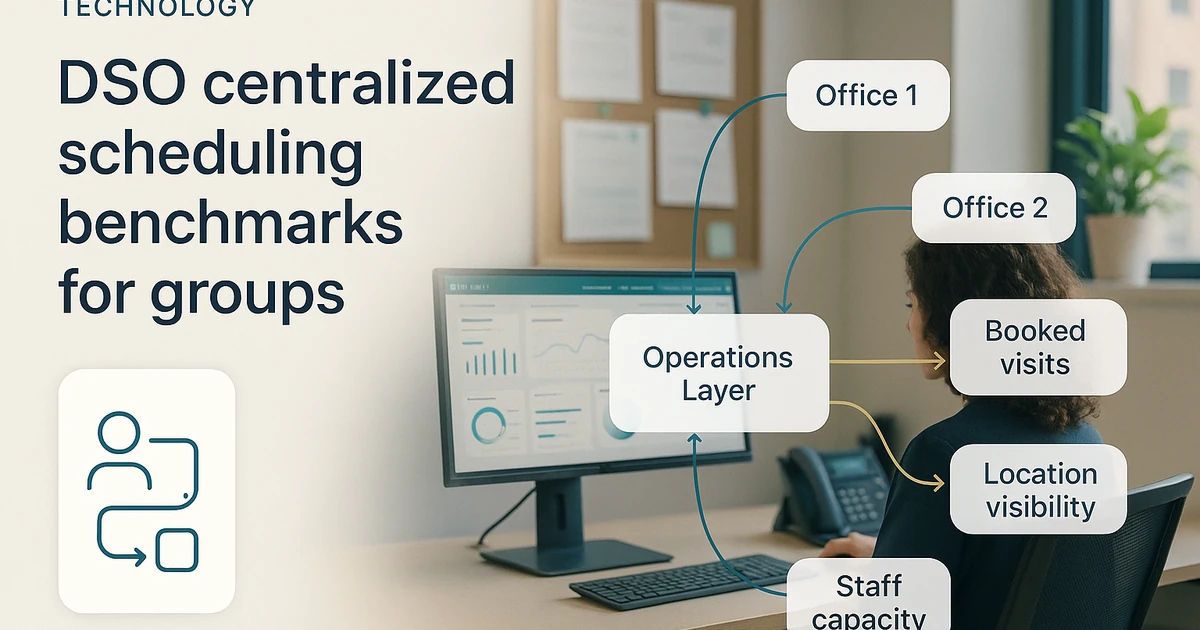
The scale effect is operational rather than theoretical. Each location has its own peak hours, staff absences, schedule templates, and acquired-phone-system history. If every site handles overflow differently, a chief operating officer sees only the result: uneven appointment creation and unexplained variation between locations. A dental group operations hub should treat that variation as an access-management question, not merely a local performance issue.
Missed-call work also protects the investment already made in demand generation. A campaign can drive the right people to a location, but the group has not created an appointment until a trained team member has answered, handled the inquiry, and completed the correct handoff. That is why centralized patient access belongs alongside enterprise centralized scheduling in an operating plan. Both determine whether incoming demand becomes a usable appointment opportunity.
Which Calls Should a DSO Treat as Revenue Risk?
Not every call has the same urgency or economic significance. A missed call from a vendor should not be managed like a missed new-patient inquiry. The solution is not to guess the value of every ring. It is to use clear dispositions that show which caller types require a timely recovery process.
Start with the call types tied directly to scheduled care and patient continuity: new-patient inquiries, hygiene and recall scheduling, treatment-plan follow-ups, referrals, rescheduling requests, and urgent routing requests that need a trained human response. Groups should define the clinical escalation pathway with their clinical leadership. A non-clinical patient-access team should not diagnose or provide treatment advice.
Then define what “recovered” means for each type. A recovered new-patient inquiry may mean a completed appointment request with the correct location and service line. A recovered recall call may mean an appointment placed into the appropriate provider schedule. A recovered referral may mean a documented handoff to the specialty workflow. These definitions make the report useful to operators and finance leaders instead of leaving a generic tally of voicemail events.
This classification also clarifies where a centralized scheduling model is appropriate. If the majority of missed calls are routine scheduling and information requests, central coverage can absorb predictable overflow. If the calls require local clinical judgment or a specialty-specific process, the model needs an escalation rule rather than a generic script.
How Can Leaders Measure the Missed-Call Problem?
Begin with a baseline that connects call-system records to the appointment workflow. A useful first review covers at least four weeks and separates results by location, hour of day, day of week, inbound number, and call disposition. Include calls that reached voicemail, abandoned calls, transfers that were not answered, and calls answered after an extended wait. Looking at only a headline answer rate hides too much.
For each missed or abandoned call, the team should determine whether the system retained enough information to attempt a compliant callback and whether a callback actually occurred. The review should document the time to first response, the eventual disposition, and whether an appointment was created. This is a process audit, not an excuse to use a speculative dollar amount for every call.
The most revealing comparison is often cross-location. One site may show strong answer rates but weak appointment conversion because staff lack scheduling authority or availability is not visible. Another may show low answer rates only during lunch coverage, which points to an overflow design problem. A third may have calls answered but no consistent disposition coding, which prevents leadership from determining whether callers were helped.
Groups with multiple practice-management systems should make the integration gap explicit. Dental software integrations can reduce duplicate entry and give schedulers current availability, but an integration should be evaluated on the workflow it supports. The relevant question is whether the organization can trace a call outcome to an appointment request without exposing patient information in a reporting tool that lacks the right safeguards.
Why Do Front Desks Miss Calls Even When Teams Work Hard?
Most missed-call patterns are capacity and design failures, not evidence that location teams do not care. The same person may be checking in patients, collecting information, managing a schedule change, responding to a provider request, and answering an incoming call. At predictable peaks, the tasks arrive at once. A policy telling the front desk to “answer every call” does not resolve a physical coverage conflict.
Fragmented technology makes the conflict harder to manage. Acquired locations may have different auto-attendants, transfer trees, voicemail rules, and reporting. Calls may ring at a desk with no backup queue, or they may transfer to an offsite team that cannot see the schedule. In either case, the organization has made a patient-access promise without giving staff the tools or authority to keep it.
Training drift creates another source of variation. When call handling is taught location by location, teams can use different greetings, intake questions, escalation rules, and callback ownership. That makes quality assurance subjective. A multi-location call-center QA calibration process gives leaders a common way to inspect whether a call was handled according to the approved workflow, not simply whether an agent sounded pleasant.
After-hours and lunch coverage deserve separate analysis. They are not a reason to offer clinical guidance outside approved processes. They are a reason to define which requests can be documented, scheduled, routed, or escalated, and which must wait for the appropriate team. The operational goal is reliable access with clear boundaries.
What Operating Model Reduces Missed Calls Across Locations?
There is no universal model, but enterprise groups generally choose among distributed coverage with structured overflow, a centralized access team, or a hybrid model. The right design depends on call volume, specialty mix, schedule complexity, system access, and the degree of standardization the group can sustain.
Distributed coverage can work when locations have stable staffing, modest call volume, and consistent scheduling rules. It still needs an overflow path that activates when on-site staff are occupied. Without one, the organization has simply assigned a group-level risk to individual locations.
A centralized patient-access team can provide more consistent coverage, dedicated training, and portfolio-level reporting. It is particularly useful when multiple locations share appointment types and scheduling protocols. The group should decide in advance what the team may schedule, what requires a site handoff, and what information is necessary to complete the task. MGMA’s discussion of centralized scheduling is a relevant external reference for organizations considering the broader operating implications of central scheduling.
Hybrid coverage often fits groups that need both central consistency and site-specific knowledge. A central team can answer, capture, and schedule standard requests while local teams handle exceptions and specialty workflows. A medical answering service may be part of that model if its capabilities, training, data handling, and escalation procedures match the group’s requirements. Vendor selection should remain a formal operational and compliance decision.
Whatever model is chosen, establish one owner for the queue, one escalation map, and one definition of a completed handoff. A call that is transferred without acceptance is not a resolved call.
How Should a Dental Group Roll Out Better Call Coverage?
Start with a limited pilot, not a simultaneous change across the portfolio. Select locations that provide a meaningful test of the target workflow, such as different call volumes, service mixes, and technology environments. Before launch, document the current metrics, routing rules, appointment types, staff roles, escalation points, and data-access constraints. That baseline makes it possible to judge the pilot on evidence rather than anecdotes.
Build the operating playbook before the routing change. It should specify who answers each call class, how calls are identified in the system, when a callback is required, who owns an unresolved transfer, and how exceptions are reported. It should also define the access boundaries for the central team, including what information staff may view or document and when clinical or compliance leaders must be involved.
During the pilot, review a sample of calls and transfers with local operations, central access leaders, and compliance stakeholders. Check for callers who are routed incorrectly, appointment types that cannot be scheduled with available information, and locations that retain different rules. The purpose is to correct the process before expansion, not to declare the pilot a success because more calls were answered.
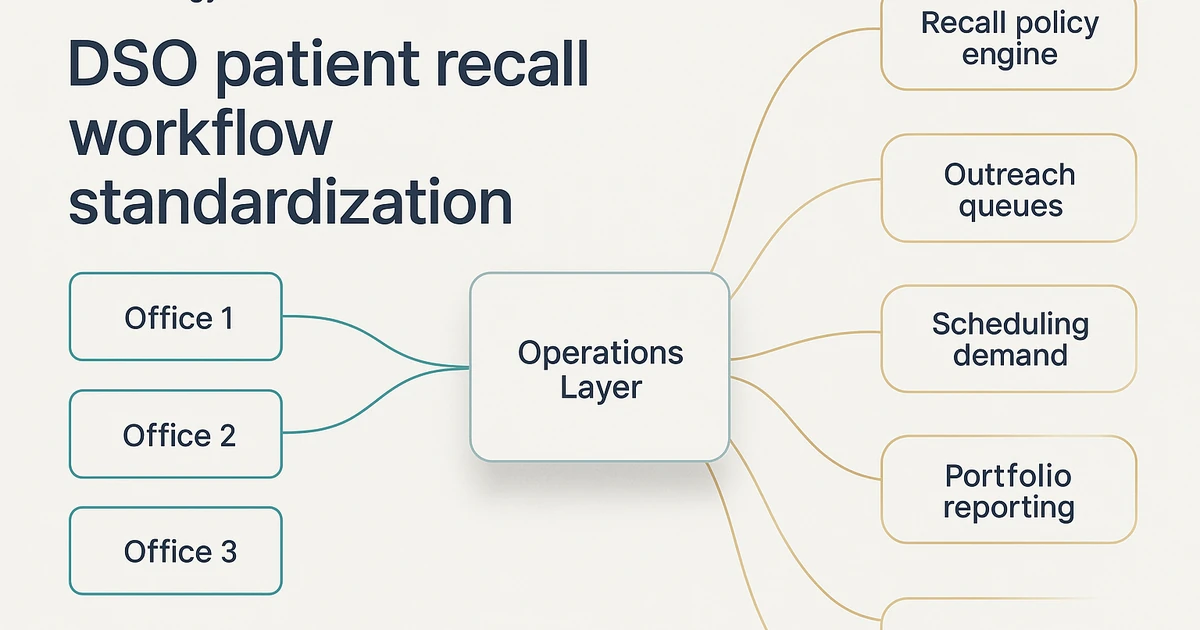
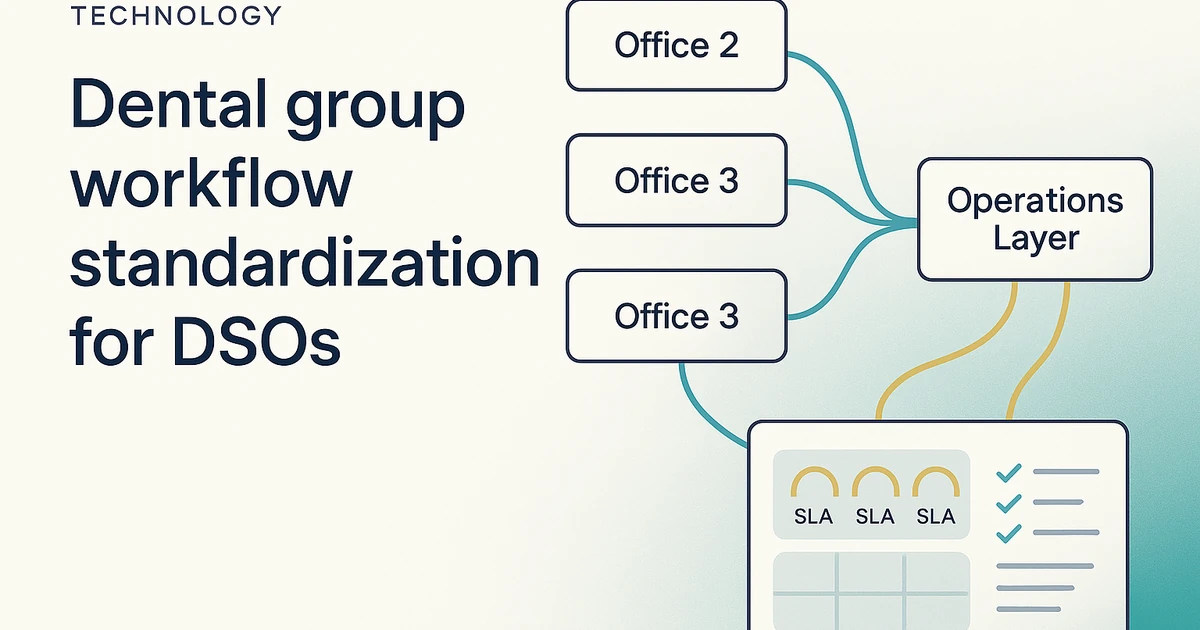
After the pilot, roll out in waves with the same scorecard and training materials. This approach is consistent with the change-management work required for DSO workflow standardization. Each wave should produce a documented decision: expand, revise the workflow, or pause for a specific gap. That discipline prevents one location’s workaround from becoming the group standard by accident.
Which Metrics Prove Whether Coverage Is Working?
Answer rate is useful, but it is only the first measure. A group can improve answer rate by answering quickly and still fail to create appointments, route patients correctly, or complete callbacks. The scorecard should reflect the whole path from inbound contact to a documented operational outcome.
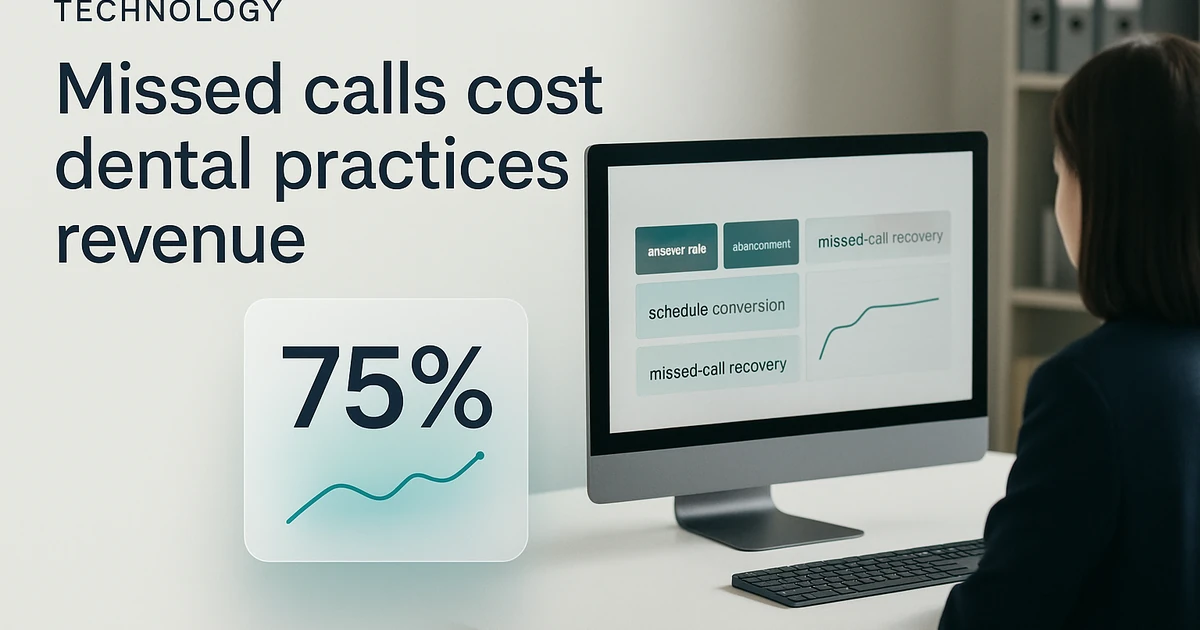
Track inbound volume, answer rate, time to answer, abandonment rate, voicemail volume, callback completion within the group’s defined window, transfer completion, and appointment requests created. Then break those measures down by location, call type, time period, and handling team. Pair the operational metrics with quality reviews that test whether the approved intake and escalation steps occurred.
For executives, trend and variance are more useful than a single benchmark. A location whose abandonment rate changes sharply after a staffing change deserves investigation even if its group average still looks acceptable. A central team that books more appointments but creates a rise in rework may need revised scheduling rules. The scorecard should prompt an operational question and an owner, not simply report a percentage.
Finance and operations can jointly define how to connect appointments to downstream outcomes using their own validated data. Do not assume a uniform value for every inquiry. Appointment type, payer mix, provider availability, specialty, and patient follow-through differ materially across a group. The more defensible approach is to measure the conversion path your organization can substantiate and use that evidence to prioritize coverage investments.
What Questions Should an Executive Team Ask First?
An executive team does not need to approve a new phone platform before it understands the failure pattern. Start with these questions:
- Can we see missed, abandoned, and unanswered transfers by location and hour?
- Do we know who owns the callback and whether it was completed?
- Can a trained team member see the information needed to place the appropriate appointment request?
- Which call types require location-specific handling, clinical escalation, or different access permissions?
- Are QA findings and call outcomes reviewed in the same operating cadence as staffing and schedule capacity?
The answers reveal whether the immediate priority is staffing, routing, scheduling access, training, integration, or governance. They also make vendor conversations more concrete. A group that knows its baseline can ask for a defined workflow and reporting model instead of buying features it cannot operationalize.
Leadership should also ask whether the current system creates a fair comparison between locations. A site with a different phone tree, fewer scheduling permissions, or more specialty calls should not be judged against a simple portfolio average. Normalize the comparison where the workflow is genuinely different, and make the exceptions visible. This protects both the integrity of the scorecard and the credibility of the team using it.
The first operating review should end with named owners and dates, not a broad mandate to improve phone performance. One owner may investigate abandoned calls during peak periods. Another may confirm scheduling permissions for the overflow team. A third may review unresolved transfers. Small, evidence-based assignments create momentum while leadership decides whether a larger patient-access redesign is warranted.
For broader access design, the Agency for Healthcare Research and Quality’s open-access scheduling guidance provides a useful external perspective on aligning appointment access with patient demand. Its framework does not replace dental-specific workflow design, but it reinforces the management principle: access performance improves when capacity, scheduling rules, and measurement are considered together.
This work should be reviewed as part of the regular operating cadence, not only when a location reports a weak month. Patient-access leaders can bring the queue and QA evidence. Regional operators can explain staffing or workflow changes. Finance can validate which appointment outcomes belong in the group’s internal attribution model. Clinical leadership can confirm that escalation boundaries remain appropriate. That shared review turns a phone report into a controlled improvement process and keeps each function accountable for the part it owns.
Over time, the group should retain the decisions behind its access model: why a routing rule changed, which locations were included in a rollout wave, what exception patterns persisted, and what evidence supported the next investment. This record is especially useful when leadership changes or acquisitions add new systems. It makes patient access repeatable rather than dependent on a handful of people who remember why the current setup exists.
Related Reading
- Centralized Scheduling for Dental Offices
- Dental Software Integrations
- Multi-Location Call Center QA Calibration for Healthcare
- Dental Group Workflow Standardization
- Enterprise Centralized Scheduling
Sources
- MGMA: Implementing Central Scheduling to Support Practice Growth and Success
- Agency for Healthcare Research and Quality: Open Access Scheduling for Routine and Urgent Appointments
- AAFP: Same-Day Appointments: Exploding the Access Paradigm
Managing patient access across 3+ dental locations? Request an Enterprise Assessment for your group.