Patient experience does not begin in the exam chair. It begins the moment someone picks up the phone to call your practice. For eye care offices, where patients may be dealing with sudden vision changes, anxiety about a new diagnosis, or the simple frustration of trying to schedule an appointment, that first phone interaction carries more weight than most practice owners realize.
Consider this: research consistently shows that 96% of unhappy patients never complain directly to the practice. They simply leave and find another provider. By the time you notice a dip in retention numbers, the damage is already done. The patients who called, had a poor experience, and quietly moved on are invisible in your data unless you are actively measuring call quality.
The phone remains the most frequent touchpoint between patients and eye care practices. It is used for scheduling, rescheduling, insurance questions, prescription inquiries, post-operative concerns, and urgent care needs. Yet many practices treat call handling as a purely administrative function rather than what it actually is: the single most underestimated driver of patient satisfaction. When you improve how your phones are answered, you improve the entire patient journey downstream.
This guide examines how call handling shapes patient experience in eye care and provides a practical framework for building a phone culture that retains patients and strengthens your practice.
Table of Contents
- Why Does the First-Call Impression Matter?
- What Are the 5 Ways Call Handling Shapes Patient Experience?
- How Do You Measure Patient Experience Through Call Metrics?
- How Do You Build a Patient-Centric Call Culture?
Why Does the First-Call Impression Matter?
Research in communication psychology suggests that people form lasting impressions within the first seven seconds of an interaction. On the phone, where there are no visual cues to soften a poor experience, those seven seconds matter even more. The way your practice answers a call sets the tone for everything that follows.
Speed matters. Industry benchmarks suggest that calls should be answered within three rings or less. Every additional ring increases the likelihood of a hang-up. A study published by Invoca found that 30% of callers who reach voicemail will not leave a message and will call a competitor instead. For an eye care practice that depends on appointment volume, those lost calls translate directly to lost revenue.
But speed alone is not enough. The tone, warmth, and professionalism of the greeting establish your practice brand in the caller’s mind. A rushed “Doctor’s office, hold please” communicates something very different from a calm, attentive “Good morning, thank you for calling Clearview Eye Care, this is Sarah. How can I help you today?” The second version tells the patient they are speaking with a real person who has time for them.
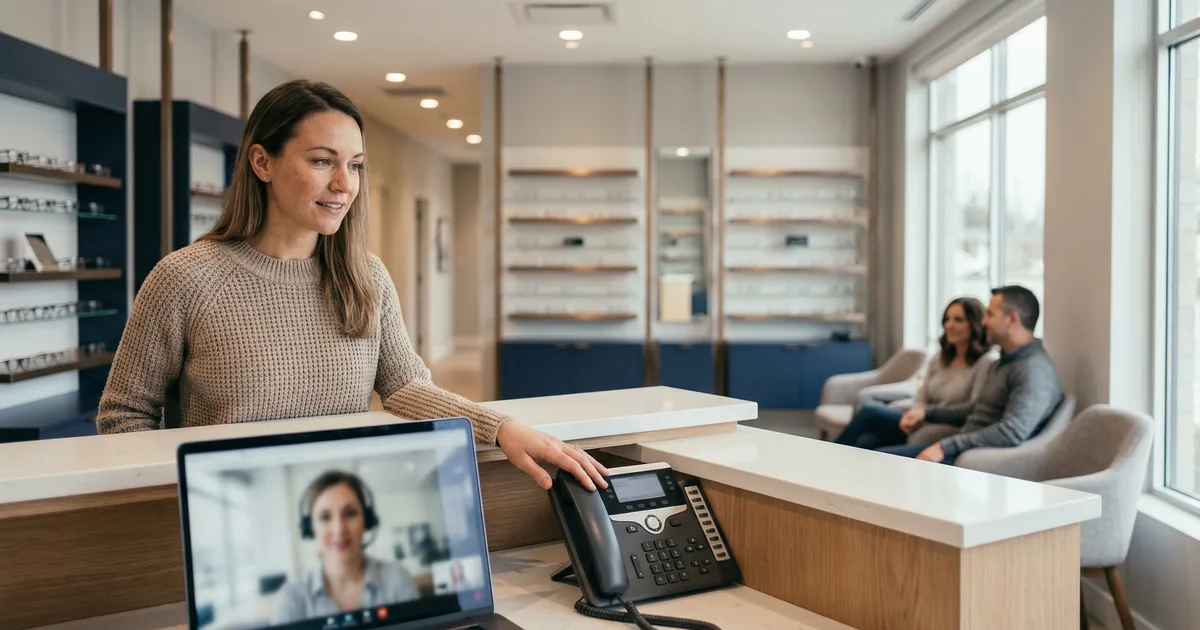
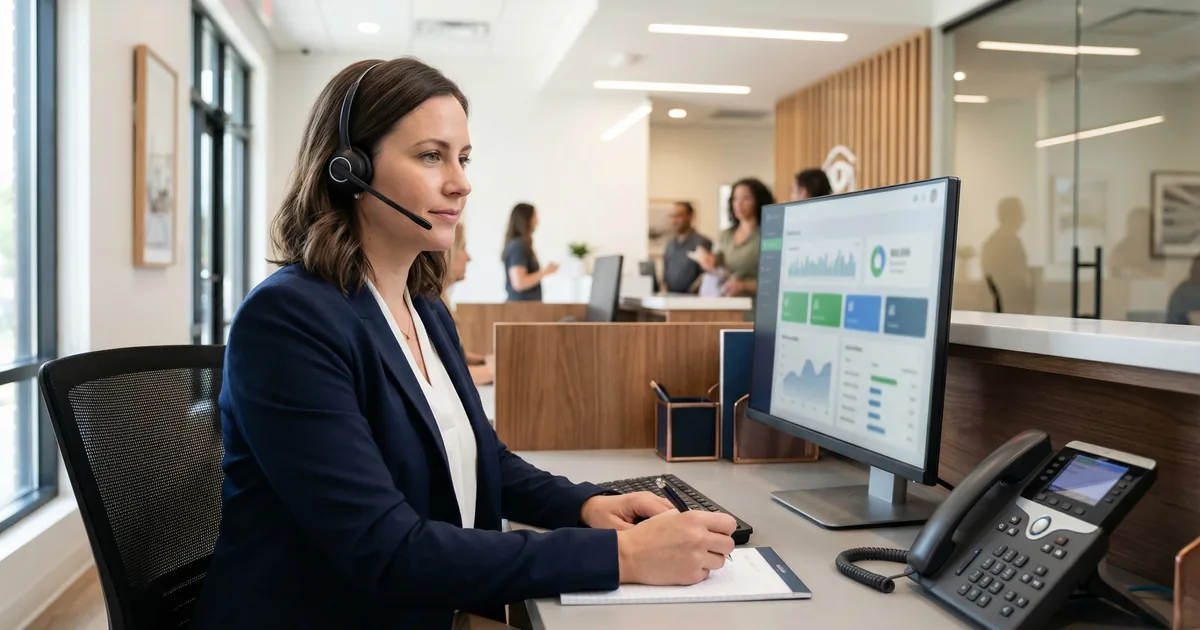
This is where the contrast between a distracted front desk and a dedicated call handler becomes most apparent. Front desk staff juggle patients standing in front of them, incoming faxes, insurance paperwork, and coworkers asking questions, all while the phone rings. A dedicated call handler, whether in-house or through an answering service, has one job: give the caller their full attention. Patients notice the difference immediately, even if they cannot articulate exactly what felt better about the call.
The greeting is not a script to rush through. It is the handshake of your practice brand. Getting it right means training your team to be present, unhurried, and genuinely welcoming, every single time the phone rings.
What Are the 5 Ways Call Handling Shapes Patient Experience?
Call quality is not a single variable. It is a combination of accessibility, empathy, efficiency, follow-through, and consistency. Each of these dimensions shapes how patients perceive your practice and whether they stay loyal over time.
1. How Does Accessibility Build Trust?
When a patient calls your office and reaches a live person, something subtle but powerful happens: they feel valued. The act of picking up the phone, rather than routing to voicemail or an automated tree, signals that your practice prioritizes the people it serves.
Accessibility goes beyond business hours. Patients do not schedule their eye emergencies around your office hours. A patient who wakes up with sudden floaters on a Saturday morning needs to reach someone, not a recording that says “Our office is currently closed. Please call back Monday.” Practices that offer extended-hours or 24/7 phone coverage, whether through staff or a dedicated service, communicate a deeper commitment to patient welfare.
Accessibility also means reducing the “phone tag” that frustrates patients. When a patient calls to ask about their contact lens order and is told “I will have someone call you back,” the experience has already degraded. The callback may come during a meeting, leading to another voicemail, leading to another callback attempt. Each failed connection erodes trust. The goal should be first-contact resolution whenever possible: the person who answers the phone should be enableed to answer the question.
2. Empathetic Communication During Sensitive Moments
Eye care occupies a unique emotional space in healthcare. Vision is tied to independence, livelihood, and quality of life in ways that patients feel acutely. A patient calling after a glaucoma diagnosis may be quietly terrified. A parent calling about a child’s failed school vision screening may be anxious and overwhelmed. An elderly patient calling about worsening macular degeneration may be grieving the possibility of losing their ability to drive or read.
These are not routine calls. They require trained agents who understand how to provide reassurance before addressing logistics. The difference is in the sequence: “I understand this is concerning, and I want to make sure we take care of you” comes before “Let me look at the schedule for available appointments.” Acknowledging the emotional weight of the call before pivoting to the practical steps creates a fundamentally different experience for the patient.
Developing empathetic call scripts does not mean creating robotic responses. It means equipping your call team with language frameworks that validate patient concerns, express genuine care, and then guide the conversation toward resolution. Training in active listening, where the agent reflects back what they hear before responding, is one of the most effective techniques for making patients feel heard during these vulnerable moments.
3. How Does Smooth Scheduling Reduce Friction?
Scheduling is the most common reason patients call an eye care practice, and it is also where friction most often creeps in. Every additional step between “I need an appointment” and “You are booked” increases the chance the patient gives up, delays care, or calls a competitor who makes it easier.
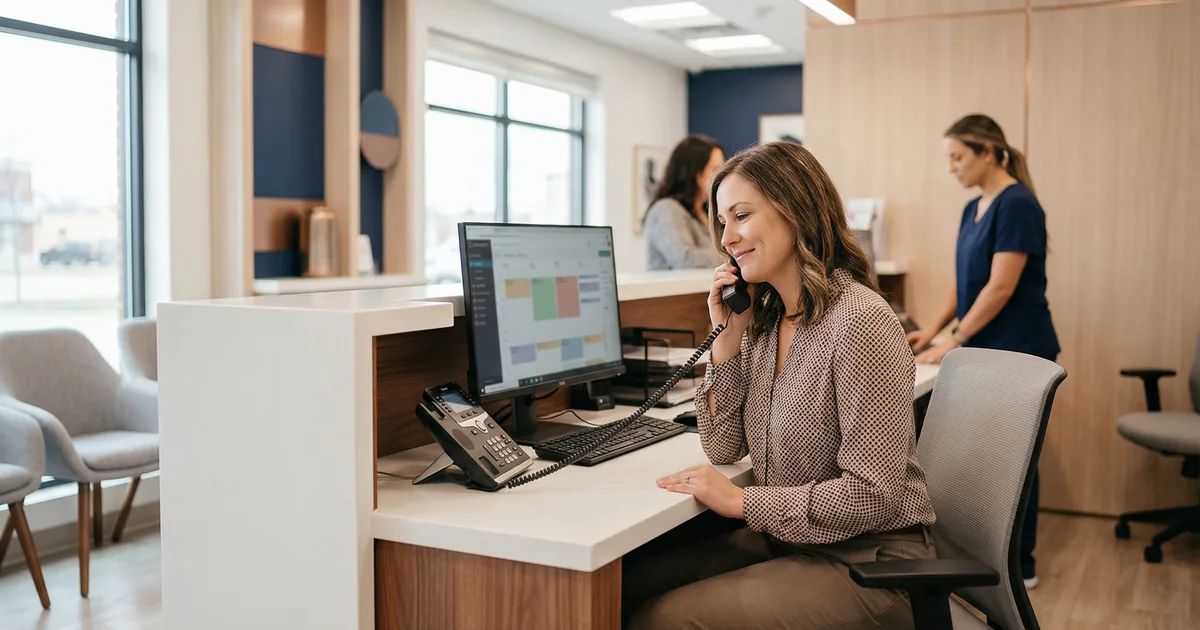
The gold standard is one-call appointment booking with no callbacks, no extended holds, and no “let me check with the doctor and get back to you.” This requires two things: access to real-time availability in the practice management system and the authority to confirm appointments on the spot.
Integration with your EHR or scheduling platform is essential. When your call handler can see open slots in real time, confirm insurance eligibility, and book the appointment during the same call, the patient experience transforms from frustrating to effortless. Patients notice when your practice respects their time. Handling insurance verification questions upfront, rather than surprising patients with coverage issues when they arrive, further reduces the anxiety associated with healthcare scheduling.
For practices looking to streamline this process, a medical answering service with EHR integration can provide the infrastructure needed to deliver one-call booking consistently across all patient interactions.
4. How Does Proactive Follow-Up Show You Care?
Reactive call handling, answering when the phone rings, is the baseline. Proactive follow-up is what separates good patient experience from exceptional patient experience. When your practice reaches out to patients before they have to call you, it communicates attentiveness and care that patients remember.
Post-appointment satisfaction checks are one of the most underused tools in eye care. A brief call the day after a procedure to ask “How are you feeling? Do you have any questions about your recovery?” takes two minutes and generates enormous goodwill. Patients who receive follow-up calls report significantly higher satisfaction scores and are more likely to refer friends and family.
Recall reminders are another opportunity. The difference between a reminder that feels personal and one that feels automated often comes down to whether a real person is on the other end of the call. A live agent who says “Hi Mrs. Johnson, I see it has been about 14 months since your last comprehensive exam and I wanted to make sure we get you scheduled” is categorically different from a robotic text message. For practices building structured recall programs, the patient recall campaign framework provides a detailed playbook for multi-channel outreach that balances automation with the personal touch.
Prescription and order status updates round out the proactive follow-up picture. When a patient’s new progressive lenses arrive, calling them before they have to call you asking “Are my glasses ready yet?” flips the dynamic from reactive to proactive and reinforces that your practice is organized and patient-focused.
5. Consistent Experience Across Locations
For multi-location eye care groups, consistency is the hidden challenge. A patient who has an outstanding phone experience at your flagship location and a mediocre one at a satellite office does not think “that location has worse phone staff.” They think “this practice is inconsistent,” and inconsistency erodes brand trust faster than almost anything else.
Standardizing the phone experience across locations requires centralized protocols: scripted greetings, defined escalation paths, consistent hold music and messaging, and uniform training standards. Every location should feel like the same practice when a patient calls, regardless of which office they reach.
This is particularly important for growing groups that have acquired practices with different cultures and workflows. The phone experience is often the last thing standardized during integration, but it should be among the first because it is the most frequent patient touchpoint. A patient access center model, where calls from all locations route through a centralized team, eliminates location-to-location variability and ensures every patient receives the same caliber of service.
Centralized call handling also provides operational benefits: better coverage during lunch breaks, PTO, and call surges; easier quality assurance monitoring; and a single source of truth for call metrics across the organization.
How Do You Measure Patient Experience Through Call Metrics?
You cannot improve what you do not measure. While patient satisfaction surveys capture broad sentiment, call-specific metrics provide the granular data needed to identify and fix experience gaps. The following KPIs should be on every eye care practice’s dashboard.
Average Speed of Answer (ASA) measures how long patients wait before reaching a live person. The benchmark for healthcare practices is under 20 seconds. Anything above 30 seconds correlates with increased abandonment and lower satisfaction scores.
First-Call Resolution Rate tracks the percentage of calls where the patient’s need is fully addressed without requiring a callback. High-performing practices achieve 85% or higher. Every call that requires a follow-up is a potential friction point and a risk of losing the patient’s attention to a competitor.
Appointment Booking Rate measures the percentage of scheduling-related calls that result in a confirmed appointment. If patients are calling to book but hanging up without an appointment, something in the process is broken, whether it is hold times, availability issues, or an undertrained call handler.
Patient Satisfaction Scores from post-call surveys provide direct feedback on the phone experience. Even a simple “On a scale of 1 to 5, how would you rate your experience today?” captures actionable data. Practices that survey consistently can correlate call quality trends with retention and referral outcomes.
Net Promoter Score (NPS) correlation with call quality reveals a powerful relationship: practices with high NPS scores almost always have strong phone operations. The connection makes sense. Patients who feel well-served from the first phone call through their appointment are the ones most likely to recommend your practice. For guidance on tracking recall-specific metrics, the reactivation campaign KPIs guide outlines the benchmarks that matter most.
Reviewing these metrics monthly and sharing them with your call team creates accountability and continuous improvement. When agents see that their first-call resolution rate jumped from 78% to 88% after a training session, they internalize the connection between their effort and patient outcomes.
How Do You Build a Patient-Centric Call Culture?
Metrics and technology provide the infrastructure, but culture determines whether your phone experience truly serves patients. Building a patient-centric call culture requires sustained investment in people, processes, and feedback loops.
Training in empathy and active listening should not be a one-time onboarding event. Schedule quarterly refreshers where agents practice handling difficult scenarios: the angry patient whose insurance claim was denied, the confused elderly patient who cannot remember which drops to use, the parent who is upset about a billing error. Role-playing these situations in a low-stakes environment prepares agents to handle them with grace when the pressure is real.
Call scripts should sound natural, not robotic. The purpose of a script is to ensure consistency and completeness, not to turn agents into automatons. The best scripts provide a framework, the key points that must be covered, while leaving room for the agent’s personality and judgment. Patients can hear the difference between someone reading a script and someone who genuinely cares.
Regular QA reviews and coaching transform call quality from a vague aspiration into a disciplined practice. Record calls (with proper consent and disclosure), review a sample each week, and provide specific, constructive feedback to agents. Celebrate excellence publicly. Address gaps privately and supportively. The reporting and QA tools available to modern call operations make this process systematic rather than burdensome.
Incorporate patient feedback directly into call protocols. When a post-call survey reveals that patients are frustrated by long hold times during the lunch hour, that is an operational signal to adjust staffing. When multiple patients mention that they were not told about copay amounts before arriving, that is a training signal to add insurance verification to the call flow. The feedback loop between patient input and call protocol refinement is what separates static call centers from learning organizations.
Building this culture takes time, but the compounding effect is significant. Practices that invest in their call culture see improvements in patient satisfaction, retention, referrals, and ultimately revenue, because every positive phone interaction reinforces the patient’s decision to stay with your practice.
Better Calls, Better Outcomes
The relationship between call handling and patient experience is not abstract. It is measurable, improvable, and directly tied to practice performance. Practices that answer quickly, communicate with empathy, schedule without friction, follow up proactively, and deliver consistency across locations create a patient experience that drives retention and referrals.
The improvements do not require a massive overhaul. Start by measuring your current call metrics. Identify the biggest gaps. Train your team on the fundamentals of empathetic, efficient phone communication. Build feedback loops that turn patient input into operational improvements. Small, sustained changes in call quality accumulate into a meaningfully better patient experience over months and years.
If you are unsure where your practice stands, an honest assessment of your current call handling is the first step. Listen to a few recorded calls. Call your own office as a mystery shopper. Ask patients directly about their phone experience. The gaps you uncover will point you toward the highest-impact improvements.
Ready to assess your call handling and improve patient experience? Contact our team to learn how dedicated call support can transform your practice’s front door.
Related Reading
- Patient Recall Solution
- Complete Guide to Medical Answering Services for Eye Care Practices
- Appointment Reminder Best Practices: Reduce No-Shows 20-50%