

Multi-location optometry groups deploying virtual assistants report 37.8% revenue growth and 60% reductions in missed calls according to 2024 industry data. For operations leaders managing 3+ locations, virtual assistants represent a strategic solution to the staffing crisis that has plagued eye care practices since 2020. This guide breaks down the deployment framework, KPI benchmarks, and implementation timeline for enterprise optometry groups ready to scale patient access operations.
What You’ll Learn
- Why Are Multi-Location Optometry Groups Turning to Virtual Assistants?
- What Tasks Can Virtual Assistants Handle Across Locations?
- How Does Centralized VA Support Differ From Location-Based Staffing?
- What ROI Can Multi-Location Groups Expect?
- How Do You Deploy Virtual Assistants Across 3+ Locations?
- Technology Requirements for Enterprise VA Integration
- What KPIs Should You Track Across Locations?
- How Do You Maintain Quality and Compliance at Scale?
- Common Implementation Mistakes to Avoid
Why Are Multi-Location Optometry Groups Turning to Virtual Assistants?
The optometry staffing crisis has reached critical levels. A 2024 study projects ophthalmology workforce supply will drop 12% while demand rises 24% by 2035, signaling broader pressures across eye care practices. MGMA reports that 53% of healthcare practice leaders rank candidate shortages as their top challenge, ahead of compensation concerns at 29% and retention issues at 16%.
For multi-location groups, these pressures compound exponentially. When a single-location practice loses a front desk employee, cross-training covers the gap temporarily. When a 10-location group faces 30% annual turnover at the front desk, the operational chaos affects patient access across your entire network. Patients calling location three get sent to voicemail. Location seven has a two-week backlog for appointments. Location one is burning out staff covering for understaffed locations.
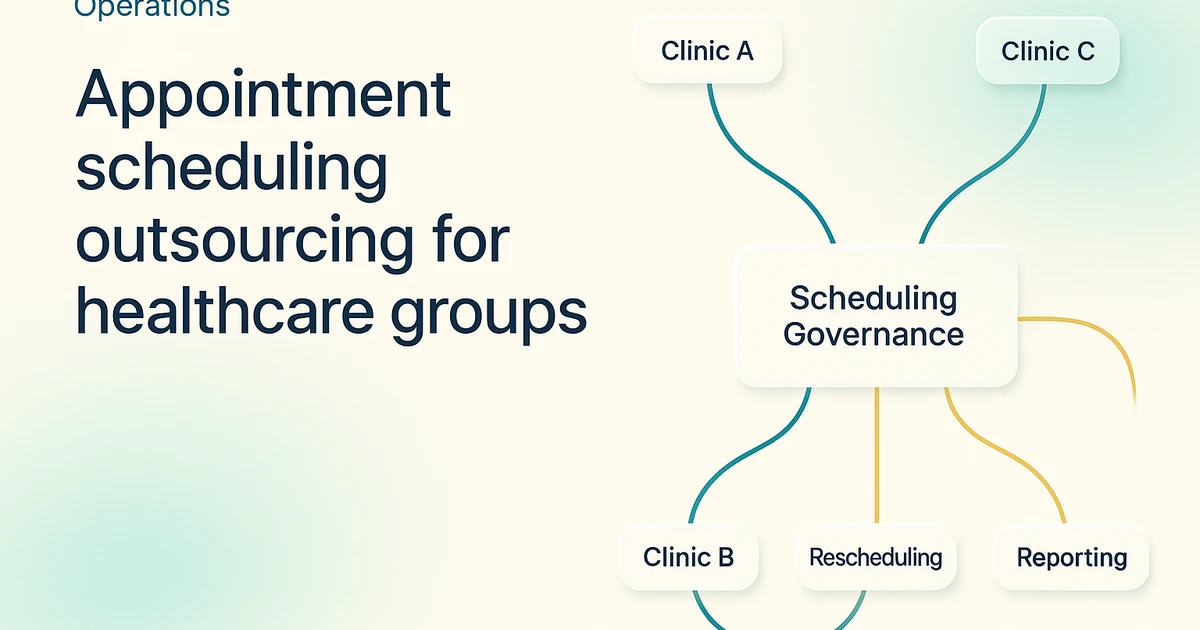
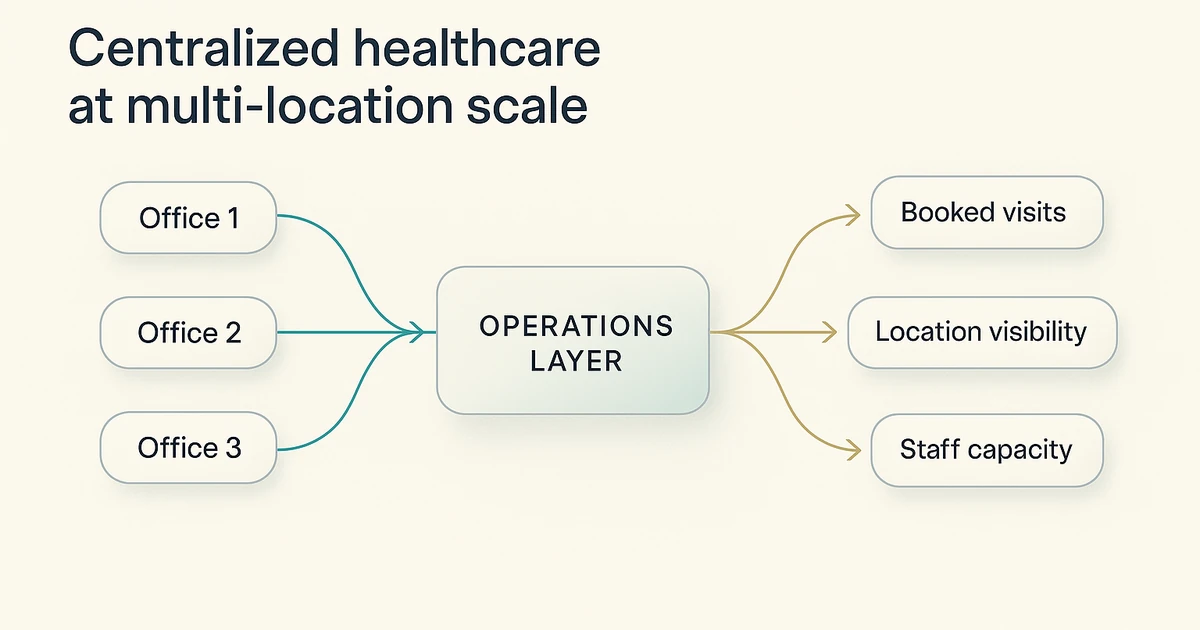
Virtual assistants solve this structural problem by creating a centralized patient access layer that operates independently of location-specific staffing volatility. Rather than staffing each location to handle peak call volumes, groups can route overflow calls to a trained VA team that understands your protocols, has access to your EHR system, and can schedule appointments directly into any location’s calendar.
The financial case is equally compelling. MGMA data shows front desk staff pay increases of 4.5% for 2025, outpacing the 3.25% median across all staff roles. Benefits, training, and turnover costs add another 50-75% to base compensation. Virtual assistant models typically cost 40-60% less per hour than in-office equivalents, without benefits overhead or state employment taxes.
Multi-location optometry groups face a unique missed calls revenue problem that single practices rarely encounter. When call volume spikes across multiple sites simultaneously, each location’s front desk operates independently without visibility into the broader patient access picture. A VA model centralizes call handling intelligence so operations leaders can actually see and manage the problem.
What Tasks Can Virtual Assistants Handle Across Locations?
Virtual assistants in multi-location optometry groups typically handle two categories of work: synchronous tasks that require real-time patient interaction and asynchronous tasks that can be batched and processed during off-peak hours.
Synchronous tasks include inbound call answering, appointment scheduling, appointment confirmations, insurance verification inquiries, and basic patient questions about hours, locations, and services. These tasks require the VA to access your practice management system in real time and make decisions based on location-specific protocols. A caller asking about appointment availability at your Westside location needs immediate access to that location’s schedule, provider preferences, and exam room capacity.
Asynchronous tasks include patient recall outreach, insurance eligibility batch processing, referral follow-ups, chart preparation, and administrative documentation. These tasks can be queued and processed systematically rather than reactively. A VA team can work through your recall list during morning hours, making outbound calls to patients overdue for annual exams across all locations.
The distinction matters for deployment planning. Synchronous tasks require real-time system access, immediate escalation protocols, and tight quality assurance monitoring. Asynchronous tasks can be batch-audited and allow for more flexible scheduling. Most enterprise groups start with synchronous call answering, then expand to asynchronous recall campaigns once the operational foundation is established.
Patient recall represents a particularly high-value use case for multi-location groups. Industry data shows that centralized recall programs recover 20-30% of dormant patients, compared to 8-15% for fragmented location-based efforts. The centralization allows for consistent scripting, systematic follow-up sequences, and unified tracking across your entire patient base.
How Does Centralized VA Support Differ From Location-Based Staffing?
The centralized versus distributed intake decision represents a fundamental strategic choice for multi-location groups. Location-based staffing means each practice hires, trains, and manages its own front desk team independently. Centralized VA support means patient access operations are managed as a unified function across all locations.
Location-Based Model
Staff per location: 2-3 FTEs
Hiring responsibility: Location manager
Training consistency: Variable
Peak coverage: Limited to on-site staff
Cross-location visibility: None
Turnover impact: Location-specific disruption
Centralized VA Model
Staff per location: 1 FTE + VA overflow
Hiring responsibility: VA partner or central ops
Training consistency: Standardized protocols
Peak coverage: Scales with demand
Cross-location visibility: Unified dashboard
Turnover impact: Absorbed by VA team depth
For groups with 3-5 locations, hybrid models often make sense. You maintain one strong front desk person at each location to handle in-person patients and local escalations, while routing phone volume to a centralized VA team. This preserves the patient relationship at the physical location while solving the phone coverage problem that drains most front desk resources.
For larger groups with 10+ locations, full centralization delivers maximum operational efficiency. Your in-office staff focus entirely on the patient standing in front of them while all phone-based patient access flows through a trained team with unified protocols and real-time performance monitoring.
The multi-location healthcare intake guide details the decision framework for choosing between these models based on location count, call volume patterns, and organizational structure.
What ROI Can Multi-Location Groups Expect?
The financial case for virtual assistants in multi-location optometry groups rests on three primary value drivers: missed call recovery, labor cost reduction, and patient retention improvement.
Missed call recovery represents the largest opportunity for most groups. Industry data shows new patient lifetime value in optometry ranges from $4,000 to $8,000 over a 10-20 year relationship, with annual patient value of $400-$500. When you factor in the family multiplier of 3.15x, a single missed new patient call costs $1,400 to $2,800 in lost revenue. For a 10-location group missing 20 calls per day across all sites, that translates to $1.2 million in annual revenue leakage.
Virtual assistant deployment targeting 95%+ answer rates recovers a significant portion of that leakage. Groups achieving this benchmark through centralized call handling report measurable ROI from healthcare call center investments within the first 90 days of deployment.
Labor cost reduction comes from the structural economics of virtual staffing. The MGMA DataDive shows healthcare operating expenses rose 11.1% year-to-date in 2025 compared to 2024, with 65% of leaders citing labor as the top cost driver. Virtual assistants at 40-60% of in-office labor costs create meaningful margin improvement, particularly for groups facing pressure from private equity partners or preparing for eventual exit.
Patient retention improvement flows from consistent patient experience across locations. Healthcare call center statistics show that negative phone experiences make patients four times more likely to switch providers. When your 10 locations deliver wildly inconsistent phone experiences based on whoever happens to be working that day, you create retention risk across your entire patient base. Centralized VA support with standardized scripting and quality monitoring ensures every patient interaction meets your standards regardless of which location they call.
A 15-location optometry group documented 95% answer rate achievement after deploying centralized virtual assistant support, recovering approximately $875,000 in annual revenue that was previously lost to missed calls and inconsistent follow-up.
How Do You Deploy Virtual Assistants Across 3+ Locations?
Enterprise VA deployment follows a phased approach that minimizes disruption while building operational confidence. The typical timeline spans 60-90 days from contract to full deployment across all locations.
Phase 1: Discovery and Configuration (Weeks 1-2)
The deployment partner documents your current workflows, call routing structures, and location-specific protocols. This phase includes EHR access setup, practice management system integration, and call routing infrastructure configuration. Operations leaders should expect to invest 8-10 hours during this phase working with the implementation team to document scheduling rules, insurance acceptance policies, and escalation procedures for each location.
Phase 2: Pilot Deployment (Weeks 3-4)
Most groups start with 1-2 locations as a pilot. This allows you to validate VA performance against your quality standards before scaling. During pilot, the VA team handles overflow calls during peak hours rather than all inbound volume. Your existing front desk staff remains fully engaged while the VA team builds proficiency with your systems and protocols.
Phase 3: Expansion to Remaining Locations (Weeks 5-8)
Based on pilot results, deployment expands to remaining locations. Each location follows a similar 1-2 week ramp-up period where VA support starts with overflow handling before transitioning to primary call answering. This graduated approach lets location managers adapt to the new model without sudden operational changes.
Phase 4: Optimization and Steady State (Weeks 9-12)
With all locations live, focus shifts to performance optimization. QA calibration sessions align your team and the VA partner on call quality standards. KPI dashboards are configured to your specific reporting requirements. Feedback loops establish ongoing improvement processes.
The enterprise call answering deployment framework provides detailed checklists for each phase of this implementation timeline.
Technology Requirements for Enterprise VA Integration
Virtual assistant deployment at enterprise scale requires integration with several core systems. The good news: most established VA partners have pre-built connectors for common optometry platforms. The complexity comes from managing multiple system types across locations if your group has grown through acquisition.
Practice Management System (PMS) Access
VAs need real-time access to your scheduling system to book appointments, check availability, and verify patient records. For groups running a single PMS across all locations, this is straightforward. For groups with multiple systems from acquisitions, the VA partner needs access credentials and training for each platform. Common optometry PMS platforms include OfficeMate, Crystal PM, RevolutionEHR, and MaximEyes.
EHR Integration
Depending on task scope, VAs may need EHR access for chart preparation, insurance verification, and patient history review. This requires appropriate user credentials, role-based access controls, and HIPAA-compliant connection protocols. The EHR and PMS integration guide details technical requirements for enterprise deployments.
Phone System Configuration
Call routing must be configured to direct calls to the VA team based on your preferred logic. Options include: all calls route to VA first, overflow routing when on-site staff are busy, after-hours routing, or location-specific routing rules. Modern cloud phone systems like RingCentral, 8x8, and Zoom Phone support these configurations. Legacy on-premise systems may require additional middleware.
Communication Platforms
Real-time communication between VAs and on-site staff is essential for escalations, schedule changes, and complex patient situations. Most groups use Slack, Microsoft Teams, or similar platforms for instant messaging. Screen sharing capability supports training and complex case resolution.
Reporting Dashboard Access
Operations leaders need visibility into VA performance across all locations. This typically requires dashboard access showing call volumes, answer rates, scheduling conversion rates, and quality scores by location and time period. The KPI dashboard for multi-location intake outlines the essential metrics for enterprise monitoring.
What KPIs Should You Track Across Locations?
Enterprise VA deployment requires systematic performance measurement across both efficiency metrics and quality metrics. Operations leaders managing 3+ locations should establish baseline measurements before deployment and track progress against these benchmarks.
Efficiency Metrics
| Metric | Definition | Target Benchmark | Industry Average |
|---|---|---|---|
| Answer Rate | % of calls answered vs. total incoming | 95%+ | 70-80% |
| Average Speed to Answer | Time from ring to pickup | Under 30 seconds | 3-4 minutes |
| Abandonment Rate | % of callers who hang up before answer | Under 5% | 10-15% |
| First Call Resolution | % of calls resolved without callback | 80%+ | 52% |
| Scheduling Conversion | % of calls resulting in booked appointment | 65%+ | 45-55% |
Quality Metrics
Quality measurement requires call monitoring and scoring. Most VA partners conduct QA reviews on a random sample of calls, typically 5-10% of total volume. Scoring criteria should align with your patient experience standards and typically include greeting quality, accuracy of information provided, appointment handling, and professional demeanor.
Location Comparison Metrics
One advantage of centralized VA support is the ability to compare performance across locations. Metrics to compare include call volume per location, peak call times, scheduling conversion by location, and recall response rates. This visibility often reveals operational issues at specific locations that were previously invisible.
The healthcare group operations benchmarks report provides detailed performance standards for multi-location groups.
How Do You Maintain Quality and Compliance at Scale?
Quality assurance and HIPAA compliance become more complex as you scale VA support across multiple locations. The distributed nature of remote work means you cannot rely on physical supervision or informal hallway feedback.
QA Calibration Process
Establish monthly calibration sessions where your operations team and the VA partner review sample calls together. Score calls independently, then discuss discrepancies to align on quality standards. This prevents drift between what you expect and what the VA team delivers. The multi-location call center QA calibration guide details the calibration methodology used by high-performing groups.
HIPAA Compliance Controls
Virtual assistants handling patient information must operate under a Business Associate Agreement (BAA) with your organization. The VA partner should maintain SOC 2 Type II certification, implement secure remote access protocols, and provide documented training on PHI handling. Regular compliance audits verify these controls remain effective.
Patient information should only be accessed through secure, encrypted connections. VAs should never store patient data on personal devices. Call recordings must be encrypted and retained according to your record retention policies. The SOC2 medical answering service requirements document outlines compliance standards for enterprise healthcare groups.
Performance Monitoring
Real-time dashboards should alert operations leaders to performance issues before they become problems. Configure alerts for answer rate drops, unusual call volumes, or quality score declines. Daily reports summarizing key metrics across all locations keep leadership informed without requiring manual data collection.
Escalation Protocols
Document clear escalation paths for situations VAs cannot handle independently. Common escalation triggers include patient complaints, complex insurance questions, clinical inquiries requiring optometrist input, and scheduling conflicts. Each location should have a designated escalation contact available during business hours.
Common Implementation Mistakes to Avoid
Multi-location groups deploying virtual assistants often encounter predictable challenges. Understanding these pitfalls before deployment helps you avoid them.
Mistake 1: Insufficient Protocol Documentation
VAs can only perform as well as the protocols they follow. Groups that skip thorough workflow documentation during discovery find themselves frustrated when VAs make decisions that conflict with location-specific preferences. Invest the time upfront to document scheduling rules, insurance handling, and escalation criteria for each location.
Mistake 2: Inadequate Location Manager Buy-In
Central operations may approve VA deployment, but location managers who view it as a threat to their autonomy will undermine success. Include location managers in the decision process, explain how VAs will support rather than replace their teams, and address concerns about control over scheduling directly.
Mistake 3: Expecting Immediate Perfection
The pilot phase exists because VAs need time to learn your specific protocols. Groups that judge performance harshly during week one often abandon promising deployments prematurely. Set realistic expectations: solid performance by week four, optimization through week twelve.
Mistake 4: Neglecting Ongoing QA
Initial deployment receives intensive attention, but quality can drift over time without systematic monitoring. Build QA into the ongoing relationship rather than treating it as an implementation phase activity. Monthly calibration sessions and weekly performance reviews maintain standards.
Mistake 5: Failing to Integrate with Recall Programs
Virtual assistants excel at patient recall outreach, but many groups deploy VAs only for inbound call handling. Expand scope to include recall once inbound operations stabilize. The patient recall campaign framework provides the structure for this expansion.
The RFP vendor checklist for patient access centers helps operations leaders evaluate VA partners and avoid common selection mistakes.
Building Your Multi-Location VA Strategy
Virtual assistant deployment for multi-location optometry groups represents a strategic shift from location-centric staffing to centralized patient access operations. The groups achieving 95%+ answer rates and 30%+ revenue growth through VA deployment share common characteristics: they approach the initiative as an operational transformation rather than a staffing shortcut, they invest in proper documentation and integration before deployment, and they maintain ongoing quality oversight after go-live.
For operations leaders managing 3+ locations, the question is no longer whether virtual assistants can support multi-location optometry practices. The evidence from groups already deploying this model is clear. The question is whether your organization is ready to make the operational and cultural shifts required for successful deployment.
The optometry network operations guide provides additional strategic frameworks for scaling operations across multiple locations.
Ready to Scale Patient Access Across Your Locations?
Managing virtual assistant deployment across 3+ optometry locations? Request an enterprise assessment to see how centralized patient access can reduce missed calls and standardize operations across your group.
Key Takeaways
Multi-location optometry groups deploying virtual assistants achieve measurable improvements in patient access operations. The staffing crisis shows no signs of easing, with workforce projections indicating continued pressure through 2035. Virtual assistant models provide a scalable alternative to the location-based staffing approach that has dominated optometry operations.
Success requires treating VA deployment as an operational transformation. Groups that invest in proper protocol documentation, phased implementation, and ongoing quality monitoring achieve the 95%+ answer rates and revenue recovery that make the business case compelling. Groups that approach VA deployment as a quick staffing fix typically struggle with quality issues and location manager resistance.
For operations leaders evaluating this approach, the pilot model offers a low-risk entry point. Deploy VA support at 1-2 locations, measure results against your current baseline, then expand based on proven performance. The 60-90 day implementation timeline means you can validate the model within a single quarter before committing to full deployment.