
What You’ll Learn
Operating Model Questions
- How dermatology patient access operations multi-site clinics should be framed as an enterprise operating layer
- Where centralization creates value for intake, scheduling, escalation, and reporting
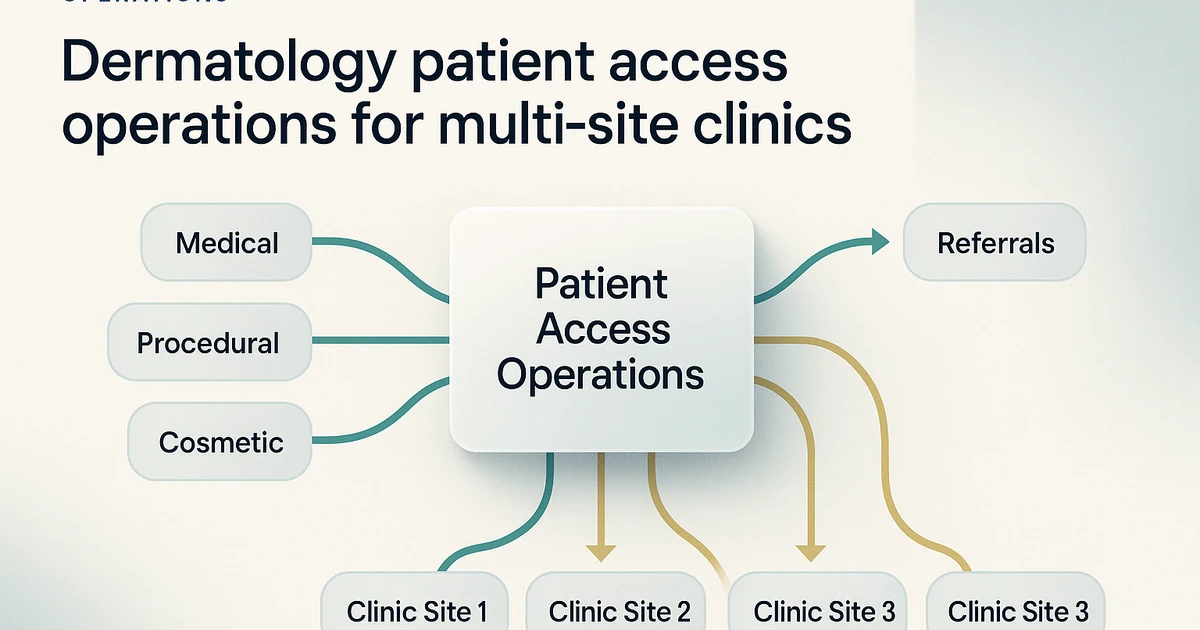
- Why dermatology groups need explicit rules for medical, procedural, cosmetic, and referral-driven demand
Governance Questions
- Which workflows belong in a centralized access center
- How buying committees should evaluate triage, integrations, QA, and compliance review
- Where SLA calibration and EBITDA impact discussions should sit in the operating cadence
How Should Dermatology Groups Define Patient Access At Scale?
Dermatology access is not just appointment booking when a group manages multiple locations, provider types, referral sources, and visit categories.
It becomes a shared operating system for demand capture, clinical routing, template management, payer intake, patient communication, and executive reporting.
Dermatology access research has measured appointment success, wait time, insurance acceptance, clinician availability, and practice ownership differences (PubMed).
For COOs, VPs of Operations, and buying committees, the question is not whether each site can answer phones.
The question is whether the group can run one access model that makes patient demand visible, routes it consistently, and gives leaders a defensible view of performance across the portfolio.
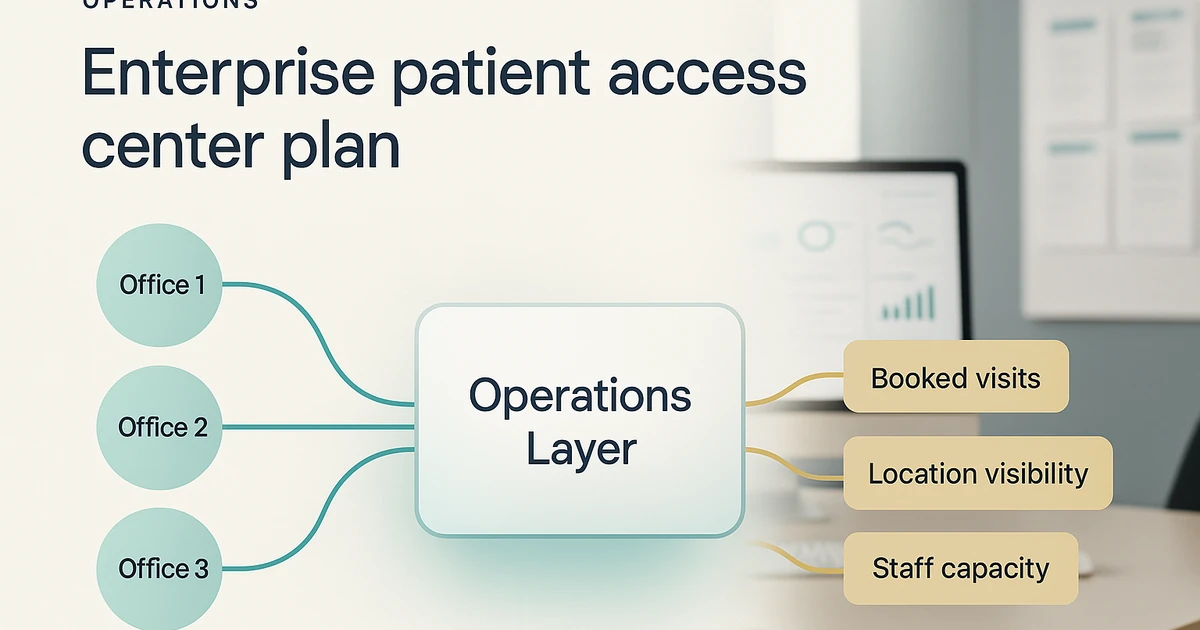
That is why dermatology groups evaluating an enterprise patient access center should treat access as part of the broader enterprise operating model, not as a front-desk staffing project.
Centralized Access Is An Operating Layer
A centralized dermatology access model defines who owns each step between initial demand and a resolved next action.
That may include new patient intake, referral capture, appointment scheduling, patient questions, digital requests, reschedules, waitlist offers, cosmetic inquiry routing, and escalation to clinical teams.
This layer should not erase site context. Dermatology groups still need provider-specific rules, procedure constraints, payer requirements, and clinical escalation paths.
The enterprise value comes from making those rules documented, trainable, auditable, and consistent enough that leaders can manage variation rather than discover it through complaints.
Dermatology Demand Needs Clear Segmentation
Dermatology groups often manage different access motions inside the same brand: medical dermatology, surgical referrals, cosmetic consultations, acne follow-up, biologic monitoring, pathology-related follow-up, and lesion evaluation.
Treating those requests as one undifferentiated queue can create preventable rework.
The operating model should segment demand by intent, complexity, and required decision rights. A cosmetic inquiry may need a different conversion workflow than a medical referral.
A procedural request may need different prerequisites than an established-patient follow-up. This segmentation gives centralized teams the structure needed to route work without making clinical assumptions beyond their role.
What Breaks When Scheduling Rules Stay Site-Specific?
Scheduling variation is a common way for a multi-site dermatology group to lose control of access performance. If each location uses different visit names, template rules, escalation habits, and waitlist practices, the access center cannot operate from a single playbook.
The NCBI Bookshelf chapter on health care scheduling describes access and wait-time complexity across specialty care, including referral requirements, preauthorization, diagnostic prerequisites, and the need to balance urgent new patients with returning patients (NCBI Bookshelf).
That framework is useful for dermatology because the scheduling problem is rarely just open slots. It is the interaction between demand, clinical appropriateness, payer requirements, provider availability, and site-specific constraints.
Template Variation Creates Operational Rework
A multi-site dermatology group needs template governance before it can expect consistent centralized scheduling. Visit types should be named consistently where possible, mapped to provider eligibility, and documented in language that access agents can apply during live scheduling.
The group should also define which template rules are enterprise standards and which are approved site exceptions. Without that distinction, every site-specific preference becomes a shadow policy.
Over time, the access center becomes less centralized in practice, even if it still sits in one reporting structure.
Urgent And Routine Demand Need Explicit Rules
AHRQ describes open access, also called advanced access, as a scheduling approach that reserves capacity for same-day demand and addresses both routine and urgent appointment requests (AHRQ).
Dermatology groups do not need to copy that model wholesale to learn from it. The enterprise lesson is that access targets require deliberate capacity design.
For dermatology operators, this means defining how the group distinguishes urgent concerns, routine medical visits, cosmetic interest, procedure follow-up, and provider-directed exceptions.
The central team needs approved routing language, escalation contacts, and documentation requirements. SLA calibration should come from governance, not from agents improvising under pressure.
How Can A Centralized Access Center Handle Dermatology Triage?
A conservative dermatology access model should not ask access teams to perform clinical diagnosis. They can, however, use approved protocols to capture the right information, route demand to the right owner, and identify when a clinical review is required before scheduling.
This distinction matters for compliance review and for physician trust. A centralized team can standardize intake questions, referral documentation, image-handling instructions, and escalation triggers while leaving clinical judgment with licensed clinicians.
Groups should have their compliance, clinical, and legal teams review the final workflow before deployment.
Route By Intent Before Provider Preference
Provider preference is important, but it should not be the first sorting logic for every request. A dermatology access center should first identify patient intent, visit category, payer or referral requirements, location flexibility, and whether a clinical review is needed.
Only after that intake layer should the workflow match the patient to provider, location, and appointment type. This prevents the access center from filling schedules based only on what is open.
It also creates better reporting because leaders can see whether access friction is tied to demand type, template design, payer requirements, referral quality, or site-level constraints.
Use Teledermatology As A Capacity Valve
Asynchronous teledermatology can be relevant to enterprise triage design when it is embedded in an approved clinical workflow.
A study of physician-to-physician outpatient asynchronous teledermatology inside a shared Epic EHR found that this model can support rapid consultation and reduce the need for some in-person dermatology referrals (PubMed).
For a multi-site group, the operational takeaway is not that teledermatology replaces visits. It is that some dermatology demand may be better routed through a clinical review pathway before an in-person slot is consumed.
The access center can support that pathway by standardizing intake, routing consult requests, tracking dispositions, and reporting where referrals convert into visits or other next actions.
Where Should Digital Scheduling Fit In Multi-Site Dermatology?
Digital scheduling should not sit outside the access operating model. Online requests, portal activity, web forms, waitlist offers, and self-rescheduling all create operational work that needs ownership, rules, and reporting.
A study of hospital-affiliated dermatology practices examined appointment wait time, insurance acceptance, hold time, and web-based booking availability (PMC).
For enterprise operators, that reinforces a practical point: phone workflows and digital workflows both shape access. A group that manages only the call queue may miss a meaningful portion of access friction.
Self-Scheduling Needs Guardrails
A large multisite, multispecialty clinic described multiple self-scheduling and self-rescheduling processes, including ticket-based scheduling, direct self-scheduling, website scheduling, waitlist-driven scheduling, and self-triage pathways (PubMed).
Dermatology groups can use that concept without treating every visit type as suitable for self-scheduling.
The access center should define which dermatology visits are appropriate for direct scheduling and which require review.
Cosmetic consultations, established-patient follow-ups, and low-complexity visit categories may have different guardrails than surgical, referral-driven, or medication-monitoring workflows.
Digital access works best when it is connected to eligibility rules, template logic, and human follow-up for exceptions.
Waitlists Need Governance
Automated waitlists are often positioned as a scheduling feature, but multi-site operators should treat them as a governance issue.
A multisite evaluation of automated waitlists described adoption determinants, appointment filling, missed-appointment patterns, governance, and digital equity constraints (PubMed).
Dermatology groups should define which patients are eligible for waitlist offers, how openings are prioritized, when a clinical review is required, and how access teams document the final outcome.
Without those rules, waitlists can create confusion across sites. With governance, they become part of the access infrastructure rather than a disconnected automation layer.
Which Operating Metrics Should Executives Review?
Enterprise dermatology access reporting should separate activity from operational control. Call volume, appointment requests, and digital inquiries matter, but they do not tell leadership whether the access model is standardized, trusted, or scalable.
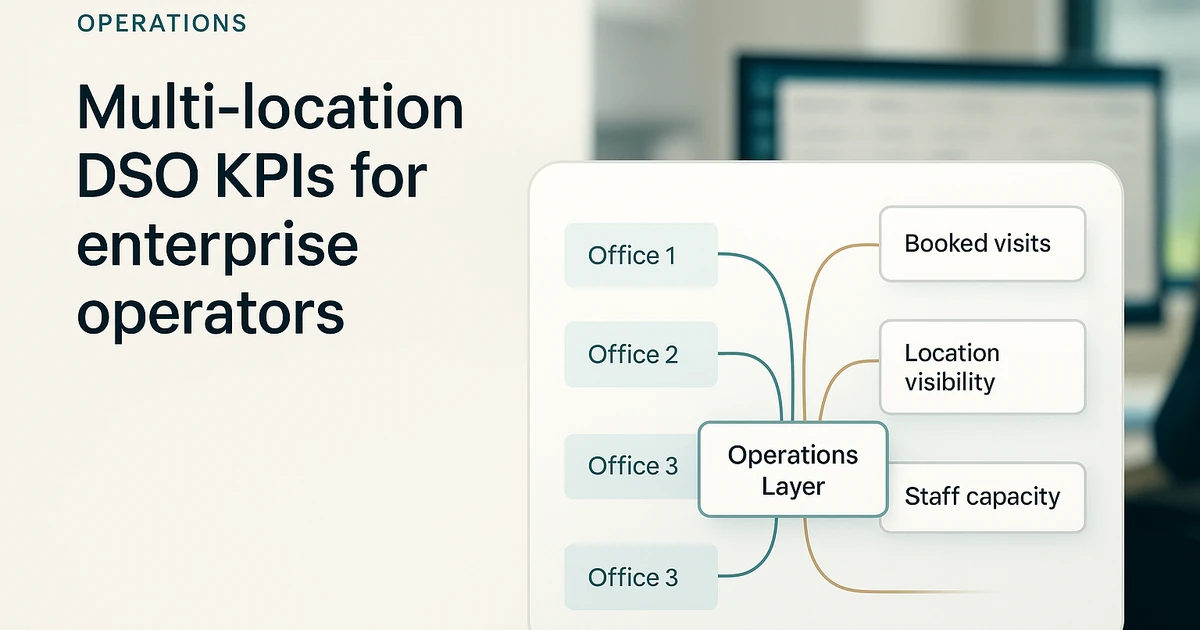
The executive dashboard should connect demand, scheduling completion, exception volume, transfer reasons, digital request handling, QA findings, and site-level variance.
It should also connect access operations to centralized scheduling and reporting and QA so leaders can see whether the model is improving operational discipline or merely moving work into a central queue.
Separate SLA Calibration From Clinical Outcomes
SLA calibration should focus on the work the access center actually controls: response handling, routing, documentation quality, schedule completion, escalation follow-through, and queue ownership. Clinical outcomes, diagnosis, and treatment decisions belong in a different governance lane.
That separation helps buying committees evaluate the access model fairly. The access center should be accountable for consistent execution and documented handoffs.
Clinical leadership should own triage rules, escalation language, and clinical review pathways. Compliance teams should review information handling, system access, and patient communication standards before workflows go live.
Use QA To Detect Variance
QA should measure whether agents follow approved workflows, use the correct scheduling logic, document required fields, escalate appropriately, and avoid unsupported promises. It should also show whether the issue is agent performance, template design, training gaps, unclear policy, or site resistance.
For dermatology platforms, QA calibration is especially important because cosmetic, medical, and procedural workflows can sound similar during intake while requiring different next steps.
A calibrated QA process gives leaders a repeatable way to compare performance across locations and teams. It can also support EBITDA impact discussions by showing where rework, transfers, and unresolved demand may be creating operational drag.
How Should Leaders Roll Out The Model Across A Portfolio?
A dermatology access transformation should be phased by operational readiness, not by optimism. The right sequence depends on how standardized templates are, how clean referral workflows are, how many systems are involved, and how much site-level variation the group has inherited.
Groups may begin with overflow call handling, new patient intake, referral coordination, digital request queues, or centralized scheduling for selected visit categories. The important point is to define scope clearly and learn from controlled deployment before expanding.
That is where a broader front-desk outsourcing or managed access model can be evaluated against enterprise governance expectations.
Pilot By Workflow And Location
The pilot should specify included locations, included workflows, system access, escalation contacts, QA method, reporting cadence, and decision rights. It should also define what is out of scope so the pilot does not become a catch-all for every unresolved site workflow.
A well-scoped pilot gives leadership cleaner evidence. If new patient intake works but surgical scheduling creates friction, the group can adjust template logic or escalation rules before expansion.
If digital requests are not being completed consistently, the group can define ownership before scaling that channel across more sites.
Govern Exceptions Before They Become Site Policy
Every dermatology group has exceptions. The risk is not the existence of exceptions; it is allowing them to become unmanaged policy. A provider preference, payer rule, location constraint, or clinical escalation path should either be documented as an approved exception or corrected as variation.
The operating cadence should include regular exception review. Operations, clinical leadership, revenue cycle, IT, and the access center owner should review recurring blockers and decide whether to update the standard workflow.
This keeps centralization from becoming rigid while protecting the group from uncontrolled site drift.
What Should Buying Committees Require From Partners?
Buying committees should evaluate patient access partners on operating discipline, not just staffing capacity. A dermatology platform needs agents, but it also needs governance, QA, escalation design, reporting, and integration readiness.
MGMA has summarized scheduling workflow redesign at scale, including standardization gaps, template management, metrics, patient self-scheduling, and physician engagement (MGMA).
That set of topics maps closely to what a dermatology buying committee should test during vendor evaluation. A partner that cannot support standardization may struggle as the group adds locations, service lines, or acquired workflows.
Integration And Compliance Review
Access partners should be evaluated on how they work inside the group’s EHR, PMS, phone system, messaging tools, and reporting environment. The committee should ask how agents receive permissions, how work is documented, how exceptions are routed, and how reporting definitions are maintained.
Compliance review should be handled with the group’s own compliance counsel and security team.
The partner should be able to support BAA review, access controls, audit expectations, and documented information-handling procedures, but the group should avoid treating any vendor statement as a substitute for internal review.
For groups evaluating systems connectivity, integrations should be part of the access design from the start.
Management Cadence And EBITDA Narrative
A scalable dermatology access program needs a management cadence that connects daily work to executive decisions. Supervisors need QA and queue visibility.
Directors need location and workflow variance. COOs and PE operating partners need a clean narrative around capacity, standardization, rework, and operating risk.
The EBITDA discussion should stay grounded in evidence the group can actually measure. Avoid unsupported promises about guaranteed lift or savings.
Instead, define the operating model, baseline the current workflow, track variance, and use the dashboard to show where centralization is creating more disciplined execution across the platform.
Related Reading
Patient Access Strategy
- Enterprise Patient Access Center Implementation
- Patient Access Center Metrics for Healthcare Executives
- Centralized Scheduling Rollout for Multi-Location Practices
Operating Model Design
- EHR/PMS Integration for Centralized Scheduling
- Reporting Dashboard for Multi-Site Healthcare Operations
Sources
- PubMed: Insurance Acceptance, Appointment Wait Time, and Dermatologist Access
- NCBI Bookshelf: Issues in Access, Scheduling, and Wait Times
- AHRQ: Open Access Scheduling for Routine and Urgent Appointments
- PubMed: Access to Consultative Dermatologic Care Via Asynchronous Teledermatology
- PMC: Wait Times for Scheduling Appointments With Hospital-Affiliated Dermatologists
- PubMed: Patient Opportunities to Self-Schedule in a Large Multisite Clinic
- PubMed: Automated Waitlists for Ambulatory Appointment Scheduling
- MGMA: Streamlining Scheduling Workflows To Improve Appointment Capacity
Managing dermatology patient access operations across 3+ locations? Request an Enterprise Assessment for your group.