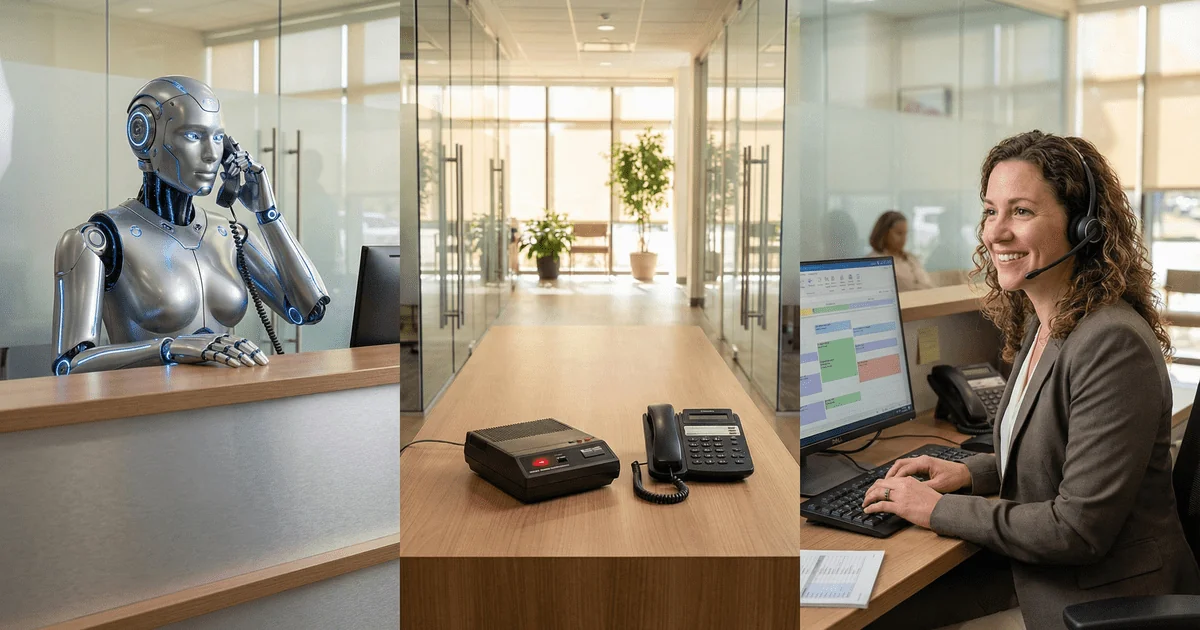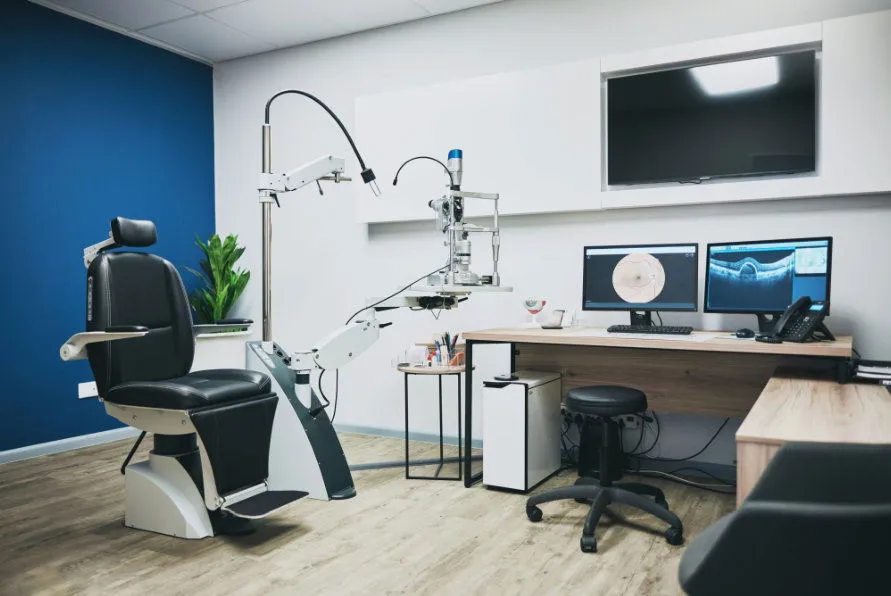


For an optometry group with three or more locations, inbound calls are not a front-desk side task. They are the front door to appointment access, insurance questions, optical inquiries, recall follow-up, and time-sensitive routing. When each location handles that work differently, the result is not simply a busy phone line. It is an operating model that makes coverage, coaching, and reporting harder to control.
Inbound call services give a group a dedicated way to answer, qualify, schedule, document, and route calls. The value is not that every call should be handled by a distant team. The value is that routine patient-access work has clear ownership when an in-office team is serving people at the desk, a location is short staffed, or demand spikes across the network.
The best model preserves local clinical judgment while standardizing the work that should not vary by location: greetings, appointment categories, information capture, escalation rules, callback expectations, and quality review. That is the same operating discipline that supports a broader optometry group model, not a substitute for it.
Table of Contents
- Why Do Inbound Calls Become an Enterprise Operations Problem?
- What Should an Inbound Call Team Handle for an Optometry Group?
- How Does Consistent Call Handling Improve the Patient Experience?
- Can Inbound Services Protect Front-Desk Capacity Without Disconnecting Locations?
- Which Call Metrics Should Operations Leaders Review?
- How Should Groups Handle Urgent or Clinical Calls?
- What Should a Multi-Location Group Require From an Inbound Partner?
- What Is a Practical First Step for Improving Inbound Coverage?
Why Do Inbound Calls Become an Enterprise Operations Problem?
At one site, a seasoned receptionist can often keep a phone queue moving through familiarity and extra effort. Across several sites, that approach creates uneven coverage. One office answers during a lunch rush, another sends callers to voicemail, and a third relies on a manager to return messages after closing. Leadership sees complaints or a soft schedule, but cannot see whether the cause is demand, staffing, routing, or an inconsistent process.
This is why multi-location groups should treat call handling as a patient-access workflow. The operating question is not, “Who can pick up the phone right now?” It is, “What should happen to this request, who owns the next step, and can we measure whether it happened?”
The Medical Group Management Association’s guidance on centralized scheduling is relevant because it frames scheduling as an operational design issue, not a switchboard exercise. A centralized or hybrid model needs defined responsibilities, shared protocols, and reporting that local leaders can act on. That same logic applies when an optometry group adds overflow coverage or a managed inbound team. MGMA’s central-scheduling guidance is a useful starting point for the operating questions involved.
For many groups, the first visible benefit is more dependable coverage. The deeper benefit is a common system for handling demand. That system lets a COO compare locations fairly, lets regional managers coach a specific workflow, and lets clinical and optical teams spend less time improvising phone coverage.
What Should an Inbound Call Team Handle for an Optometry Group?
The right scope depends on the group’s systems, appointment rules, and service mix. Inbound support should not be asked to make clinical judgments. It should handle the administrative work that can be defined, trained, audited, and escalated when needed.
That commonly includes appointment requests, rescheduling, cancellation handling, general office information, basic insurance and benefit questions within approved scripts, recall responses, and routing for optical or billing inquiries. A trained team can also capture the reason for the call and record a complete handoff when the issue belongs with a location, provider, or billing specialist.
Optometry requires more nuance than a generic message-taking service. A caller may be seeking a routine exam, asking whether a location carries a particular product, trying to resolve a contact-lens question, or reporting a concern that needs a defined clinical escalation path. The call team needs approved categories, plain-language scripts, and a clear rule for when to stop and hand off. The American Optometric Association emphasizes patient communication as part of practice operations, which is consistent with treating the phone experience as a managed part of the patient journey rather than an afterthought. See the AOA’s patient communication resource.
For groups evaluating a managed model, the useful distinction is between routine call completion and exception management. A routine scheduling request should reach a reliable outcome with the information the next team needs. An exception should move quickly to the right owner with a documented reason. That distinction is central to an enterprise patient access center, where consistency and escalation matter as much as live answer coverage.
How Does Consistent Call Handling Improve the Patient Experience?
Patients usually judge access by practical moments: whether someone answers, whether the person understands the request, whether an appointment can be arranged, and whether an unresolved issue receives a clear next step. A calm first interaction can establish trust before the visit. A confusing transfer or an unanswered message can create friction before a patient ever reaches the office.
Consistency does not mean a rigid script. It means patients receive the same basic standard of help regardless of which location receives the call or how busy that location happens to be. A group can define the required opening, the information needed for each appointment type, the process for explaining next steps, and the acceptable handoff when a team member cannot resolve a request.
This is especially important when the in-office team is managing check-in, checkout, payments, optical dispensing, and provider questions. Removing routine phone interruptions gives the staff at the desk more room to focus on the person in front of them. It also gives callers a clearer path than a voicemail box that may be checked later.
The patient experience should be measured through the workflow, not assumed from a friendly greeting. Groups should review abandoned calls, callbacks completed within the agreed window, appointment requests that were booked or properly escalated, transfer reasons, and recurring questions that indicate a process gap. Those measures turn an anecdotal complaint into something operations can diagnose.
Can Inbound Services Protect Front-Desk Capacity Without Disconnecting Locations?
Yes, if the service model is designed as an extension of the local workflow instead of a detached call queue. The central team needs current location hours, provider and appointment rules, insurance processes, service lines, escalation contacts, and access to the scheduling tools approved by the group. Local teams need a dependable way to receive the exceptions that require their knowledge.
A hybrid design often works well for groups that want to preserve local relationships. Location teams can handle selected calls during normal coverage, while an inbound team manages overflow, lunch coverage, after-hours messages, recall responses, or defined appointment types. The group can adjust that mix as it learns where demand and staffing pressure actually occur.
The key is to avoid creating two competing processes. If local staff and the inbound team use different appointment definitions or document calls in different places, the group has simply moved inconsistency into a new channel. A front-office standardization program should establish the shared rules before the group expands coverage.
This operating design also gives leaders a better way to discuss staffing. Instead of treating every missed call as a reason to add another receptionist at a single location, they can distinguish between persistent local workload, predictable peak-period overflow, and gaps caused by an unclear workflow. The answer may be local staffing, centralized support, or both. The call data makes that decision more grounded.
Which Call Metrics Should Operations Leaders Review?
Metrics should describe access quality and workflow control, not merely phone volume. A high number of handled calls can still conceal long waits, poor transfers, or appointment requests that were never completed. Conversely, a short average call time can indicate efficient service or a rushed interaction. Leaders need measures that fit together.
Start with a small, stable scorecard that can be reviewed by location and across the network:
- Answer rate and abandonment rate, segmented by time of day and location.
- Speed to answer and callback completion for calls that cannot be resolved immediately.
- Appointment-request conversion, tracked separately from other call types.
- First-contact resolution for administrative requests that should not require another call.
- Transfer and escalation reasons, including which queues create the most rework.
- Quality-review findings, such as incomplete documentation or missed required disclosures.
The point of the scorecard is not to punish a site for having a difficult week. It is to identify where the system needs attention. A pattern of abandonments at the same time each day may call for overflow coverage. A high transfer rate for one appointment type may reveal a training or scheduling-rule issue. A backlog of callbacks may show that an exception queue has no clear owner.
This approach aligns with the broader work of measuring call management in optometry. It also gives a group a reliable baseline before it makes stronger claims about revenue impact. An unanswered call can be a lost opportunity, but no responsible operator should assume every call becomes a booked visit. The practical goal is to make the entire path from inquiry to next action visible and improvable.
How Should Groups Handle Urgent or Clinical Calls?
Inbound teams should not diagnose, recommend treatment, or decide clinical urgency. Their role is to recognize the triggers defined by the organization and follow the approved escalation protocol without delay. That protocol should be created and reviewed by clinical leadership, not improvised by a call vendor or front-desk employee.
For example, the group can maintain an approved escalation guide that identifies the exact language that requires immediate routing, the on-call or location contact, what information the caller should be asked to provide, what should be documented, and what to do if the first contact does not respond. The guide should also state what the call team must not say. This protects patients, staff, and the organization from false reassurance or inconsistent advice.
Routine service recovery needs similar care. If a patient reports an issue with a prior visit, a billing concern, or an appointment error, the team should acknowledge the concern, capture the facts, and route it to the accountable owner. It should not make promises about a clinical outcome, refund, or accommodation that the group has not authorized.
Groups that are planning after-hours coverage should make this protocol part of the launch criteria. Clear boundaries are more valuable than broad claims about availability. The related after-hours medical answering service framework explains why service-level expectations and escalation ownership need to be explicit before phones roll over.
What Should a Multi-Location Group Require From an Inbound Partner?
An inbound service should be evaluated as an operating partner, not only as a staffing source. The buying committee should ask how the service will learn location-level rules, how it will maintain those rules as the group changes, and how it will show its work through reporting and quality review.
At minimum, require a documented implementation plan, role-based training, approved scripts and escalation paths, call-quality scoring, regular calibration with operations leaders, and a shared reporting cadence. Confirm how scheduling access is controlled, how patient information is handled, where documentation lives, and how the team responds when an office changes hours, provider availability, or appointment rules.
For a group with several locations, governance matters as much as capacity. One designated internal owner should approve workflow changes. The partner should have a named operations lead. Both sides should agree on what counts as a defect, how urgent issues are escalated, and how recurring findings become process improvements. Without that structure, the relationship will depend on informal conversations and eventually drift.
Groups comparing alternatives can also review the tradeoffs in front-desk outsourcing for multi-location practices. The right model is the one that fits the group’s systems, management capacity, and patient-access goals. It is not automatically the model with the broadest feature list.
What Is a Practical First Step for Improving Inbound Coverage?
Begin with a short current-state review across all locations. Map where calls enter, who answers during normal and peak periods, where messages go, which appointment types create the most transfers, and which calls require clinical or local escalation. Pull a sample of abandoned calls, voicemail messages, callbacks, and transfers. The objective is to see the real workflow, including the workarounds.
Then define the first improvement scope. For some groups, that may be lunch-hour overflow. For others, it may be centralized scheduling for routine exams, a shared callback queue, or improved coverage for recall responses. Keep the first scope narrow enough to train, measure, and adjust. A group does not need to centralize every call on day one to establish a better patient-access standard.
From there, set the baseline metrics, name the owners, document the escalation boundaries, and review the results at a regular operating cadence. If the model works, expansion can be deliberate. If it exposes a scheduling or documentation problem, fix that foundation before adding more volume.
Inbound call services are most useful when they help a multi-location optometry group turn phone coverage into a dependable, measurable part of patient access. The outcome is not a promise that every call produces revenue. It is a clearer operating system for helping patients reach the right next step while protecting the capacity of the teams serving them in person.
Ready to Improve Your Patient Retention?
MyBCAT helps healthcare practices recapture missed calls and automate patient scheduling so no opportunity slips through the cracks.