

Multi-location optometry groups lose between $196,000 and $364,000 annually to front desk turnover alone. With 46% of eye care practices reporting understaffing and 30-40% annual turnover rates at the front desk, operations leaders at 3+ location networks face a fundamental question: should you invest in full-service front desk outsourcing (BPO) or hire individual virtual assistants? The answer depends on your location count, integration requirements, and operational maturity. This framework breaks down how enterprise optometry groups evaluate both models and determine which delivers sustainable ROI at scale.
What You’ll Learn
- Why Does This Decision Matter More at Scale?
- How Do Front Desk Outsourcing and Virtual Assistants Differ?
- What Are the True Costs of Each Model?
- Which Model Fits Your Location Count?
- How Do You Evaluate Integration and Compliance Requirements?
- What QA and SLA Standards Should You Require?
- When Should You Choose a Hybrid Approach?
- Decision Framework: 5 Questions for Operations Leaders
Why Does This Decision Matter More at Scale?
Single-location practices can absorb front desk inefficiencies through owner intervention. Multi-location optometry groups cannot. When you operate 5, 10, or 20+ locations, every operational decision multiplies across your network.
The healthcare front desk staffing crisis hits multi-location groups hardest. A 20-location optometry group with 60 front desk staff experiencing 30% annual turnover and 50-day average fill times loses approximately 1,710 productive staff-days per year. That translates to roughly 7 full-time equivalent positions worth of lost productivity before accounting for new hire ramp-up time.
The staffing math becomes increasingly punishing as you scale. Consider what happens when a single front desk employee leaves:
Turnover Cost Calculator: Per-Position Impact
Direct replacement costs: $14,000 - $26,000 (recruiting, training, onboarding)
Productivity loss during vacancy: 45-60 days at $0 output
New hire ramp-up: 90 days at 50-70% productivity
Manager time diverted: 40+ hours per hire cycle
For a 15-location group with 45 front desk staff, reducing turnover from 30% to 15% saves approximately $140,000 annually in direct costs alone. The indirect costs of inconsistent patient experience, missed calls during vacancies, and manager burnout compound this figure significantly.
This is why operations leaders at PE-backed optometry groups and growing regional networks treat front desk staffing as a strategic decision rather than a tactical hiring problem. The question shifts from “how do we fill this position?” to “what operational model gives us predictable, scalable patient access across all locations?”
How Do Front Desk Outsourcing and Virtual Assistants Differ?
Understanding the fundamental differences between these models helps clarify which aligns with your operational requirements. Both provide remote support for front desk functions, but they differ significantly in structure, management, and scalability.
Front Desk Outsourcing (BPO Model): Full-service providers deliver trained teams, management infrastructure, technology platforms, and quality assurance systems. You contract for outcomes (answer rates, conversion metrics, patient satisfaction scores) rather than hiring individuals. The provider handles recruiting, training, supervision, and performance management. This model dominates in enterprise healthcare: large organizations account for 54.3% of the front office BPO market, which reached $222.7 million in 2025 and is growing at 8.8% CAGR.
Virtual Assistants (Individual Contractor Model): You hire remote individuals, either directly or through staffing platforms, to perform specific front desk tasks. You maintain management responsibility, provide training protocols, and handle quality oversight. VAs offer flexibility and lower per-hour costs but require internal infrastructure to support them effectively.
Virtual Assistant Model
Structure: Individual contractors, flexible hours
Management: Your team supervises and trains
Technology: Uses your existing systems
Scaling: Hire additional VAs as needed
Best for: 3-6 locations with strong internal ops
Front Desk Outsourcing (BPO)
Structure: Managed teams with built-in redundancy
Management: Provider handles supervision and QA
Technology: Integrated platform with analytics
Scaling: Add capacity through SLA adjustments
Best for: 7+ locations or rapid expansion
The distinction matters for enterprise call answering in healthcare because your choice affects not just cost structure but also your management bandwidth, compliance posture, and ability to maintain consistent patient experience across locations.
What Are the True Costs of Each Model?
Cost comparisons between outsourcing and virtual assistants require accounting for all operational expenses, not just hourly rates. Multi-location groups often underestimate the hidden costs in each model.
Virtual Assistant Direct Costs: Hourly rates for healthcare-trained VAs typically range from $8-15/hour for offshore talent and $15-25/hour for US-based contractors. A full-time equivalent covering standard business hours costs approximately $16,640-$52,000 annually in direct wages. However, this represents only part of your total investment.
Virtual Assistant Hidden Costs: Your operations team absorbs management overhead: recruiting, interviewing, onboarding, training, daily supervision, quality monitoring, and replacement when VAs leave. Internal managers typically spend 5-10 hours weekly per VA on oversight activities. You also bear the cost of turnover, which affects VAs at rates similar to or higher than traditional employees.
Front Desk Outsourcing (BPO) Costs: BPO providers typically charge per-call, per-minute, or monthly retainer models ranging from $2,500-$8,000 per location monthly depending on call volume and service scope. This all-in pricing includes recruiting, training, management, quality assurance, technology, and replacement of underperforming agents.
Total Cost Comparison: 10-Location Group
| Cost Category | VA Model | BPO Model |
|---|---|---|
| Direct labor/fees | ||
| Management overhead | Included | |
| Technology/tools | Included | |
| Turnover costs (25%) | Included | |
| Annual Total |
The cost gap narrows significantly when accounting for management burden and turnover. For groups prioritizing operational simplicity, the premium for BPO often delivers value through freed management capacity and predictable monthly expenses. This aligns with research showing healthcare call center ROI calculations must include indirect operational costs to accurately compare models.
Which Model Fits Your Location Count?
Location count serves as a primary filter for model selection because it determines your internal management capacity and the economies of scale available to you.
3-6 Locations: VA Model Often Wins
At this scale, you likely have an operations manager or regional director who can absorb VA oversight responsibilities. The lower direct costs of VAs provide meaningful savings, and the management load remains manageable. You can implement structured training programs and quality monitoring without overwhelming existing staff.
The key success factor at this stage is having documented processes. If your front desk protocols exist primarily in the heads of experienced staff, VAs will struggle without significant support. Organizations at this stage should review resources on optometry virtual assistants for multi-location practices to understand implementation requirements.
7-15 Locations: Transition Zone
This range represents the inflection point where VA management becomes a dedicated role. Groups operating 10+ VAs need a full-time remote team manager, quality monitoring systems, and structured communication workflows. The incremental cost of this infrastructure often approaches what BPO providers charge.
Questions to evaluate at this stage:
- Do we have, or want to build, internal competency in remote team management?
- Is front desk operations a core differentiator, or is it infrastructure we want to standardize?
- How rapidly are we adding locations, and can our management structure scale with growth?
15+ Locations: BPO Typically Makes Sense
At enterprise scale, the complexity of managing 30, 50, or 100+ remote individuals becomes a significant operational burden. BPO providers offer purpose-built infrastructure for large-scale team management, quality assurance, and performance optimization. The provider absorbs the management complexity, freeing your operations team to focus on clinical quality, revenue optimization, and growth initiatives.
PE-backed groups and DSO platforms at this scale typically favor BPO relationships because they simplify post-acquisition integration and provide standardized patient experience across diverse legacy systems.
How Do You Evaluate Integration and Compliance Requirements?
Beyond cost and scale, your technology environment and compliance requirements significantly influence model selection. Multi-location groups operating multiple EHR/PMS systems face particular challenges.
EHR/PMS Integration Complexity: Groups assembled through acquisition often inherit diverse practice management systems. Each system requires specific training, access protocols, and workflow documentation. VAs can learn multiple systems but require extended training periods and may struggle with context-switching between platforms. BPO providers with healthcare expertise typically maintain training programs for major optometry platforms and can onboard new systems more rapidly.
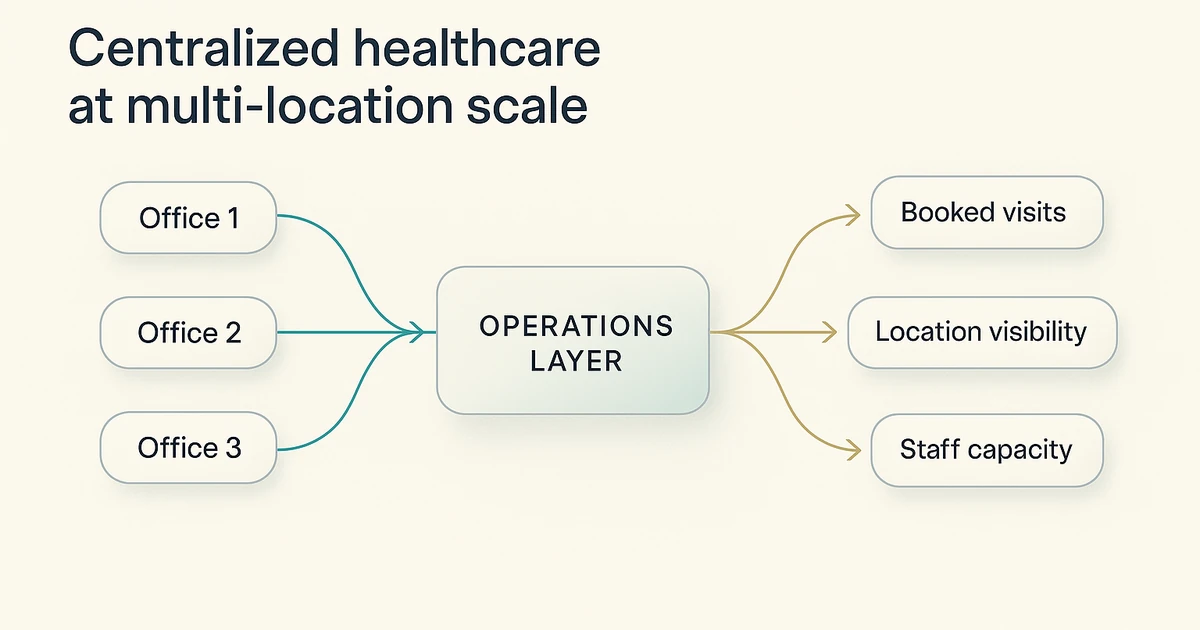
The centralized versus distributed intake framework becomes relevant here. Centralized models work best when you can standardize technology across locations. Distributed models may be necessary when integration costs exceed the benefit of centralization.
HIPAA Compliance and Security: Both models can achieve HIPAA compliance, but the burden of ensuring and documenting compliance differs significantly. With VAs, you maintain responsibility for:
- Business Associate Agreement execution
- Access control and monitoring
- Training documentation
- Incident response procedures
- Audit trail maintenance
BPO providers assume contractual responsibility for these elements, typically backed by SOC 2 certifications and established compliance programs. Research on healthcare outsourcing decision frameworks identifies monitoring and control as the highest-weighted factor (0.758 path coefficient) in successful outsourcing relationships.
Questions for Your RFP Process:
- How many EHR/PMS systems do you currently operate?
- What is your technology standardization roadmap?
- Who currently maintains HIPAA compliance documentation for remote workers?
- What security certifications do you require from vendors?
What QA and SLA Standards Should You Require?
Quality assurance separates professional patient access operations from ad-hoc remote support. Whether using VAs or BPO providers, establish measurable standards and monitoring systems.
Essential KPIs for Multi-Location Optometry:
- Answer rate: Target 95%+ of calls answered within 3 rings
- Abandonment rate: Less than 5% of calls abandoned before connection
- Schedule conversion: 70%+ of scheduling inquiries converted to appointments
- Patient satisfaction: Net Promoter Score or satisfaction ratings by location
- First-call resolution: Percentage of inquiries resolved without callback
SLA Structure for BPO Relationships: Effective service level agreements specify performance thresholds, measurement methodology, reporting frequency, and remediation procedures. Consider these elements:
Sample SLA Framework Elements
Performance guarantees: Specific metrics with contractual consequences for underperformance
Reporting cadence: Weekly operational reports, monthly business reviews, quarterly strategic assessments
Escalation paths: Defined procedures for issues requiring immediate attention
Quality calibration: Regular call review sessions with client operations team
Continuous improvement: Documented process for implementing operational enhancements
For VA relationships, you build equivalent monitoring internally. This requires call recording systems, scoring rubrics, regular review processes, and feedback mechanisms. Many groups underestimate this infrastructure cost when comparing models.
Understanding common pitfalls helps regardless of which model you choose. Review the guidance on avoiding outsourcing mistakes in optometry before finalizing vendor relationships or VA hiring processes.
When Should You Choose a Hybrid Approach?
Some multi-location groups find that combining elements of both models delivers optimal results. Hybrid approaches work well in specific circumstances.
Scenario 1: Core Hours BPO, Extended Hours VA Use a BPO provider for high-volume weekday coverage (8am-5pm) and supplement with VAs for early morning, evening, or weekend slots where call volume doesn’t justify full BPO capacity.
Scenario 2: Centralized BPO, Location-Specific VAs Route general inquiries (scheduling, insurance questions, directions) to a centralized BPO team while maintaining location-specific VAs for complex clinical coordination, established patient relationships, or services requiring deep practice knowledge.
Scenario 3: BPO for New Acquisitions, VAs for Established Locations Deploy BPO providers to rapidly standardize front desk operations at newly acquired practices while maintaining well-functioning VA relationships at mature locations with established workflows.
The hybrid approach adds coordination complexity but can optimize cost and quality for groups with varied needs across their network. This connects to broader decisions about AI receptionist versus virtual front desk solutions and how technology augments human support in either model.
Decision Framework: 5 Questions for Operations Leaders
Cut through the complexity with these diagnostic questions. Your answers indicate which model aligns with your operational reality.
Question 1: What is your location count trajectory? If you plan to double locations within 24 months, prioritize scalability. BPO relationships scale through contract modifications rather than hiring cycles. If growth is modest, optimize for current state.
Question 2: How standardized are your front desk processes? If every location operates differently, VAs will struggle and BPO implementation will require significant discovery work. Either model benefits from process documentation before deployment.
Question 3: What management capacity exists for remote team oversight? If your operations team already operates at capacity, adding VA management responsibilities creates risk. BPO removes this burden entirely.
Question 4: How important is cost predictability? BPO provides fixed monthly costs. VA costs fluctuate with turnover, training needs, and performance variability. PE-backed groups often prefer BPO for cleaner financial forecasting.
Question 5: What is your technology standardization status? Groups with unified EHR/PMS across locations can deploy either model more easily. Fragmented technology environments increase training complexity for both.
After answering these questions, most groups find a clear direction. Those in transition zones (7-15 locations, mixed technology, moderate growth) should consider pilot programs testing both models before committing network-wide.
For additional perspective on how these models compare specifically for optometry operations, review the analysis in decoding optometry call services: virtual versus traditional approaches.
Building Your Evaluation Process
Multi-location optometry groups making this decision benefit from structured evaluation rather than reactive vendor selection. Consider this process:
Phase 1: Internal Assessment (2-3 weeks) Document current state metrics: answer rates, conversion rates, turnover, costs by location. Identify variation across your network and root causes of underperformance.
Phase 2: Requirements Definition (1-2 weeks) Specify must-have capabilities versus nice-to-have features. Define integration requirements, compliance standards, and performance thresholds.
Phase 3: Vendor/Candidate Evaluation (4-6 weeks) For BPO: Request proposals from 3-5 providers, conduct reference calls with similar-sized healthcare clients, evaluate technology platforms. For VAs: Source candidates through established healthcare staffing platforms, conduct structured interviews, verify experience with your EHR systems.
Phase 4: Pilot Program (8-12 weeks) Test your selected model at 2-3 locations before network-wide deployment. Measure performance against baseline metrics and refine processes based on learnings.
This structured approach reduces implementation risk and builds organizational confidence in the final decision. Groups that rush deployment often encounter avoidable problems that a pilot period would have revealed.
Key Takeaways
The choice between front desk outsourcing and virtual assistants for multi-location optometry groups depends on scale, growth trajectory, management capacity, and technology environment. Neither model is universally superior.
VAs offer lower direct costs and flexibility for groups with 3-6 locations and available management bandwidth. BPO provides scalability, compliance infrastructure, and operational simplicity for groups with 15+ locations or rapid expansion plans. Groups in the 7-15 location range should evaluate both models against their specific circumstances.
Regardless of model choice, success requires documented processes, measurable performance standards, and ongoing quality monitoring. The benefits of hiring remote workers for optometry businesses extend to both models when implemented with appropriate structure and oversight.
Ready to Improve Your Patient Retention?
MyBCAT helps healthcare practices recapture missed calls and automate patient scheduling so no opportunity slips through the cracks.
Related Reading
Sources
- Future Market Insights: Front Office BPO Services Market Report (2025) - Market sizing data showing $222.7M valuation and 8.8% CAGR growth projections
- BMC Health Services Research: Developing Decision Model for Outsourcing of Medical Service Delivery - Peer-reviewed framework identifying monitoring/control as the highest-weighted decision factor (0.758 path coefficient)
- SightView: Unpacking 2025 in Eye Care - Industry data on 46% understaffing rates in eye care practices
Managing Front Desk Operations Across 3+ Locations?
Request an Enterprise Assessment to evaluate which model delivers the best ROI for your optometry group's specific needs and growth plans.
Schedule a Consultation Today →